
Group Classes vs Personal Training: Which Wins for You?
Group classes vs personal training: a side-by-side comparison on cost, attention, programming, and fit. From a CFL3 head coach in Belltown.

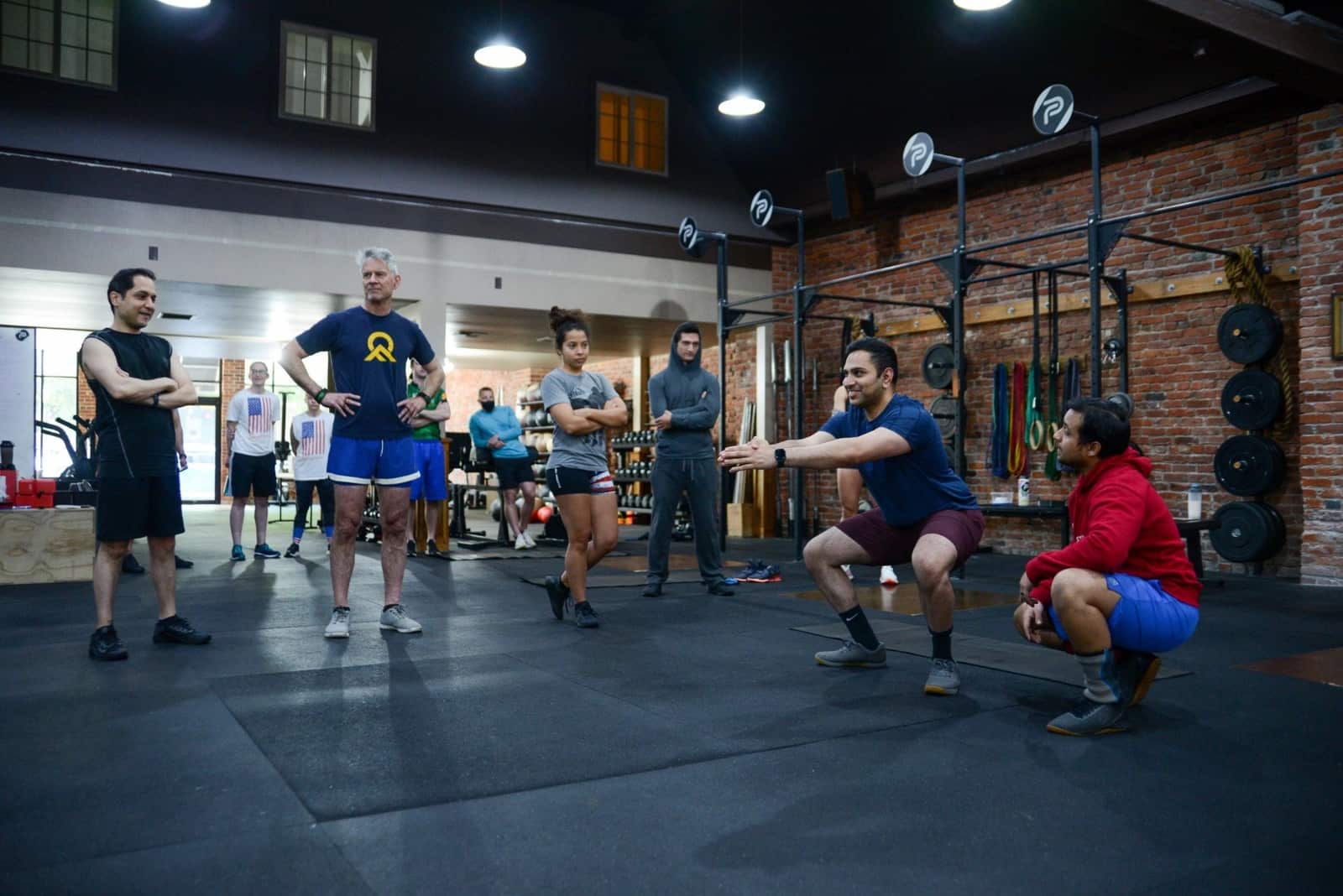
Both options work. The question is which works for you.
The most common question I get from prospective members at Persistence Athletics in Belltown is some version of "should I start with group classes or personal training?"
The honest answer is that both work for most goals. The right choice depends on your starting point, your goals, your budget, and what you actually need from each session. This is built for the decisions members make standing in our front room at 3025 1st Ave, not a pitch for the more expensive option.
I am Jacque Dewangan, CFL3 and Precision Nutrition Level 2, head coach at Persistence Athletics. I have coached our 6:30 PM weekday classes and beginner intros for years, and I have run hundreds of 1-on-1 sessions, so I am not picking a favorite. I am telling you where each one actually fits. Updated June 2026.
Table of Contents
- The full side-by-side comparison
- When group classes win
- When personal training wins
- The hybrid path: group + PT together
- How we structure the choice at Persistence Athletics
- Frequently Asked Questions
The full side-by-side comparison
Here is the full breakdown across the dimensions members actually care about. Our coach-to-athlete ratio sits around 1 to 12, which is why our group column reads better than the typical big-box class.
| Dimension | Group classes | Personal training |
|---|---|---|
| Cost per session | $7 to $15 (with monthly membership) | $80 to $150 |
| Coach attention | 1 coach to roughly 12 members | 1 coach to 1 client |
| Programming customization | Programmed for the class, scaled by the coach | Customized to the individual's goals |
| Scheduling flexibility | Set class times (multiple classes per day) | Booked appointment, flexible to coach availability |
| Community | High. Same faces every week. | Low. 1-on-1 only. |
| Accountability | Strong (you are expected at class) | Strongest (the coach is waiting for you) |
| Progression speed | Moderate, dependent on class scaling | Fast, with focused 1-on-1 attention |
| Injury accommodation | Good for minor issues, modest for chronic | Excellent for chronic or complex issues |
| Best fit | General fitness, community-driven, broad goals | Specific goals, plateau-breaking, injury return |
| Typical month cost | $69 to $89 a week depending on frequency | $640 to $1,200 (twice a week) |
Both options have an honest place. Neither is universally better. The next two sections walk through when each one wins.
When group classes win
Group classes win when the goal is general fitness, community is part of what you want, and you do not have a specific issue that demands 1-on-1 attention. That covers a wide majority of our members.
The best argument for group is a member named Pouria. He has stacked up around 1,100 classes over six-plus years and has never trained 1-on-1 with us. He shows up, follows the coach's plan, and lets consistency do the work. That is what a well-run group class is built to produce: the power of showing up, on repeat, with someone watching your bar.
The cases where group is the right answer
- General fitness, weight loss, or body recomp on a normal timeline. Most of our members fall here. Group classes 3 to 5 times a week with consistent attendance gets the job done.
- You are motivated by community. The same faces, the same coach, the post-class chat in the front room. If those things keep you coming back, group classes deliver them and PT does not.
- You respond well to programmed structure. You want to show up at the same class times each week and follow the coach's plan, no thinking about programming. Devang, one of our software engineers, walked in a true beginner and built an advanced strength base over 700-plus classes doing exactly that.
- Budget is a real constraint. A group membership at $69 to $89 a week is roughly the cost of 1 to 2 PT sessions. The math heavily favors group for general-fitness goals.
- You are new to all of this. Group classes scaled by a coach who knows your name build the foundation faster than most people expect. Your first class is free and scaled to wherever you are starting.
The case where group is not enough
If you have a chronic pain issue, a specific sport prep cycle (HYROX qualifier, masters competition), a plateau that has not broken in 6 to 8 weeks of group, or a postpartum return-to-training context, group alone does not give you the focused attention you need. That is when PT enters the picture.
When personal training wins
PT wins when the situation calls for 1-on-1 focus that group cannot provide. The cases are narrower than people assume, but they are real, and I have coached most of them personally.
The cases where PT is the right answer
- Chronic pain or injury return. Working around a back issue, knee pain, or a shoulder limitation needs individualized programming. Eric came to us with chronic back pain and built up to strict pull-ups, and the early weeks of that arc were exactly the careful, rep-by-rep work that 1-on-1 attention exists for.
- Specific sport prep. A HYROX qualifier in 12 weeks. CrossFit Open prep. A masters meet. The structure has to be tailored to the event and to your own strengths and weaknesses. Aman went from sedentary engineer to HYROX qualifier, and that kind of targeted build is where focused coaching earns its cost.
- Plateau on a specific lift. The bar has not moved in 6 to 8 weeks. A coach watching every rep catches the technique error or programming gap a busy class cannot reach. For the deep diagnostic cases, Ravi Dewangan, our head S&C coach (CFL3, MS in Strength and Conditioning), runs these.
- Postpartum return to training. Pelvic floor recovery, diastasis screening, a gradual return to load. Sofi came back after having her baby through exactly this kind of careful 1-on-1 progression. Group is not the right setting for the first 8 to 16 weeks of a postpartum return.
- Real gym anxiety. Some new members find a full class overwhelming at first. A short block of 1-on-1 sessions to build confidence before moving into group is a great on-ramp, and nobody should feel embarrassed asking for it.
- Body recomp at speed. Cutting a significant amount of weight or prepping for a physique stage. The programming and nutrition coordination needed is more than a group class delivers. That is also where our nutrition coaching comes in.
The case where PT is overkill
If you are a generally healthy adult with no specific injury, no sport goal, and basic fitness aspirations, PT is more horsepower than you need. The cost is significant and the marginal benefit over a coached group class is small. Most general-fitness goals are better served by group classes plus the occasional PT check-in.
The hybrid path: group + PT together
The path most of our long-term members end up on is hybrid: group classes for the bulk of the week, supplementary PT for the targeted work.
A typical hybrid week
- 3 to 4 group classes, including Saturday HYROX from 9:30 to 11:00 AM, which is built into every membership
- 1 to 2 PT sessions per week, focused on one specific thing (a form fix, sport prep, a plateau)
- 1 active recovery day or rest
The total cost is your group membership plus 4 to 8 PT sessions a month. For one PT session a week, that lands roughly $300 to $700 a month total; for two, $500 to $1,000. The hybrid is more than group alone but less than PT-only, with most of the upside of both.
Why hybrid works for most serious members
Group classes deliver volume, conditioning, and community. PT delivers focus, technique, and accountability on the specific things that need attention. The combination addresses the limitations of each.
Group alone: not enough specific attention for plateau-breaking or injury work. PT alone: not enough volume, not enough community, expensive at scale. Group plus PT: enough of both to keep progressing without breaking the budget.
About 60 percent of our members on PT are also doing group classes. The other 40 percent are PT-only, either because their schedule does not fit class times, they are early in injury return, or they prefer fully customized work.
How we structure the choice at Persistence Athletics
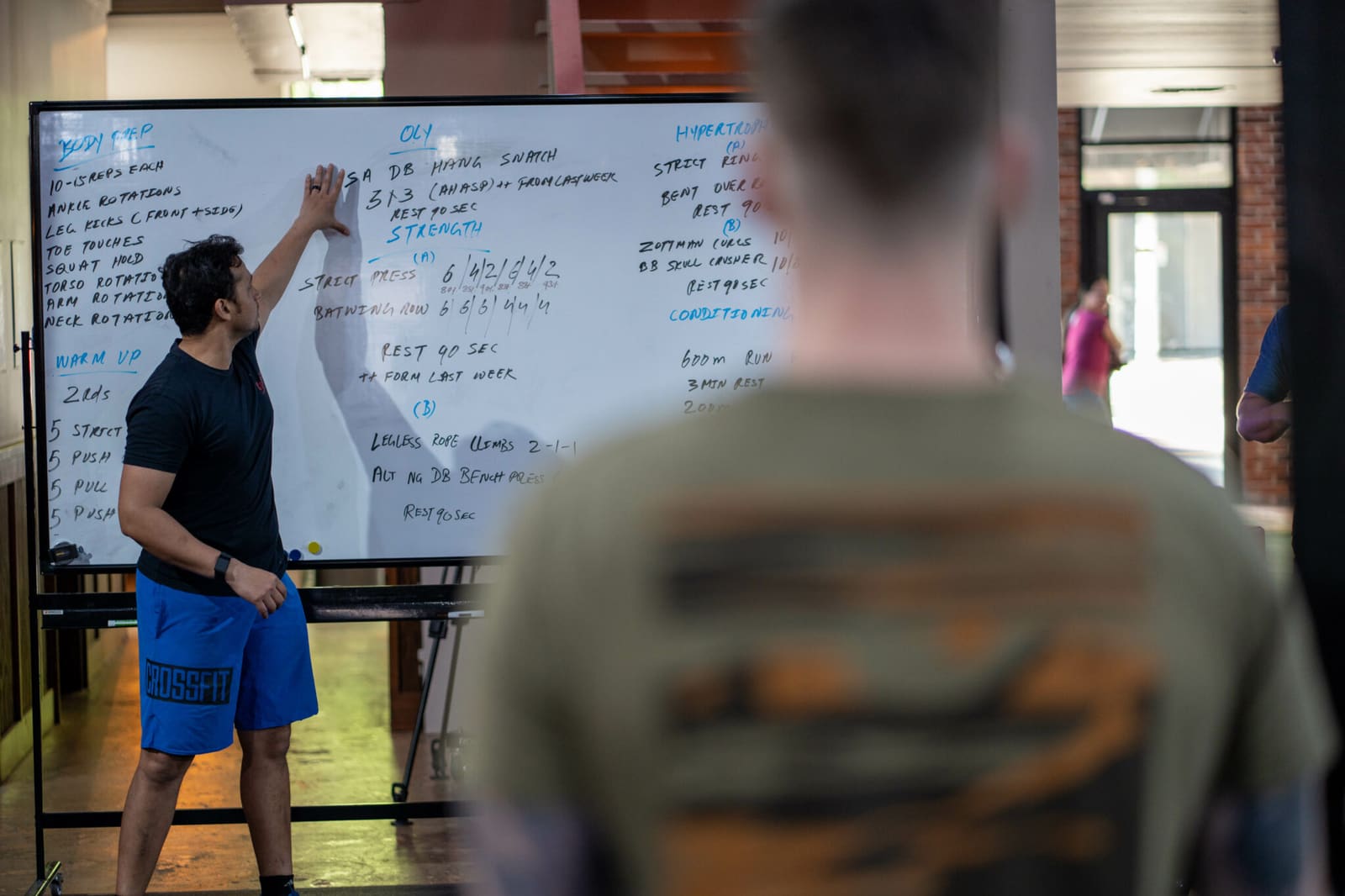
When a new member walks into Persistence, the default recommendation is a free first class. The free class is a group class, specifically because it is the right starting point for most goals. Trial slots are Saturday at 8:00 AM and weekday evenings at 6:30 PM, Fridays at 6:00 PM. About 70 percent of members start in group, stay in group, and never need PT. That is a feature, not a failure.
For the 30 percent who need more, we recommend personal training starting with a 5 to 10 session block. The full menu and rate breakdown is on our pricing page. For deeper context on the Belltown PT market, our Belltown personal trainer page covers the broader landscape.
The rule we follow: never push PT on a member whose goal can be met by group. We make more revenue per PT client, but the right call for most members is the cheaper option, and we tell them that to their face.
For members who do start in PT (postpartum return, chronic injury, sport prep), the typical engagement is 8 to 12 weeks of 1-on-1 work, then a transition into group classes with optional PT check-ins. PT-only long-term is rare and usually reflects a specific sport context.

Frequently Asked Questions
Are group classes or personal training better for beginners?
Group classes work for most beginners, especially in coached gyms with class sizes that allow individual attention. Personal training is the right starting point only if you have a chronic pain issue, a specific sport prep, severe gym anxiety, or are recovering from injury. About 70 percent of new members at Persistence start with group classes and add PT later if needed.
How much does personal training cost vs group classes in Belltown?
Personal training in Belltown runs $80 to $150 per session at boutique gyms. Group class memberships run $200 to $300 per month for unlimited classes, which works out to $7 to $15 per class for an active member. PT is roughly 8 to 15 times the per-session cost of group classes. The right choice depends on what you need from each session.
Can I do both group classes and personal training?
Yes, and this is the most common path for serious members. A typical week is 3 to 4 group classes plus 1 to 2 PT sessions. Group classes provide the conditioning and community, PT provides the targeted strength or skill work. The combination is more than the sum of the parts and accounts for most of our long-term members at Persistence.
Will I get the same coaching attention in a group class as in PT?
No, by definition. PT is one coach watching one client every rep. Group classes are one coach watching 8 to 15 members at varying levels. Good coached group classes still deliver real coaching: the coach scales the workout, watches form on the lift, and gives individual cues. But the depth of attention is lower. PT exists for cases where that depth matters.
When does it make sense to switch from group classes to PT?
Three triggers: a plateau on a major lift that has not broken in 6 to 8 weeks, a chronic pain issue or movement limitation that needs targeted work, or a specific sport prep cycle (HYROX qualifier, masters competition). For most members, the answer is to add PT alongside group classes for 8 to 12 weeks, then evaluate. Few members need PT-only long-term.
Are semi-private and small group training a good middle ground?
Yes, often. Semi-private training (2 to 4 clients with one coach) runs roughly 50 to 70 percent of solo PT cost. The catch is goal alignment: the clients in the semi-private session need similar goals and similar starting fitness. When the alignment is there, semi-private is excellent value. When it is not, the programming gets compromised.
Try a free first class at Persistence Athletics
If you want to figure out whether group, PT, or a hybrid is right for you, the free first class is the place to start. A CFL3 coach will scale the class, talk through your goals, and recommend the path that actually fits. No pressure, no contract. Book your free class at Persistence Athletics, 3025 1st Ave, Belltown, Seattle, about 8 minutes from Amazon and walkable from anywhere downtown. Questions first? Call us at (206) 593-4236.
Want to take this further?
Talk to a coach about coaching programming at Persistence Athletics.