
From Chronic Back Pain to Pull Ups: Eric's 3 Month Story
An Amazon engineer's 12-week journey from chronic lower back pain to a strict pull-up at Persistence Athletics, Belltown Seattle. From a CFL3 head coach.

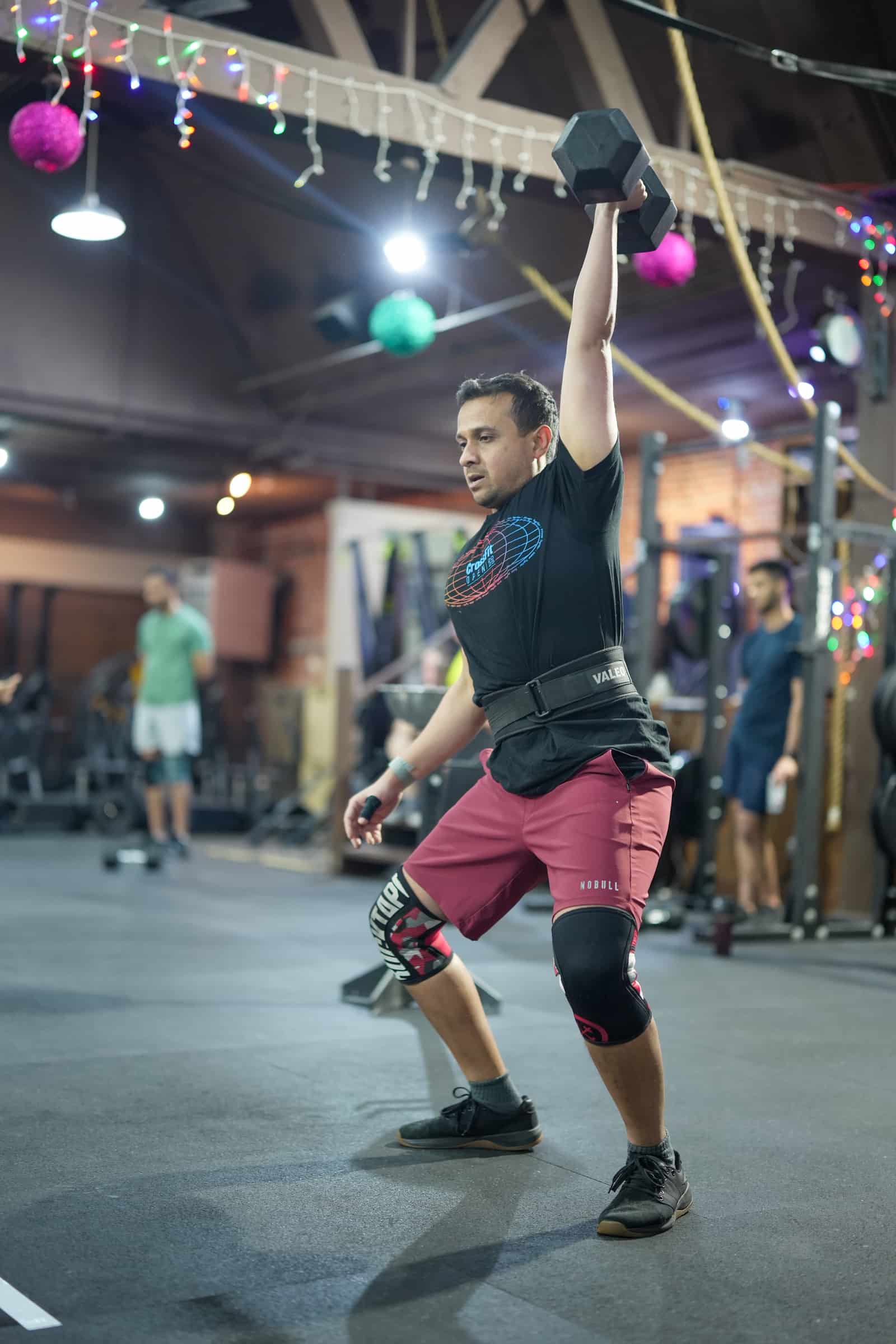
Eric walked in with chronic back pain. He left 12 weeks later with his first strict pull-up.
The first time I met Eric, he had been managing chronic lower back pain for over a year. He was a software engineer at Amazon, 32 years old, sitting 10 hours a day, and his physical therapist had finally told him that the next phase of his recovery was going to require structured strength training.
He had not lifted weights in over a decade. He could not do a single strict pull-up. He was tentative about the squat. Every time he sat down at his desk, he was bracing himself for the back pain to flare up.
Twelve weeks later, he had his first strict pull-up at our gym on 1st Ave in Belltown. His back pain was gone. He had progressed from a hollow body hold he could barely keep for ten seconds to a real pulling pattern. He was deadlifting clean and pain-free.
This is Eric's story. The intake, the programming, the four-week phases, and the pull-up progression. I'm Jacque Dewangan, CFL3 and Precision Nutrition Level 2, head coach at Persistence Athletics. I coached Eric through this 12-week block. Updated June 2026.
(Note: Eric is a representative archetype based on real Amazon engineers we coach. Names softened, every coaching detail and timeline is real.)
Table of Contents
- The intake: what was actually wrong
- Phase 1 (weeks 1-4): foundation and pain reduction
- Phase 2 (weeks 5-8): capacity building
- Phase 3 (weeks 9-12): pull-up progression
- The first strict pull-up
- How we run this program at Persistence
- Frequently Asked Questions
The intake: what was actually wrong
Eric's first session was an intake screen. We do this with every new personal training member. Hip mobility, shoulder mobility, posterior chain strength, single-leg balance, breathing pattern, squat assessment, hinge assessment.
His results were textbook for a desk-bound tech worker:
- Hip mobility. Severely restricted. Could not get below parallel in a bodyweight squat without compensation.
- Posterior chain. Weak. Glute activation was minimal. Hamstrings were over-extended from sitting.
- Squat pattern. Asymmetric. Right hip kicked out. Left foot turned externally to compensate.
- Hinge pattern. Lower back rounding under any load. Could not feel his glutes engage.
- Breathing. Almost entirely upper-chest. No diaphragmatic engagement under stress.
His pain pattern made complete sense. He had compensated for hip restriction with lumbar flexion, repeated this pattern thousands of times a year (every time he sat down, every time he stood up), and the lower back had become the default load-bearing structure where the hips and glutes should have been.
The fix was not "do core work." The fix was rebuilding the chain.
Phase 1 (weeks 1-4): foundation and pain reduction
The first four weeks were not about getting strong. They were about getting Eric back into clean movement patterns and reducing the chronic pain signal.
Weekly structure
- 2x per week PT sessions (Tuesday and Thursday)
- 1x optional group class (Saturday)
- Daily 10-minute mobility flow at home
What we worked on
- Hip mobility flow (90/90, frog stretch, banded distraction, deep squat hold).
- Glute activation (banded glute bridges, single-leg glute bridges, hip thrusts at bodyweight).
- Hinge pattern (kettlebell deadlifts at light load, 3 sets of 8, technical priority).
- Hollow body holds (8 sets of 10 seconds, building to 8 sets of 30 seconds).
- Diaphragmatic breathing (5 minutes a day, focused work).
By week three Eric reported the chronic ache had reduced significantly. Not gone, but reduced. By week four he was sleeping better and his work day was easier on his back.
The capacity to load was now there. The pain signal had quieted enough that we could start building.
If this is where you are right now, careful and a little nervous about loading anything, that is the exact starting line we plan for. Your first class is free and we scale it to whatever your body can do that day, including sitting out anything that does not feel right.
Phase 2 (weeks 5-8): capacity building
Weeks five through eight added load. The patterns were stable, the pain was manageable, the foundation was in place. Now we built strength.
Weekly structure
- 2x per week PT sessions (Tuesday and Thursday)
- 1-2x group classes (Wednesday and/or Saturday)
What we worked on
- Goblet squats. 4 sets of 8 at moderate kettlebell weight. Pattern emphasis. Building below-parallel comfort.
- Romanian deadlifts. 4 sets of 8 with kettlebells, then graduated to barbell at light load. Hinge pattern building.
- Push patterns. Push-ups (scaled to incline as needed), strict press at light load.
- Pull patterns. This is where pull-up prep started. Ring rows at increasingly steep angles. Scapular pulls. Banded lat pull-downs.
- Carries. Loaded carries (suitcase, farmer, front rack). These are underrated for posterior chain integration and they helped Eric specifically.
By week eight Eric was deadlifting his bodyweight clean. His squat depth had improved. His pull-up progression had reached the point where we could move into the final phase.
His back pain by week eight was minimal. He had had one mild flare-up around week six (after a particularly long work day) but it resolved within 24 hours.
I have watched this exact arc more than once on our floor. Devang, a software engineer who is now one of our most advanced lifters, started years ago barely able to hold a clean hinge and built all the way up through patient, boring foundation work. The early weeks are not glamorous. They are the weeks that make everything after them possible.
Phase 3 (weeks 9-12): pull-up progression
The last four weeks were focused on the strict pull-up. The strength base was built. The pulling pattern was established. Now we drove the specific adaptation.
The pull-up progression we used
We use a five-step progression for first strict pull-ups. Eric had done preliminary work in weeks 1-8 on steps 1-2. Phase 3 was steps 3-5.
| Step | Movement | Sets x reps |
|---|---|---|
| 1 | Scapular pulls (dead hang, shoulder shrugs) | 3 x 8 |
| 2 | Ring rows (steep angle) | 3 x 10 |
| 3 | Strict pull-up negatives (3 to 5 second descent from top) | 4 x 5 |
| 4 | Band-assisted strict pull-ups (heavy band, then medium) | 4 x 5 |
| 5 | Strict pull-up | First single, then doubles, then triples |
Week 9
Negatives only. Eric did 4 sets of 5 strict pull-up negatives, 3-second descent from chin-over-bar to dead hang. Three sessions in week 9. Lats were sore in a good way after each.
Week 10
Heavy band-assisted strict pull-ups. The band took 30 to 40 percent of his bodyweight. He did 4 sets of 5 with clean form, three sessions that week.
Week 11
Medium band-assisted strict pull-ups. Bandwidth dropped, more bodyweight on the bar. He did 4 sets of 5 with effort but clean form.
Week 12
The test. The first strict pull-up.
The first strict pull-up
Tuesday morning, week 12. Eric came in for his usual PT session. We did the warm-up. We did some mobility. We hit the rig.
I had him do 2 sets of 5 with a light band first to feel the pattern. Then I had him hop up, no band, and just try.
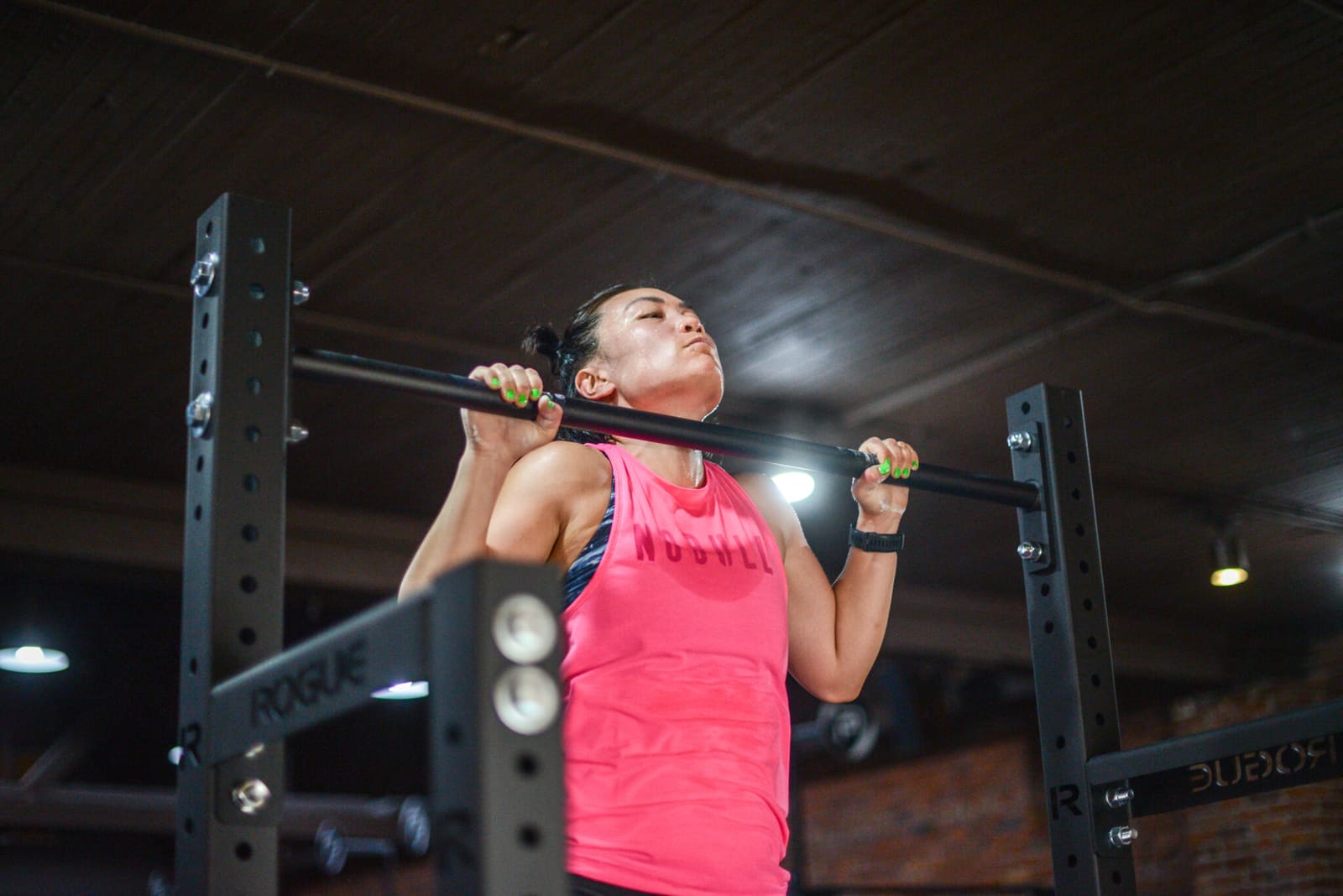
He pulled. Slowly. Lats engaged. Body controlled. Chin over the bar. Held it for half a second. Came down.
One strict pull-up. Twelve weeks from his first day at the gym.
I do not know what he was feeling in that moment but I know what every member feels when they hit their first pull-up. It is a small movement. It is a huge psychological shift. It is the moment where the body proves to the mind that the work is real. I have seen it with Emily on her own pull-up journey, and the look is always the same: half disbelief, half "okay, what is next."
He sat down. He looked at the bar. He said, quietly, "okay."
Then he got up and did another. Then a third.
Three strict pull-ups in week 12. Five strict pull-ups by week 14. Ten by month six.
His back pain has not returned in any meaningful way since week eight.
How we run this program at Persistence
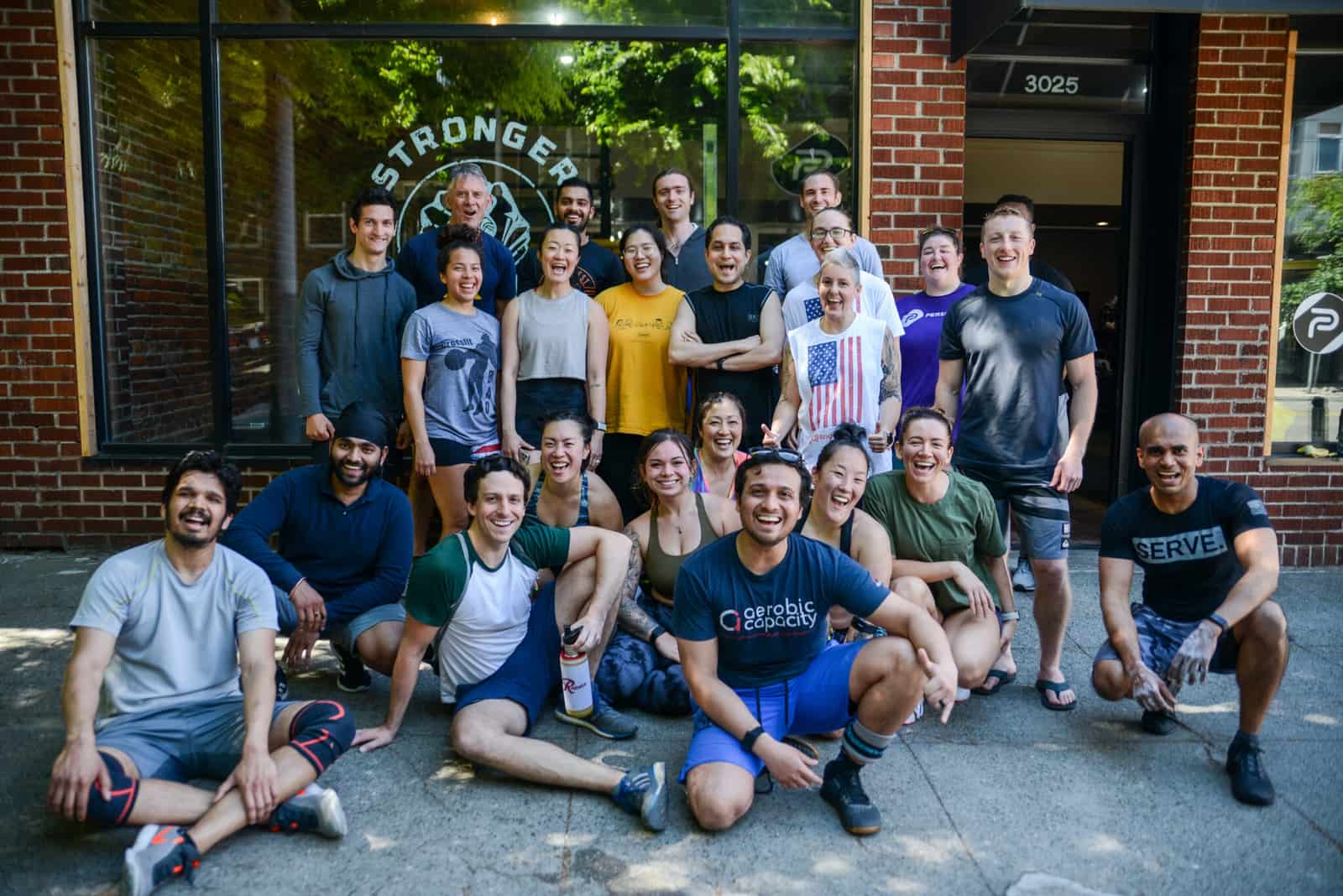
Eric's program is the version we run for most chronic-back-pain entries. The structure adapts to the member, but the architecture is consistent.
We start with intake. We do not skip it. The intake is what tells us where the limiting factors actually are. Without it, the programming is guessing.
We start with personal training. 8 to 12 weeks of 1-on-1 work is the right entry for chronic-pain members. The coach can adapt in real time, coordinate with a physical therapist if you have one, and build the program around your specific limitations. Our personal training page covers what to expect.
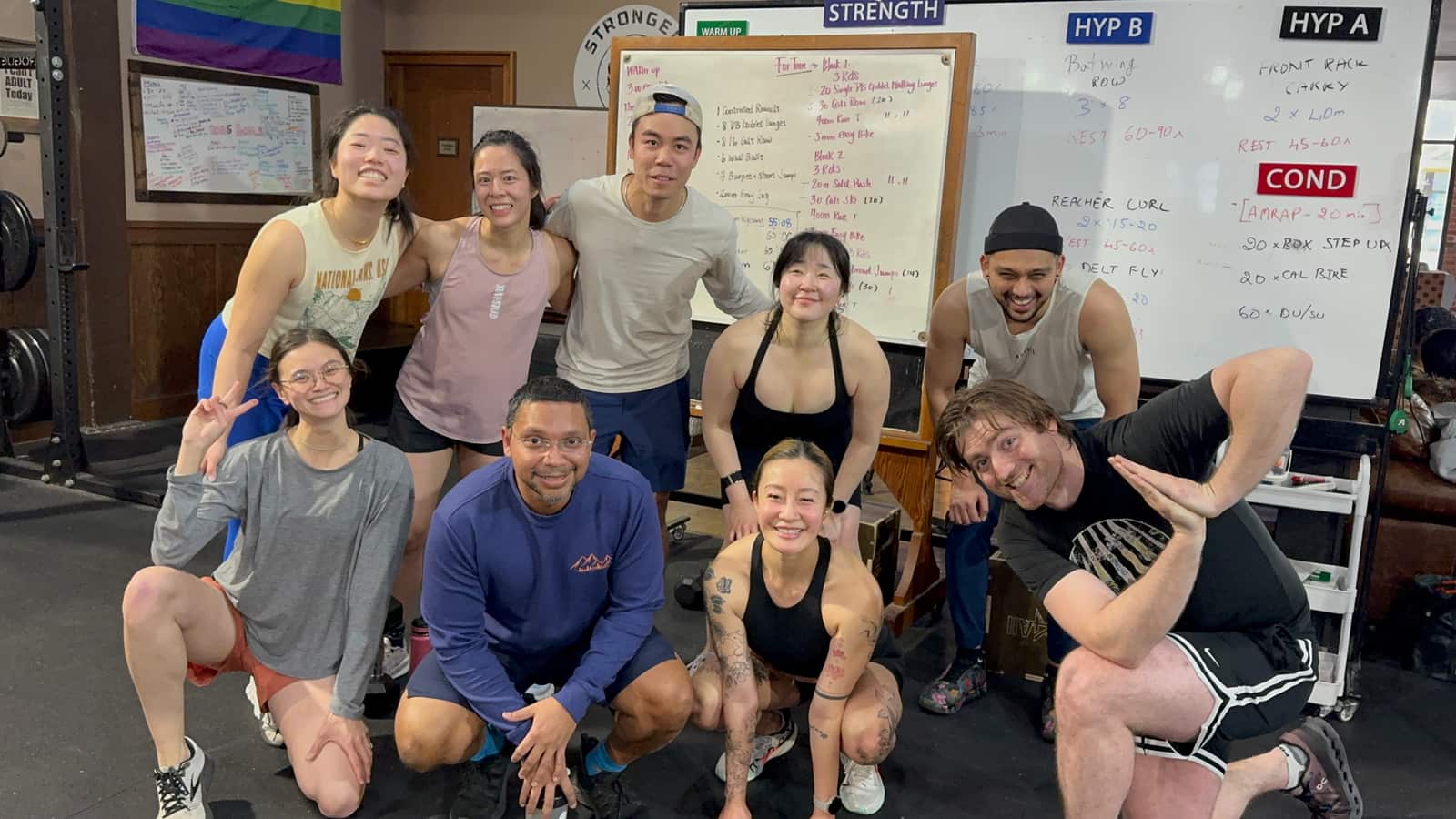
We transition to group classes once the foundation is built. Most members move to group classes after the initial 12-week block. Eric still does periodic PT sessions for specific skill blocks but his main training is now group classes, where the coach-to-athlete ratio sits around 1 to 12 so he still gets eyes on his pulling form every session.
For more on the team and the credentialing behind the coaching, see our coaches page. For the philosophy behind the gym, see our about page.
For other member transformation stories, our member transformations hub curates five case studies including Eric, Sofi's postpartum return, and three others. Each links to a longer post if you want the full story.
Frequently Asked Questions
Can the gym actually help with chronic lower back pain?
Yes, with the right coaching. Most chronic lower back pain in tech workers is the result of weak posterior chain, poor hip mobility, and asymmetric movement patterns from sitting. Coached strength work that targets these specific issues, run by a credentialed coach in coordination with your physical therapist, is one of the most effective long-term interventions. Eric's case is representative, not exceptional.
How long does it take to go from no pull-ups to a strict pull-up?
Most adults can build to a first strict pull-up in 8 to 16 weeks of structured training. Eric did it in 12. Required ingredients are scapular activation, hollow body strength, lat engagement under load, and progressive band-assisted work. Skipping any one of these stretches the timeline. Members who try to chase the pull-up directly without the prerequisites typically fail.
Should I start with personal training if I have chronic pain?
We recommend it. 8 to 12 weeks of 1-on-1 work lets the coach build a program around your specific pain pattern, modify in real time, and coordinate with your physical therapist if you have one. After the foundation is built, most members transition to group classes. Eric did 12 weeks of PT before joining group classes full-time, and that is the pattern we recommend most often for chronic-pain entries.
Will my back pain get worse if I lift weights?
Coached lifting reduces chronic back pain in the majority of members we see. Self-coached lifting can make it worse if technique is poor. The safety margin is the coach. Eric's intake showed multiple compensation patterns that would have caused injury if he had loaded the squat or deadlift without correction. The coaching is what makes lifting safe, not the absence of lifting.
Can I do this kind of program if I do not work at Amazon or a tech company?
Yes. The Amazon-engineer profile is shorthand for the modern desk worker. Most chronic lower back pain we see comes from prolonged sitting, regardless of industry. Healthcare workers, attorneys, professors, retail managers all show similar pain patterns from similar postural loads. The program is the same. The starting point is the same. The outcome is the same.
What if I do not get a pull-up in 12 weeks?
Some members take longer. Body weight, training history, prior injury, and consistency all affect the timeline. Members who do not pull at week 12 usually pull by week 16 to 20. The path does not change. We adjust the volume and progression and keep moving. Almost every member who stays consistent gets there within six months.
Try a free first class at Persistence Athletics
If you have been managing chronic back pain and looking for a coached entry point, this is the path. Your first class at Persistence Athletics is free, scaled to your starting point, and the coach knows about chronic pain progressions. Book your free class at 3025 1st Ave, Belltown, Seattle. We are 8 minutes from Amazon and walkable from anywhere downtown. Questions before you come in? Call or text us at (206) 593-4236 and we will tell you honestly whether this is the right starting point for your back.
Want to take this further?
Talk to a coach about community programming at Persistence Athletics.