
How Sofi Trained Through Postpartum Recovery
A new mom's return to training at 6 months postpartum. Pelvic floor, diastasis, gradual reloading. From Persistence Athletics in Belltown, Seattle.

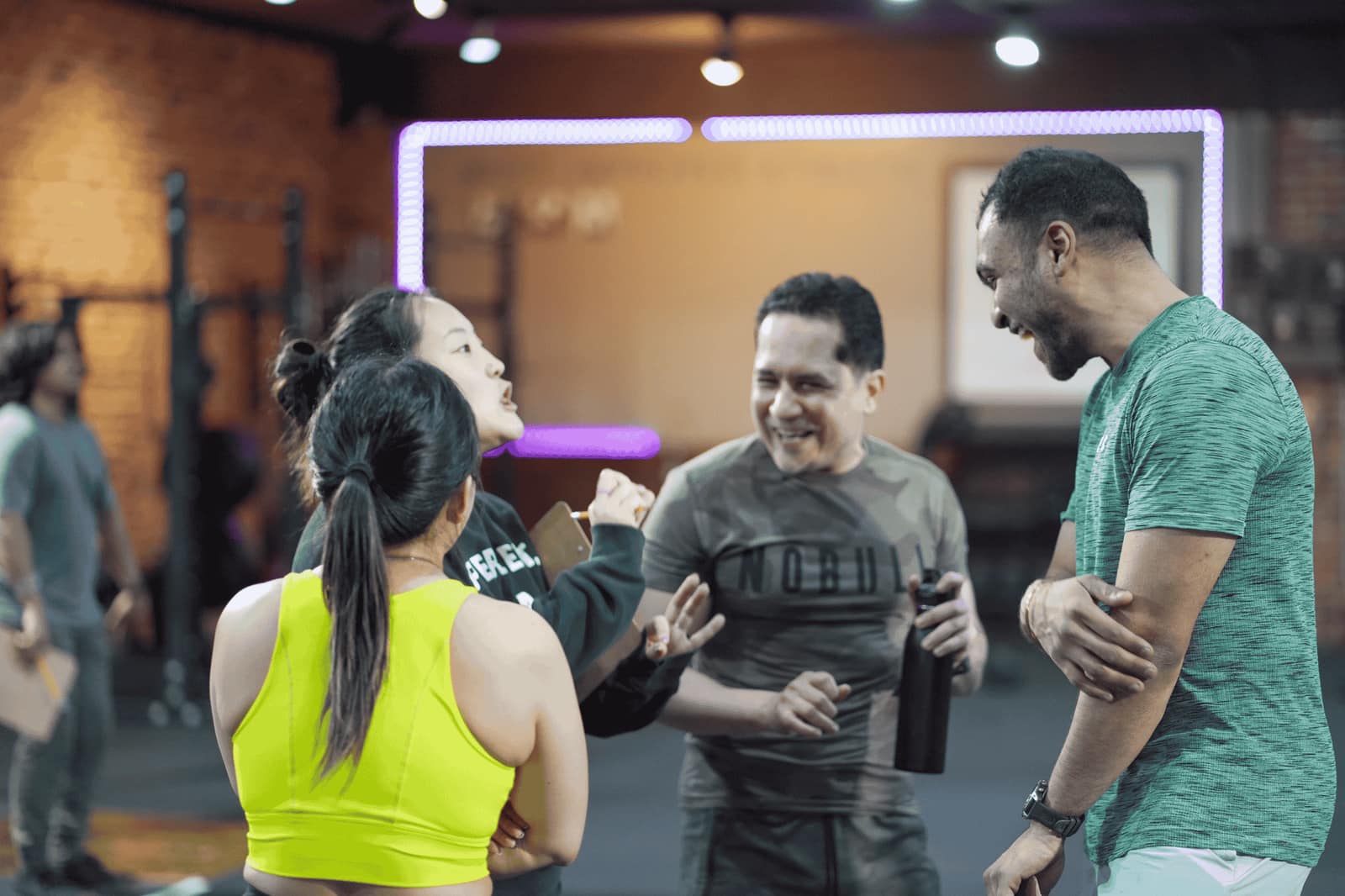
Six months after her baby was born, Sofi walked back into the gym.
She stood just inside the roll-up door at 3025 1st Ave, looking at the rig like she was not sure it would still hold her. Pregnancy and the postpartum months had scrambled her connection to her own body. She had been a runner before. She had been someone who lifted twice a week without thinking about it. Now sleep was broken, energy was on the floor, and she genuinely did not know what was safe to do anymore.
She was in her early thirties, a careful, analytical person who had read enough conflicting postpartum advice online to be frozen by it. One forum said never lift again. One influencer said she should be back to barbell snatches at eight weeks. She wanted to come back. She had no idea how.
So she booked 1-on-1 sessions with me. We sat on the benches by the front windows, the 1 Line bus hissing by on 1st Ave, and we just talked. Where she was. What she was feeling. What her body had actually been doing for the last fifteen months. Then we built a plan. Twelve weeks later she ran her first metcon since the pregnancy. Twelve months in, she was lifting at or above where she had been before. In her words, walking out one Tuesday night: "I feel like myself again."
This is Sofi's story. The postpartum considerations, the modified programming, the nutrition coordination, and the month-by-month milestones. I am Jacque Dewangan, CFL3 and Precision Nutrition Level 2. I coach almost every postpartum return at Persistence Athletics. Updated June 2026.
(Note: Sofi is a representative composite of the real postpartum members I have coached here. The name is softened for privacy. Every coaching detail and timeline is real, and no medical specifics belong to any one person.)
Table of Contents
- Why postpartum return is underserved at most gyms
- The intake: pelvic floor, diastasis, and energy
- Month 1: movement re-pattern
- Month 2: strength reintroduction
- Month 3: first metcon back
- What 12 months looked like
- How we run postpartum returns at Persistence
- Frequently Asked Questions
Why postpartum return is underserved at most gyms
Most gyms in Seattle do not have a real protocol for postpartum return. The default is some version of "ease back in" with no specifics. New mothers get handed the same workout as everyone else with a generic note to "listen to your body." That is not coaching. It is a liability disclaimer with a workout stapled to it.
Postpartum recovery has specific physiological considerations, and each one needs specific programming attention:
- Pelvic floor. Pregnancy and birth stretch and weaken the pelvic floor. Returning to high-impact loading before the floor has rebuilt strength drives incontinence and prolapse risk.
- Diastasis recti. Roughly two-thirds of pregnancies result in some degree of abdominal separation. Loading the trunk with diastasis present causes coning and can widen the gap.
- Sleep deprivation. Recovery capacity is badly compromised. Volume has to sit below pre-pregnancy norms.
- Hormonal changes. Relaxin stays elevated for months postpartum, especially during breastfeeding, which affects joint stability.
- Energy bottoming out. Most new mothers are running on a fraction of their normal tank. Programming has to respect that or it works against them.
A coach who does not understand these things will hurt postpartum members. A coach who does can guide a return that is safe, effective, and honest about where the body actually is. With our roughly 1-to-12 coach-to-athlete ratio in group classes, and 1-on-1 attention in PT, we have the eyes to catch the signals a new mom may not even know to flag.
The intake: pelvic floor, diastasis, and energy
Sofi's first session was an intake. Same structure as every personal training intake we run, with postpartum-specific additions.
We checked:
- Pelvic floor function. Self-reported (any leakage on a cough, sneeze, or jump?). She had mild stress incontinence on jumping.
- Diastasis. A two-finger gap above the belly button. Modest separation, completely common at 6 months postpartum.
- Hip mobility. Reduced from her pre-pregnancy range.
- Posterior chain. Weakened from months of carrying and breastfeeding posture.
- Sleep. 5 to 6 hours a night, frequently interrupted.
- Goals. Feel like an athlete again. Eventually run again. Not be in pain.
We agreed on a 12-week program in three phases. We agreed on no jumping for the first 8 weeks. We agreed to coordinate her nutrition through our nutrition coaching, which I run with my Precision Nutrition Level 2 background. And we agreed on twice-weekly PT sessions for the first 12 weeks.
Month 1: movement re-pattern
The first month was about reconnecting Sofi to her body. Not getting strong. Not chasing a workout. Reconnecting.
Weekly structure
- 2x per week 1-on-1 PT sessions (Tuesday, Thursday)
- No group classes yet
- Daily 5-minute pelvic floor and breathing work at home
What we worked on
- Diaphragmatic breathing (the foundation of pelvic floor function).
- Pelvic floor activation drills (breath-paced contractions, hip lifts with breath).
- Bodyweight squat re-pattern (to a box, focusing on knee tracking and hip mobility).
- Bodyweight hinge re-pattern (Romanian deadlift unloaded, then a light kettlebell).
- Dead bugs and bird dogs for safe core work that does not stress the diastasis.
- Walking. Just walking. 30 minutes a day, usually down to the waterfront and back.
By the end of month 1, the pelvic floor was responding. We had not retested the stress incontinence on jumping (we were not jumping yet), but at-rest function was clearly improving. The diastasis had narrowed to about 1.5 fingers.
She felt different. Not stronger yet. More aware of her body, more in the driver's seat.
Month 2: strength reintroduction
Month 2 added load. Carefully. Strategically. Always honoring the pelvic floor.
Weekly structure
- 2x per week PT sessions
- 1x optional group class (low-intensity day, modified)
- Daily 5-minute mobility and breathing work
What we worked on
- Goblet squats (light kettlebell, 4 sets of 8).
- Romanian deadlifts (light barbell, 4 sets of 8, technique first).
- Push-ups at an incline (4 sets of 8 to 12).
- Ring rows (4 sets of 10).
- Suitcase carries and front-rack carries (loaded carries are excellent for postpartum core integration).
- Side planks at modified angles (great for the obliques without stressing the diastasis).
By the end of month 2, Sofi was hinging under a loaded barbell with a clean brace and no coning, and squatting below parallel with good control. Her diastasis had closed to a 1-finger gap. The stress incontinence had resolved.
Sleep was still rough (the baby was 8 months old by this point), but the training was lifting her energy in a way that genuinely surprised her. She told me she had stopped dreading the stairs at her apartment.
Month 3: first metcon back
Month 3 was the bridge to group classes. We added conditioning. We tested jumping (cleared, no incontinence). We rebuilt the engine.
Weekly structure
- 2x per week PT sessions (still)
- 2x per week group classes (modified)
What we worked on
- Higher-rep strength work (3 sets of 12 to 15 at a moderate load).
- Aerobic conditioning (rowing intervals, assault bike, light treadmill running).
- Reintroduction of jumping (low box jumps to start, watching pelvic floor signals).
- First metcons (modified WODs, 8 to 12 minutes, scaled load).
Her first real metcon landed in week 11. A 12-minute AMRAP of light kettlebell swings, push-ups, and air squats, run in one of AJ's weeknight classes so she could feel what a group floor is like before committing to it. She finished. She was wrecked. She was grinning.
By the end of month 3, the major postpartum considerations were behind her. The pelvic floor was rebuilt. The diastasis was closed. The energy was returning. She was ready for sustained group class training.
If you are reading this while staring at the same wall of conflicting advice Sofi was, you do not have to figure it out alone. The simplest first step is to come in and talk it through with a coach in person. Your first class is free and we will scale everything to exactly where you are.
What 12 months looked like
Months 4 through 12 were a more typical training arc. Group classes 3 to 4 times a week. Continued PT once a week for the first six months, then dropping to as-needed.
Where she was at month 12:
- Squat. Back to her pre-pregnancy working strength, with a deeper, more stable position than before.
- Deadlift. Hinging at her pre-pregnancy level with a brace she trusts.
- Strict pull-ups. More strict pull-ups than she had pre-pregnancy. This was the one that made her tear up a little.
- Run. Back to running 5K at her pre-pregnancy pace.
- Body composition. Moving in the direction she wanted.
- Energy and mood. "Like myself again."
The nutrition coordination through this period mattered as much as the lifting. Postpartum and breastfeeding nutritional needs are not the same as pre-pregnancy, and they shift again at weaning. Running her nutrition through our coaching, with my Precision Nutrition Level 2 background, meant the fueling moved with her recovery instead of fighting it. Training plus nutrition together is what produced the 12-month outcome. Neither one alone would have.
How we run postpartum returns at Persistence
Sofi's program is the version we run for most postpartum returns. The architecture adapts to the individual member, but the structure is consistent.
We start with a thorough intake. Pelvic floor, diastasis, sleep, hormonal context, goals. We do not skip this. The intake tells us how aggressive the program can be.
We start with personal training. 8 to 12 weeks of 1-on-1 work is the right entry. A coach working one-on-one can adapt in real time and respect signals the member may not even know how to communicate. My coach page covers my background and approach, and AJ and the rest of the crew know the postpartum modifications, so the handoff to group classes is seamless.
We transition to group classes once the foundation is rebuilt. Most members move to fuller training around week 12. Some keep PT going periodically for specific skills.
We coordinate nutrition the whole way. Postpartum and breastfeeding needs are real and they change. Our nutrition coaching runs structured support for postpartum members through every phase.
Our about page covers the gym's philosophy. For other member transformation stories, our member transformations hub curates five longer-form arcs, including Eric's chronic back pain to strict pull-ups journey.
Frequently Asked Questions
When can I return to the gym after having a baby?
The standard medical clearance is 6 weeks postpartum (vaginal birth) or 8 to 12 weeks postpartum (C-section). That is clearance to start. Most postpartum members benefit from a structured return that begins with low-impact movement and pelvic floor work for the first 4 to 6 weeks before adding load. Sofi returned at 6 months postpartum because her circumstances delayed her start. Earlier returns are common and safe with the right coaching.
Is CrossFit safe postpartum?
Yes, with appropriate progression and a coach who understands postpartum considerations. The first 8 to 12 weeks back should avoid jumping, high-impact running, heavy bracing, and movements that strain the pelvic floor. Modified group class workouts or 1-on-1 sessions during this phase work well. After 12 weeks, most members can return to fuller intensity with continued coaching attention to pelvic floor signals.
What is diastasis recti and how do I know if I have it?
Diastasis recti is a separation of the abdominal muscles along the midline that occurs in roughly two-thirds of pregnancies. It can be checked at home: lie on your back, knees bent, feet flat. Lift your head slightly and feel along the midline above and below the belly button. A separation wider than 2 fingers (about 2 cm) is diastasis. Coached training can close the gap over 8 to 16 weeks of targeted work.
Can I do core work postpartum?
Yes, but the type of core work matters. Avoid traditional crunches, sit-ups, and front-loaded planks until diastasis (if present) has closed and pelvic floor function has returned. Safe early-phase core work includes diaphragmatic breathing, dead bugs, bird dogs, side planks at moderate angles, and pelvic tilts. Once cleared, normal core programming returns. We coach all of this in our postpartum sessions.
Should I work with a personal trainer postpartum or join group classes?
We recommend 1-on-1 personal training for the first 8 to 12 weeks postpartum. The volume, intensity, and movement selection need to be customized to your specific recovery state and any pelvic floor or diastasis considerations. After the foundation is built, group classes work well. Sofi did 12 weeks of PT before transitioning to group classes, which is our standard recommendation for postpartum returns.
How long does it take to get back to pre-pregnancy fitness?
Most postpartum members rebuild to their pre-pregnancy strength within 9 to 12 months of consistent training. Conditioning typically returns sooner (6 to 8 months). The faster timeline is for members who started training within the first 8 weeks postpartum. Members who delay returning (like Sofi at 6 months) often get to baseline at the 18-month mark from delivery, which is still well within a healthy window.
Try a free first class at Persistence Athletics
If you are postpartum and looking for a coached return that respects where your body actually is, this is the path. Your first class at Persistence Athletics is free and fully scaled, with the option of a low-key intro instead of getting thrown into a full WOD. Book your free class at 3025 1st Ave, Belltown, Seattle, or call us at (206) 593-4236. We will meet you where you are.
Want to take this further?
Talk to a coach about community programming at Persistence Athletics.