
CrossFit Cost in Seattle: What You're Actually Paying For
What CrossFit really costs in Seattle. Belltown, Cap Hill, Eastside compared. What is in the price, what cheap memberships skip. From a CFL3 coach.


CrossFit costs more than a Planet Fitness membership. Here is what you are actually buying.
The first question I get from prospective members at Persistence Athletics is almost always the same. "How much does it cost?" The second question, after they hear the number, is usually some version of "why?"
The honest answer is that CrossFit pricing in Seattle reflects a fundamentally different product than a big-box gym. You are not paying for equipment access. You are paying for coaching, programming, class caps, and a community that produces actual results. Once you decompose the price, the math makes sense.
This is the cost transparency article I should have written years ago. I am Ravi Dewangan, CFL3, MS in Strength and Conditioning, and CrossFit Seminar Staff. I have coached at Persistence Athletics in Belltown for over a decade and have watched the Seattle pricing landscape shift through three economic cycles. Updated June 2026 with current Seattle pricing.
Table of Contents
- What CrossFit costs across Seattle in 2026
- What is actually in the price (and what is not)
- What cheap memberships skip
- The real ROI math: per-session cost
- How we price at Persistence Athletics
- How to evaluate a CrossFit membership before signing
- Frequently Asked Questions
What CrossFit costs across Seattle in 2026
Pricing varies by neighborhood, coach quality, facility, and class cap. Here is the current Seattle landscape:
| Neighborhood | Unlimited monthly | Drop-in | 10-class punch | PT session |
|---|---|---|---|---|
| Belltown / SLU | $190 to $260 | $30 to $40 | $220 to $280 | $90 to $150 |
| Capitol Hill | $180 to $220 | $25 to $35 | $200 to $250 | $80 to $130 |
| Eastside (Bellevue / Redmond) | $170 to $230 | $25 to $35 | $190 to $250 | $80 to $120 |
| Ballard / Fremont | $175 to $215 | $25 to $35 | $190 to $240 | $75 to $120 |
| National average | $180 | $25 | $200 | $90 |
Belltown and SLU are at the top of the range because of three factors: rent (Belltown commercial rent is among the highest in Seattle), tech-worker demographic (boxes can support better coach pay through higher membership rates), and class cap discipline (good Belltown boxes cap classes at 12 to 16 athletes which costs more per session to deliver).
The Eastside is slightly cheaper because rent is lower and parking is included, which factors into facility costs. Cap Hill is cheaper because most spaces are smaller. Cheaper does not always mean lower quality, but it usually means a tradeoff somewhere.
As of mid-2026 the Belltown and SLU end of this range still sits at the top, driven by the same rent and class-cap-discipline factors below rather than by any single box raising prices.
If you are specifically comparing Belltown options, our CrossFit gym in Belltown page lays out exactly what our membership includes against this range.
What is actually in the price (and what is not)
The $220 a month membership at a Belltown CrossFit box pays for:
3 to 5 credentialed coaches per day. Not one. Multiple coaches across morning, lunch, and evening shifts. Most have CFL2 or CFL3 plus additional certifications. At our gym, our coach-to-athlete ratio runs roughly 1 to 12, which is the whole point of the price.
Programmed periodization. A head coach (or programming team) designs 12-week strength cycles, conditioning blocks, gymnastics progressions, and skill rotations. The week you walk in, you are entering an arc that started 8 weeks ago and has 4 weeks to run.
Capped class sizes. Good Belltown boxes cap at 12 to 16. Boxes that cap at 25+ are saving on coach pay and shipping the cost reduction to your form.
A structured intro process. 1 to 3 sessions of 1-on-1 or small-group intro before you join regular classes. This is non-negotiable at quality boxes.
Equipment maintenance and reset. Bars are loaded, plates are stacked, the rower has the right damper setting. Coaches reset the gym between every class. You do not wait for equipment.
Community programming. Quarterly events, member retention check-ins, partner workouts, holiday throwdowns, and a Saturday HYROX class. The community is engineered, not accidental.
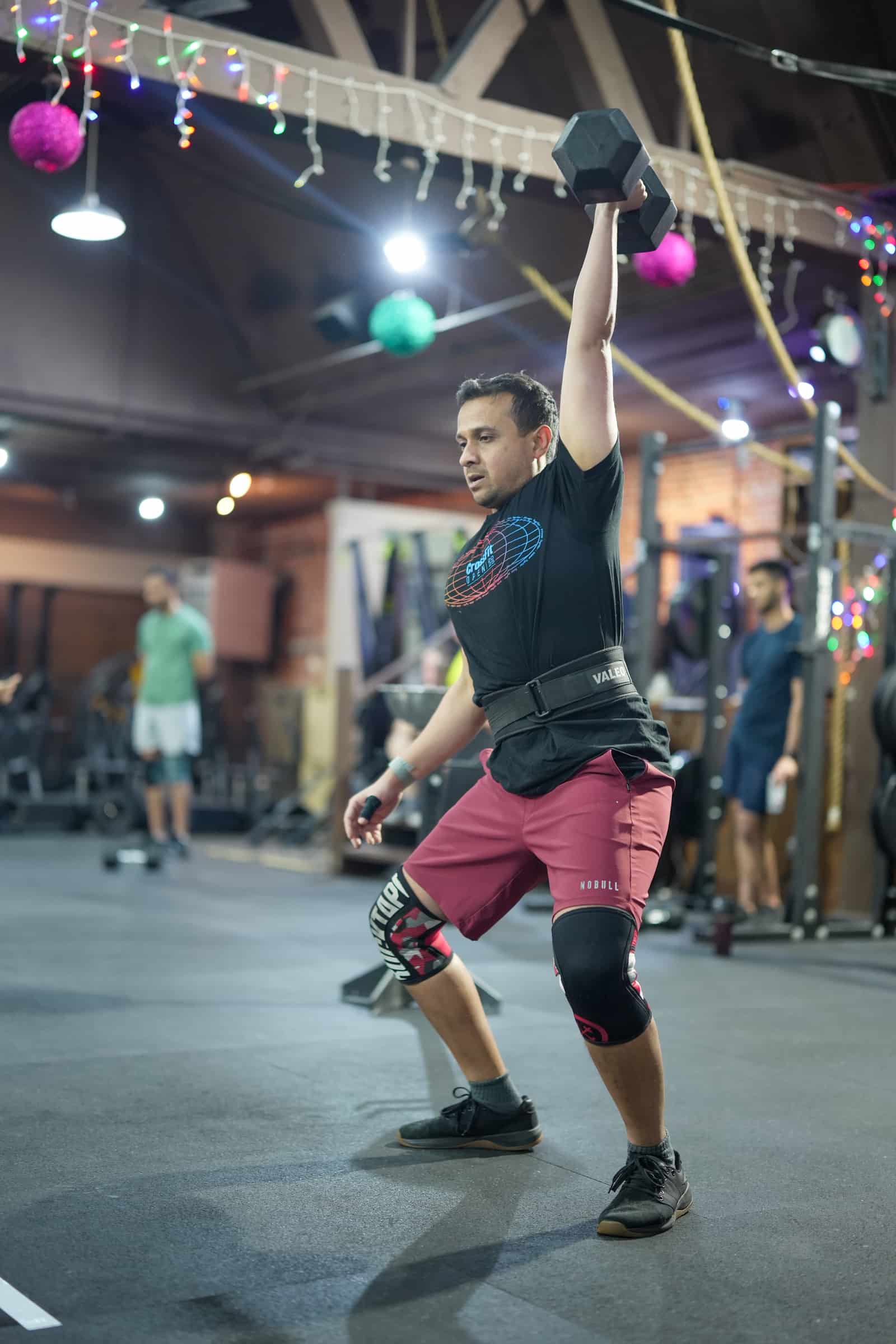
Here is what that coaching line item buys in practice. Katie's strict pull-up and ring work did not appear out of nowhere. It came from a coach standing next to her on the rig, week after week, walking the progression one honest rep at a time and refusing to let her skip steps. That is the difference between a credentialed coach watching the right thing and a video telling you to "just do pull-ups." You are paying for the person who notices the small fault before it becomes an injury.
What you are not paying for: a giant locker room with sauna and pool, branded smoothie bar, valet parking, towel service. The trade is intentional.
What cheap memberships skip
If you find a Seattle CrossFit membership at $130 to $160 a month, the math has to come from somewhere. The usual cuts:
Shorter or no intro process. New members get thrown into regular classes on day 1 with minimal scaling. Form is not built. Injuries follow.
Higher class caps. 20 to 30 athletes per coach. The coach physically cannot watch every rep. Form errors compound for months.
Lower coach credentials. CFL1 instead of CFL2/CFL3. CFL1 is the entry-level certification that requires a 2-day course. CFL3 requires multiple years of coaching plus a comprehensive practical exam. My wife and co-head coach Jacque holds a CFL3 plus a Precision Nutrition Level 2, which is why a member asking about eating around training gets a real answer instead of a shrug.
No programming structure. "Coach picks the workout that morning" instead of a periodized 12-week cycle. Beginners get random stimuli that do not progress logically.
Equipment quality and maintenance. Cheaper bars, fewer plates, longer waits, less reset between classes.
No scaled options. New members do the same workout as the regular athletes, often at weights they cannot handle safely.
The discount is real but the quality drop is bigger than the savings. The membership that is $60 a month cheaper but produces no results is not actually cheaper.
If you want to see what the paid-for version actually looks like, book a free class. Your first class with us is free and scaled to wherever you are. No sense paying for a comparison you can run yourself.
The real ROI math: per-session cost
The right way to compare CrossFit pricing is per-session-actually-attended, not per-month sticker price.
| Scenario | Monthly cost | Visits per month | Cost per session |
|---|---|---|---|
| $40 big-box gym, used twice a month | $40 | 2 | $20 |
| $40 big-box gym, used 12 times a month | $40 | 12 | $3.33 |
| $220 CrossFit membership, used 12 times | $220 | 12 | $18.33 |
| $220 CrossFit membership, used 16 times | $220 | 16 | $13.75 |
| $130 personal training session | $1,560 (12 sessions) | 12 | $130 |
| Mixed: $220 unlimited + 4 PT sessions/mo | $740 | 16 | $46 |
The $220 unlimited membership used 12 times equals $18 per session of coached, programmed training. That is one-fifth to one-eighth the per-session cost of personal training.
The big-box comparison only looks favorable in the row where you actually show up. Industry data shows the typical big-box member uses the gym 30 to 50 times per year, which means the real per-session cost is closer to $14 to $24, not $3.33. Once you account for actual usage, the gap between coached CrossFit and uncoached big-box is much narrower than the sticker price suggests.
This is where the cheapest membership and the best value diverge. Pouria has trained with us for more than six years and logged north of 1,100 classes. Spread his dues across the classes he has actually attended and his real cost per coached hour beats most people's big-box per-visit math, because he shows up. The membership is only expensive if it sits unused. The member who trains is the member who got the deal.
The mixed model row matters too. Most members who add 4 personal training sessions per month to their group membership see the fastest progress. The blended cost is high, but the per-session cost is still lower than pure 1-on-1 PT, and the rate of improvement is significantly higher.
How we price at Persistence Athletics
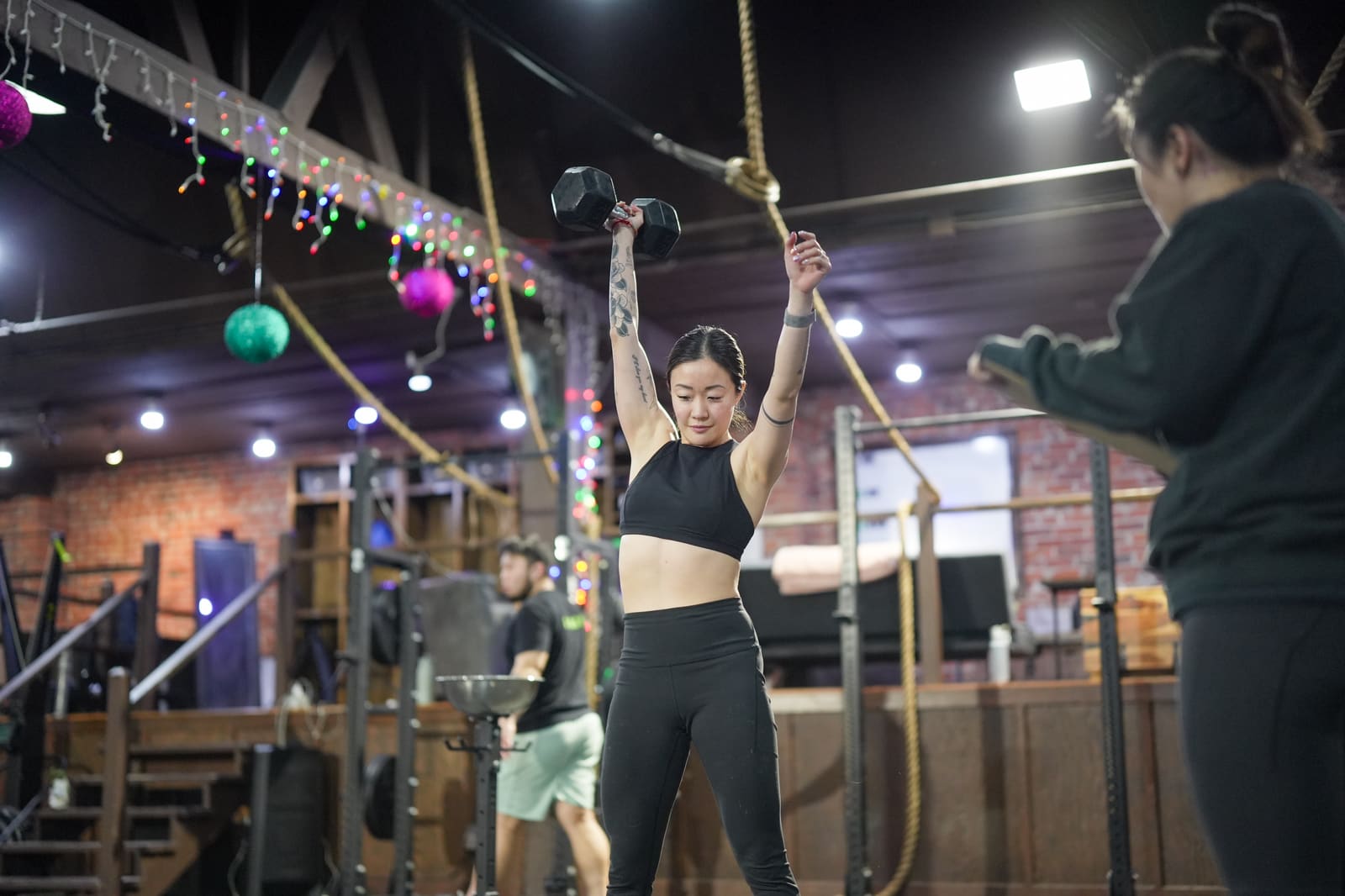
Our pricing at our Belltown CrossFit gym sits in the middle of the Belltown range. The structure is intentionally simple. No 12-month locked contracts, no surprise fees, no upsell theater. Weekly plans pause anytime.
For full transparency, our pricing page lists every option with the actual monthly numbers. The breakdown:
- Unlimited group classes. The most popular option. Includes CrossFit, the Saturday HYROX class (9:30 to 11:00 AM, no separate HYROX fee), and open gym. Best value for members training 3+ times per week.
- Limited (2x or 3x per week). For members with tighter schedules. Per-class cost is slightly higher than unlimited but works out cheaper if you train fewer days.
- Class packs. 5, 10, or 20 classes that never expire. Good for travelers and unpredictable schedules.
- Personal training packages. 1-on-1 with a credentialed coach. Best as a supplement to group training in the first 8 to 12 weeks or to address specific limitations.
- Drop-in. $35 for travelers, visiting members, or one-off classes. The drop-in also covers the Saturday HYROX class.
We do not run discount promotional pricing for the first month at half off. The reason is the math: members who buy at the full rate retain at higher rates than members who join during a promo. Pricing transparency starts at signup.
For a fuller picture of what each option includes, our group classes page covers the schedule and our personal training page covers the 1-on-1 option in depth. For the broader Seattle CrossFit pricing landscape, our Seattle CrossFit guide compares neighborhoods and helps you decide where to start.
How to evaluate a CrossFit membership before signing
The 6 questions to ask before signing any CrossFit membership in Seattle:
What credentials do the head coaches have? Look for CFL2 or CFL3 minimum on the head coach. CFL1 only on assistant coaches is acceptable. CFL1 only across the board is a red flag.
What is the class cap? Anything over 20 athletes per coach means individual attention is theoretical, not real. Ask what the coach-to-athlete ratio actually is.
What is the intro process? A real intro is 1 to 3 sessions covering foundational movements, scaling rules, and gym etiquette. "We have an orientation video" is not an intro.
What does the programming look like over 12 weeks? A coach who cannot answer this in 2 minutes is not running a programmed gym.
What is the cancellation policy? Month-to-month is ideal. 6-month commitments at a discount are acceptable. 12-month locked contracts you cannot cancel are a hard pass.
Can I see the cost-per-session math at my actual expected usage? A gym that walks you through this honestly is a gym that respects its members.
A membership that passes all 6 of these is worth its sticker price. A membership that fails 2 or more is overpriced regardless of how cheap the monthly looks on paper.

Frequently Asked Questions
How much does CrossFit cost in Seattle in 2026?
Range is $190 to $260 per month for unlimited group classes at Belltown and SLU boxes, $180 to $220 in Capitol Hill, and $170 to $230 on the Eastside. National average is around $180 per month. Drop-in rates run $25 to $40. The price gap between cities reflects coach quality, class caps, and intro process more than facility size.
Why does CrossFit cost more than a regular gym?
You are not paying for equipment access. You are paying for 3 to 5 credentialed coaches per shift, programmed periodization, capped class sizes, a structured intro process, and a community of members who actually show up. The cost-per-session-actually-attended at a coached gym is similar to or lower than a big-box gym once you factor in real attendance rates.
Is there a cheaper way to do CrossFit?
Cheaper memberships exist but typically skip what makes CrossFit work. The cheap version usually means: shorter or no intro process, higher class caps (20+ athletes per coach), CFL1 instead of CFL3 coaches, no programming structure, no scaled options. The discount is real but the quality drop is bigger than the savings.
What is the cheapest CrossFit option in Belltown?
Punch cards (10 classes for $200 to $280) work out to $20 to $28 per class which is cheaper per visit if you train under 8 times a month. Above 8 visits per month, unlimited memberships are cheaper. Most boxes also offer 6-month commitments at 10 to 15 percent off. At Persistence the most cost-effective option for most members is the unlimited monthly plan.
Is CrossFit cheaper than personal training in Seattle?
Significantly cheaper per session. Personal training in Seattle runs $80 to $150 per hour. A $220 unlimited CrossFit membership used 12 times per month equals $18 per session of coached training. Group CrossFit gives you most of what 1-on-1 PT gives, at one-fifth to one-eighth the per-session cost. PT is best as a supplement, not a replacement.
Are CrossFit memberships negotiable in Seattle?
Most boxes have set rates but offer discounts for longer commitments (6 or 12 months), military, first responders, students, and family members. Cash discounts and pre-pay options sometimes save 5 to 10 percent. Avoid boxes that require 12-month locked contracts you cannot cancel. Month-to-month flexibility is worth a small premium.
Try a free first class at Persistence Athletics
The best way to evaluate a CrossFit membership is to take a class. Your first class at Persistence Athletics in Belltown is free and scaled, no commitment, no pressure. Book your free class at 3025 1st Ave, Belltown, Seattle, WA 98121. About 8 minutes on foot from Amazon, walkable from any apartment in Belltown, SLU, or downtown. Questions first? Call us at (206) 593-4236.
Want to take this further?
Talk to a coach about crossfit programming at Persistence Athletics.