
What to Expect at Your First CrossFit Class in Seattle
Minute-by-minute walkthrough of your first CrossFit class in Seattle. What to wear, bring, and expect. From a Belltown CFL3 head coach.

You signed up for your first class. Now what?
If your first CrossFit class is on the calendar this week, you probably have a list of questions you are too embarrassed to text the gym. What do I wear? What if I cannot do the workout? What if I am the only beginner? What happens if I have to stop in the middle?
I get this email or text most weeks. The questions are always the same, and the answers are simpler than you think.
This is the article version of the conversation I have at the front desk before every new member's first class at Persistence Athletics in Belltown. I am Jacque Dewangan, CFL3 and Precision Nutrition Level 2. I have walked hundreds of first-timers through this exact moment and the pattern is consistent: 95 percent of the anxiety comes from not knowing what is going to happen. Once you know, the actual class is the easy part. Updated June 2026.
Table of Contents
- What to wear and bring (and what to leave at home)
- Minute by minute: a real first class
- The most common first-class mistakes
- How we run first classes at Persistence Athletics
- Day-of checklist for your first class
- Frequently Asked Questions
What to wear and bring (and what to leave at home)
The shoe question is the only wardrobe choice that matters on day one.
Wear:
- Flat-soled training shoes (Nike Metcon, Reebok Nano, NoBull, or any cross-trainer with a hard rubber sole)
- Athletic shorts or leggings, and a t-shirt or tank you can move in
- Hair tied back if it is long
- Deodorant. Sounds obvious. Coaches notice.
Skip:
- Running shoes for the lifts. The cushioned heel compresses under load and wobbles your squat. If running shoes are all you have, bring them and we will scale around them for one class.
- Heavy makeup, jewelry, watches that do not lock down. They will fly across the gym.
- A weightlifting belt. You do not need one for week one and most coaches will tell you to ditch it for the first month so you learn to brace without it.
Bring:
- Water bottle (24 oz or bigger)
- Small towel
- Curiosity, not a max-effort attitude
That is it. We provide all the equipment: barbells, dumbbells, plates, kettlebells, rowers, jump ropes. The gym is set up for you.
Minute by minute: a real first class
Here is exactly what happens during a first class at Persistence Athletics.
Minutes -15 to 0: Arrival
You walk in 15 minutes early. We greet you at the front, give you a quick tour, point out the locker room, and walk you to where class meets. You meet the coach. Depending on the day it might be me, Ravi, AJ, or one of the rest of the crew. The coach already knows it is your first class, because we flag it on the roster before you arrive.
Minutes 0 to 10: Warm-up
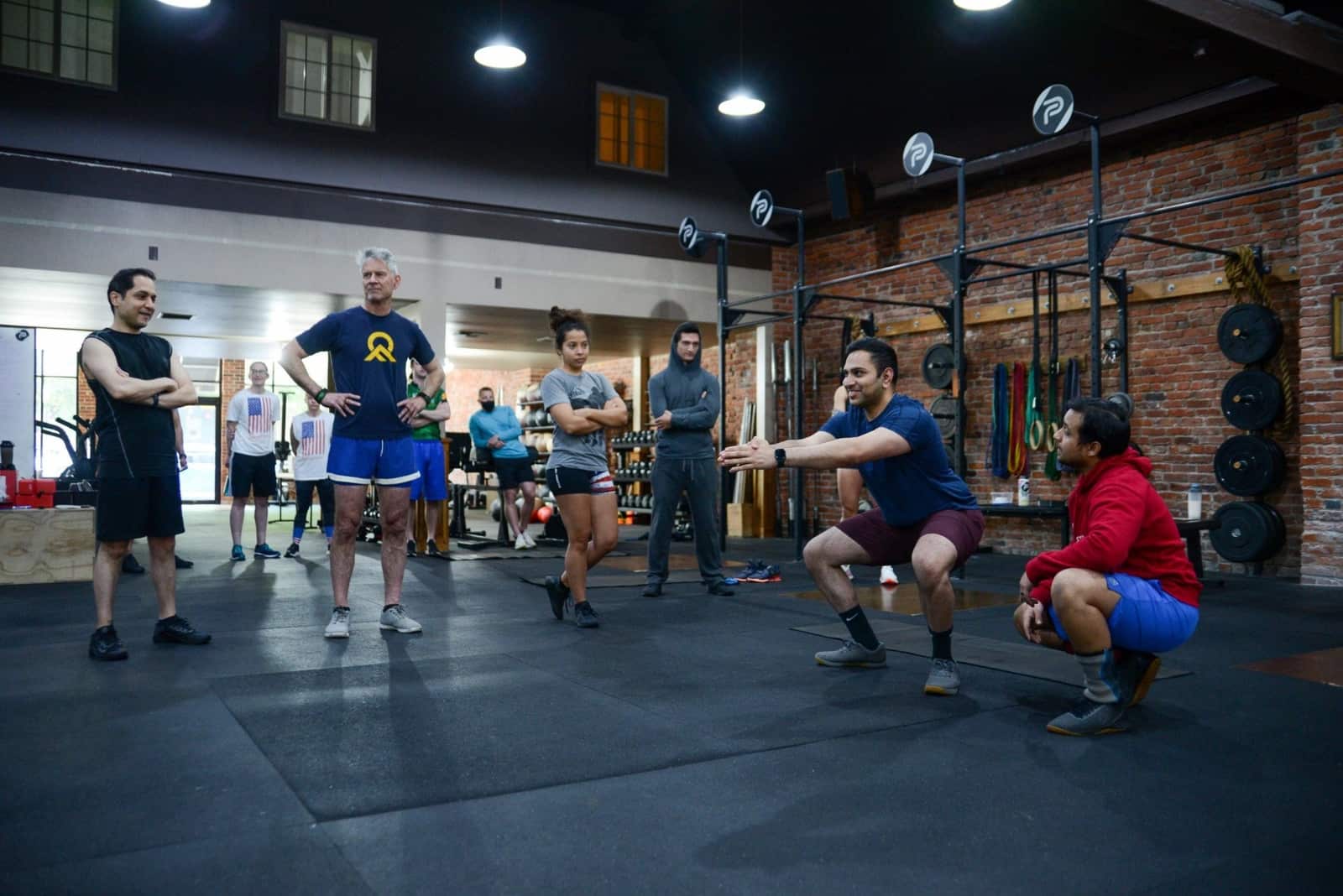
Coach-led, full class. Squats, lunges, hinge patterns, light cardio, mobility. Everyone in the room is doing the same warm-up, including the advanced lifters who are about to load a heavy bar. The warm-up is not a test. It is just blood flow plus pattern primer.
Minutes 10 to 30: Strength block
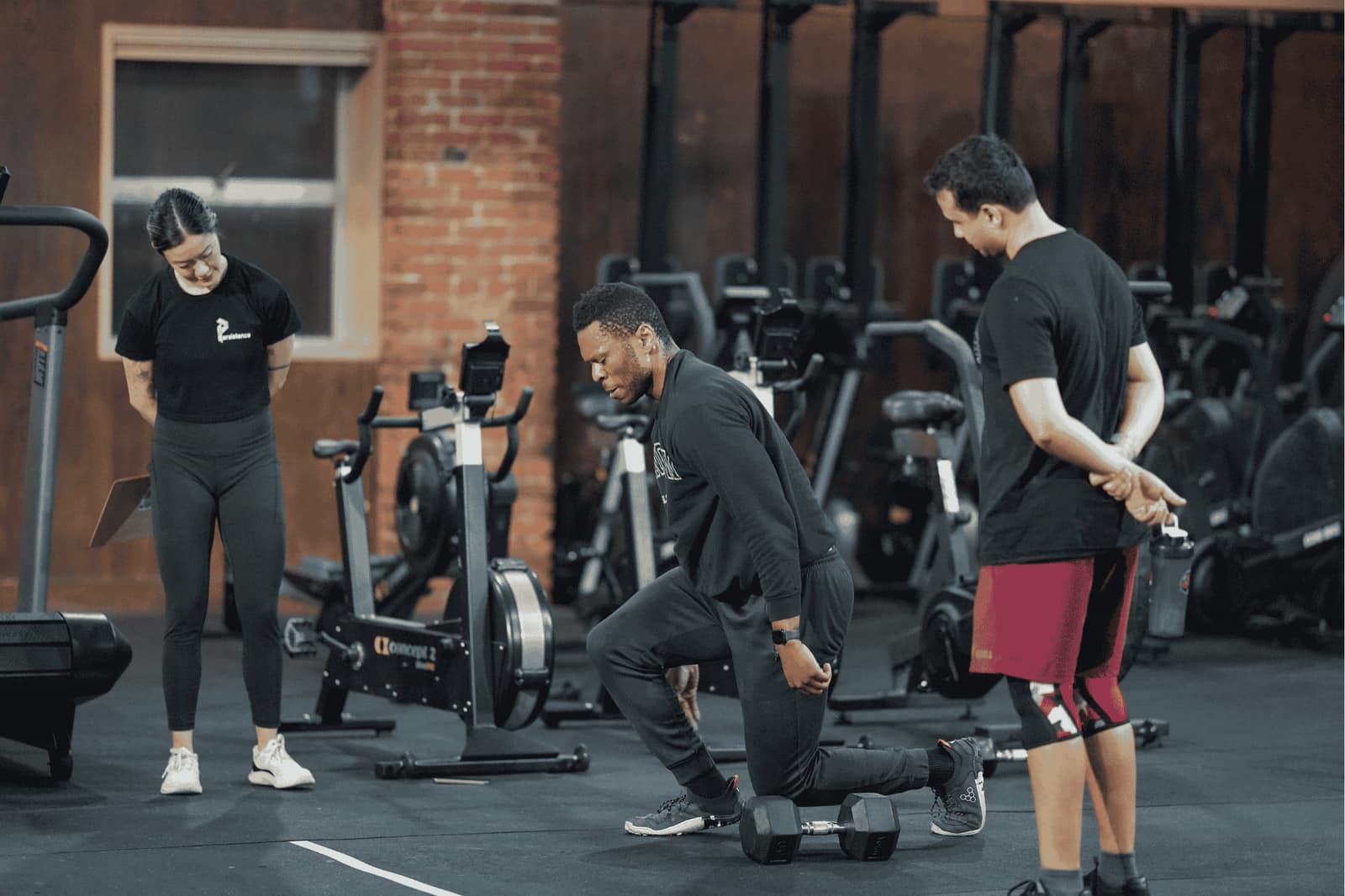
The coach demos a lift (back squat, deadlift, press, or whatever the day's focus is) with light weight. You start very light, often just an empty bar or a PVC pipe. The coach walks the room and cues every athlete. With our roughly 1-to-12 coach-to-athlete ratio, there is enough coverage that someone is watching your hips and your bar path, not just barking reps from across the room. The point of class one is to learn the pattern, not to lift heavy.
Minutes 30 to 50: WOD (workout of the day)
The conditioning portion. The coach has already scaled the workout for you in advance. You move through it at your pace, using a weight and rep count built for day one. The class around you is doing their own scaled versions. You take rest as needed. You finish, sweaty and tired, but standing.
Minutes 50 to 55: Cool-down and debrief
A short stretch, then 3 to 5 minutes at the front desk with the coach. They ask how it felt, what was confusing, what you want to work on next. You walk out with a clear next step.
That is the whole hour. No surprise tests, no shaming, no comparison.
One thing I want you to hear before you walk in: the people who look intimidating in that room started exactly where you are. Devang is a software engineer who came in as a near-total beginner and built a genuine strength base over 700-plus classes. Tom is 66 and trains alongside everyone else, scaling what he needs to and still deadlifting. The room you are nervous about is full of people who were nervous on their day one too.
The most common first-class mistakes
After hundreds of first classes, the same three mistakes show up over and over:
Going too heavy. First-timers want to prove something. The coach picks a lighter weight than your ego wants. Trust the coach. Class five is when you push. Class one is when you learn.
Pushing through pain instead of stopping. Discomfort is normal. Sharp joint pain is not. If something hurts, tell the coach mid-rep. We will adjust on the spot. Here is a real example of why that matters: Eric came to us with chronic back pain and a list of movements he assumed were off the table for life. Because he told his coach exactly what hurt and when, we scaled and rebuilt instead of pushing through, and he eventually earned strict pull-ups. That arc starts with one honest sentence on day one, not with gritting your teeth.
Apologizing for being a beginner. This one is the hardest to break. Beginners apologize when they cannot do a movement, when they need a scaled version, when they finish last. None of that is necessary. Every veteran in the room was you on day one. The culture rewards showing up, not lifting heavy.
If you only remember one thing from this article, make it this: your first class is free and already scaled to wherever you are starting. You can book it here and stop carrying the question around in your head.
How we run first classes at Persistence Athletics
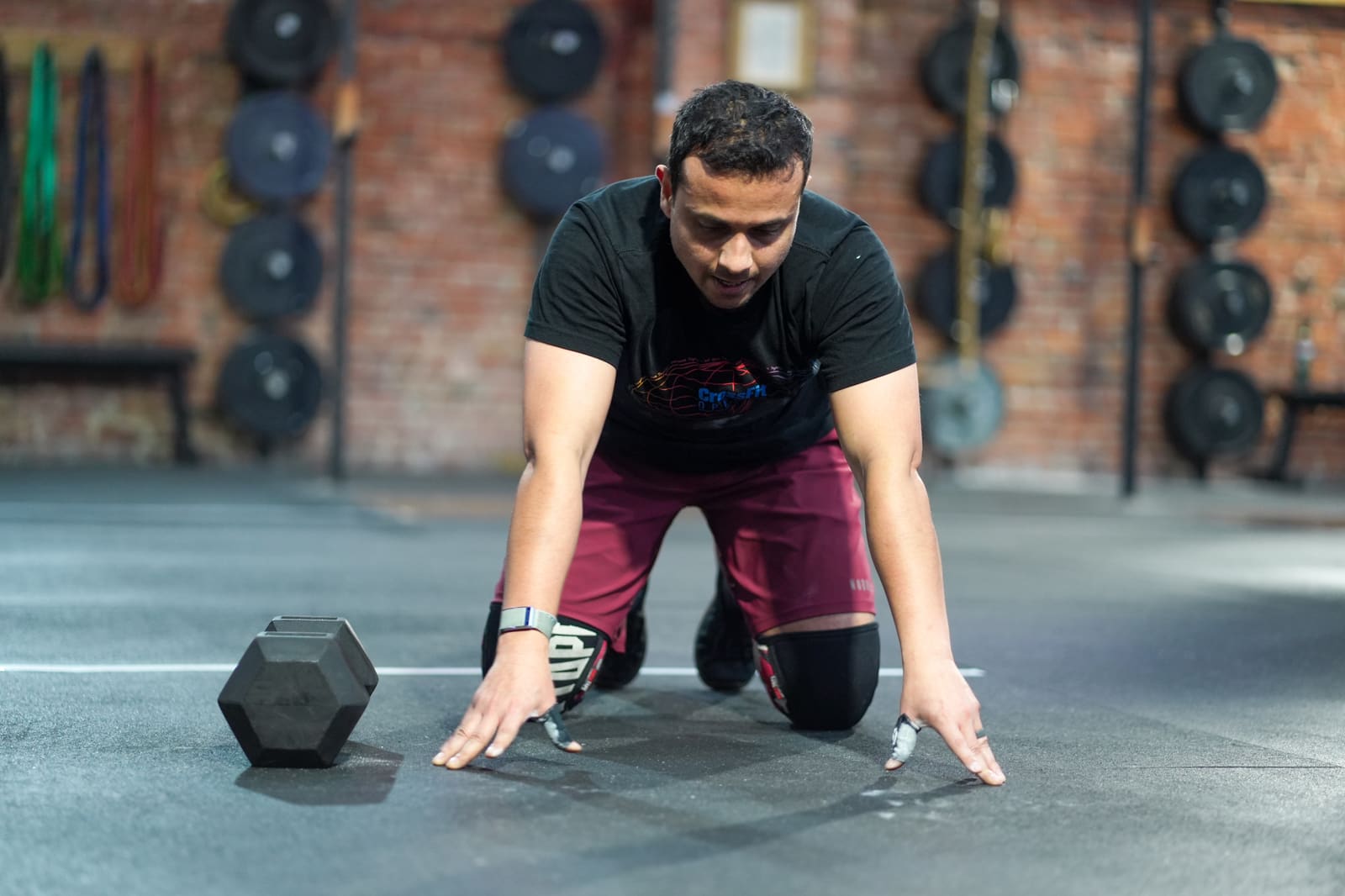
Every first class at Persistence Athletics gets the same structure regardless of the coach:
- A pre-class call or text to confirm time and answer questions.
- 15-minute pre-class arrival window.
- Gym tour and meet-the-coach intro.
- Scaled WOD ready before you arrive.
- A coach watching every rep of the strength block and the WOD.
- A 5-minute post-class debrief.
This is built across hundreds of first classes, refined every quarter. The goal is that no first-timer ever walks in cold and feels lost. Our coaches page lists every coach with their credentials so you know exactly who is running your class. For the broader picture of how the gym runs day-to-day, our group classes page covers the weekly schedule, including the Saturday 9:30 to 11:00 AM HYROX class that comes included in every membership.
For switchers from other gyms or boxes, our Belltown CrossFit page goes into what specifically makes Persistence different from other CrossFit boxes in Belltown and SLU. If you are still in the research phase, our Seattle CrossFit guide covers the wider Seattle landscape and helps you compare options.
Day-of checklist for your first class
The morning of your first class:
Eat something light 60 to 90 minutes before class. A banana, oatmeal, or toast with peanut butter works. Skip the heavy meal. Skip the energy drink.
Hydrate. Drink water steadily through the morning. Show up with your water bottle full.
Arrive 15 minutes early. Not 5. Not 30. Fifteen. We need the buffer to give you the proper intro.
Wear the right shoes. Flat-soled training shoes. We covered this above. It is the one wardrobe choice that matters.
Tell the coach if anything hurts before class starts. Knee history, back history, recent surgery, current soreness. We need to know so we can scale appropriately. Nothing disqualifies you from class. Everything informs the scaling.
Set the right expectation. Your job is to show up and follow the coach's cues. That is the whole job. The result is not how heavy you lifted, it is that you walked in scared and walked out having done it.
If you can hit all six of those, your first class will be the second-easiest class you ever take. The first easiest is class two, after you already know what to expect. Members tell me class three is when it clicks and class ten is when they realize they look forward to it.
Frequently Asked Questions
What should I wear to my first CrossFit class?
Athletic clothes you can squat and lift in. The most important piece is your shoes. Wear flat-soled training shoes like Nike Metcons, Reebok Nanos, or NoBull. Skip running shoes for the lifts because the cushioned heel wobbles under load. If you only own runners, bring them anyway and we will help you scale around them for class one.
What should I bring to my first class?
A water bottle, a small towel, and athletic clothes. Skip everything else. We provide all equipment: barbells, dumbbells, plates, kettlebells, rowers, jump ropes. Lifting belts, knee sleeves, and grips are optional and you do not need any of them on day one. Show up 15 minutes early so we can give you a quick tour and meet you before class starts.
What if I cannot do a pull-up or push-up?
Almost no first-day member can. Every movement scales. Pull-ups become ring rows. Push-ups go to your knees or to a box. The coach has already prepared a scaled version of the workout for you before you arrive. The day-one goal is to learn the movement pattern at a load you can handle, not to test your max. Showing up is the win.
How hard will the workout be?
It will challenge you, but it will not break you. Your coach scales the weight and reps so the workout takes you 10 to 18 minutes and leaves you tired but able to walk out under your own power. Coming in with a 'I will go all out' attitude is the wrong approach for class one. Save the max effort for class five or ten.
Will I be sore the next day?
Probably yes, especially in your legs and core. Soreness peaks 24 to 48 hours after a new training stimulus. Drink water, eat protein, walk around, and the soreness drops sharply by day 3. Most members report the first-class soreness is the worst soreness they get, because every class after that has a baseline to build on.
What happens after the first class?
We talk at the front desk for 5 minutes. Coach asks how it felt, what was confusing, what you want to work on. We help you pick the right next step: another free intro session, group class membership, or personal training if anxiety or injury history makes 1-on-1 the better start. No pressure, no contracts, no upsell.
Try a free first class at Persistence Athletics
If you have been thinking about your first class for weeks, this is your sign. Your first class at Persistence Athletics is free, scaled to your starting point, and the coach already knows it is your first day. Trial-eligible slots are easy to grab: Saturday 8:00 AM or weekday evenings at 6:30 PM (Fridays at 6:00 PM). Book your free class at 3025 1st Ave, Belltown, Seattle, WA 98121. About 8 minutes on foot from the Amazon Spheres, walkable from any apartment in Belltown or SLU. Questions first? Call or text us at (206) 593-4236.
Want to take this further?
Talk to a coach about crossfit programming at Persistence Athletics.