
Hero WODs Explained: Murph, Cindy, and the Stories Behind Them
What CrossFit Hero WODs are, why we run them, and the stories behind Murph, DT, Kalsu, Daniel. From a CFL3 coach in Belltown who has programmed Murph since 2014.

Hero WODs are how CrossFit honors its fallen
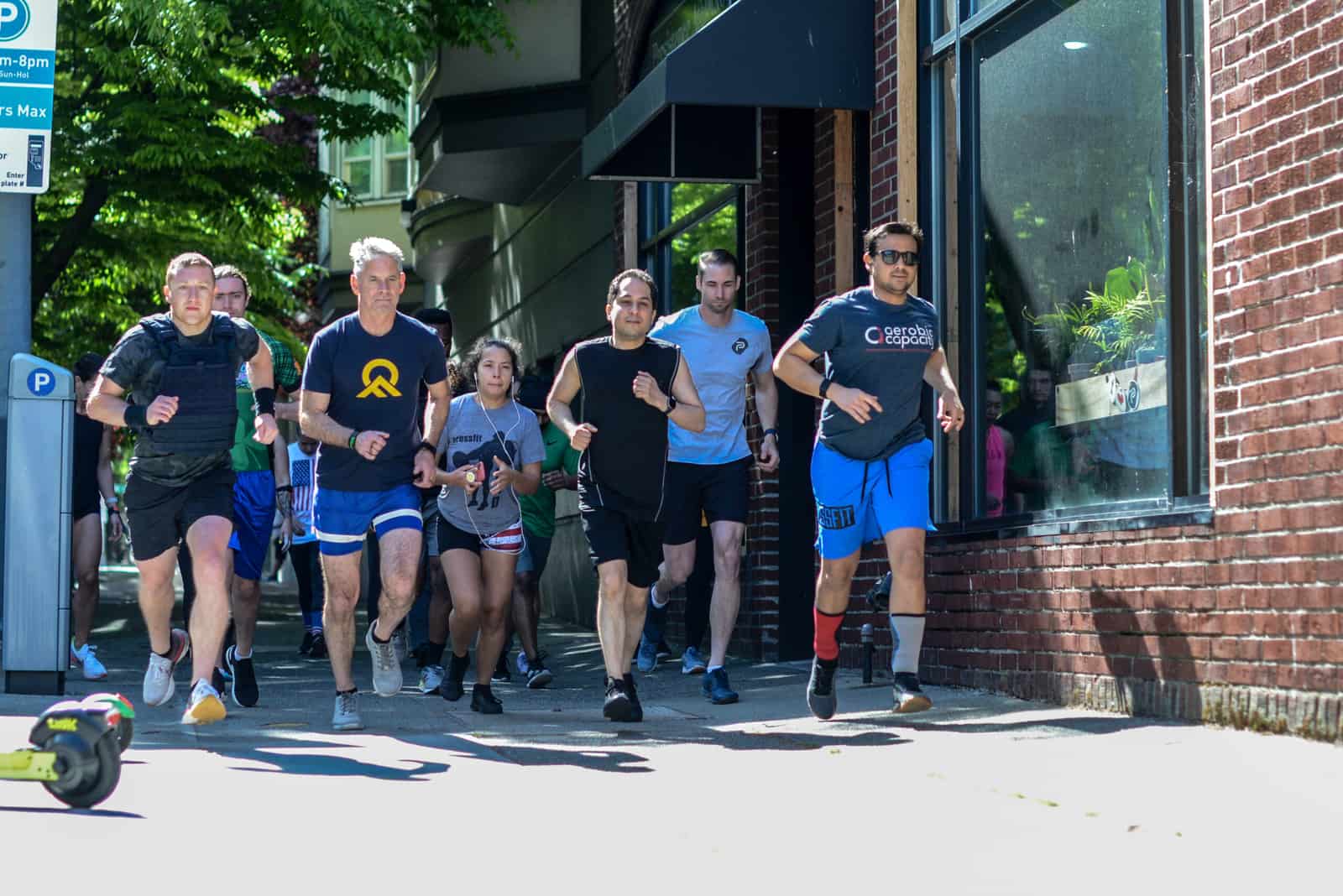
Walk into our gym on Memorial Day and you will see something unusual. The whiteboard does not have a normal workout. It has a name. Murph. The athletes warming up are quiet. The room is full from early morning. Most of the people in here have done this workout before, and they know what is coming. Pouria, who has trained with us for six-plus years and somewhere north of 1,100 classes, has done it every year. He still gets quiet at the start line.
Hero WODs are the most distinct programming tradition in CrossFit. They are not benchmark tests. They are not capacity builders. They are tributes, named after fallen service members, first responders, and law enforcement officers, designed by their friends and units, and run at gyms around the world to honor what those people gave.
I am Ravi Dewangan, CFL3, MS in Strength and Conditioning, and CrossFit Seminar Staff. I have programmed and coached Hero WODs at Persistence Athletics in Belltown since 2014. This article covers what Hero WODs are, the stories behind the most well-known ones, and why CrossFit gyms run them. Updated June 2026.
Table of Contents
- What is a Hero WOD and where they came from
- Murph: Lt. Michael Murphy and the workout that started it all
- DT, Kalsu, and Daniel: the other named tributes
- Where Cindy and Fran fit in (and why they are not Hero WODs)
- How we run Hero WODs at Persistence Athletics
- Frequently Asked Questions
What is a Hero WOD and where they came from
A Hero WOD is a CrossFit workout named in honor of a fallen military service member, first responder, or law enforcement officer who died in the line of duty. The category started in 2005 when Lt. Michael Murphy, a Navy SEAL and CrossFit athlete, was killed in Afghanistan during Operation Red Wings.
Murphy had been doing a workout he called "Body Armor" before deployment. CrossFit founder Greg Glassman renamed the workout "Murph" after his death and published it as the first Hero WOD on August 18, 2005. The structure: 1 mile run, 100 pull-ups, 200 push-ups, 300 squats, 1 mile run, in a 20 lb weighted vest. The volume was specifically calibrated to be brutal, because the workout was meant to honor the brutality of what Murphy and his team faced.
Within a few years, other Hero WODs followed. DT honored Major Andrew Dunwoody. Kalsu honored Lt. Bob Kalsu, killed in Vietnam. Daniel honored Daniel Crabtree. Each was designed by close friends or members of the fallen's unit, often using elements that had personal significance (Murphy's prep workout, the duration of a specific mission, a number significant to the unit).
The category grew from one workout to over 100 named Hero WODs by the mid-2010s. Each one carries a story. The stories are the point. The workouts are the medium.
Why grief became programming
The Hero WOD tradition is unusual because it converts grief into a physical practice. The friends and units of the fallen design a workout that the rest of the CrossFit community then performs, year after year, often on the date the person died.
The result is that fallen service members who would otherwise be remembered only by their families and units are remembered by hundreds of thousands of CrossFit athletes around the world. A new member at a gym in Belltown does Murph on Memorial Day and learns the name Lt. Michael Murphy. That is the function. The workout is the vehicle.
Murph: Lt. Michael Murphy and the workout that started it all
Lt. Michael Murphy was 29 years old when he was killed in Afghanistan on June 28, 2005. He was leading a four-man SEAL reconnaissance team during Operation Red Wings when they were ambushed by a much larger force. To call for help, Murphy moved into open terrain to get a satellite phone signal, fully exposing himself to enemy fire. He made the call, was hit multiple times during it, finished the call, and returned to his team's position. He died of his wounds. He was awarded the Medal of Honor posthumously.
Three of the four SEALs on that mission died. The fourth, Marcus Luttrell, survived and wrote about the operation in "Lone Survivor."
The workout Murphy was doing before deployment, "Body Armor," was a high-volume bodyweight workout. Glassman renamed it Murph and published it in 2005. The prescribed structure:
- 1 mile run
- 100 pull-ups
- 200 push-ups
- 300 squats
- 1 mile run
- All wearing a 20 lb weighted vest
A prescribed Murph takes most CrossFit athletes 45 to 75 minutes. Elite athletes finish in the low 30 minute range. Beginners are scaled (no vest, partitioned reps, banded pull-ups) and finish in the same window.
The Memorial Day Murph tradition started informally around 2009 to 2010 at gyms that had close ties to the military community. By 2014 it was at most CrossFit gyms in the country. By 2020 it was at thousands of gyms worldwide, with Murph being the most-performed Hero WOD on the most-performed day of the CrossFit calendar.
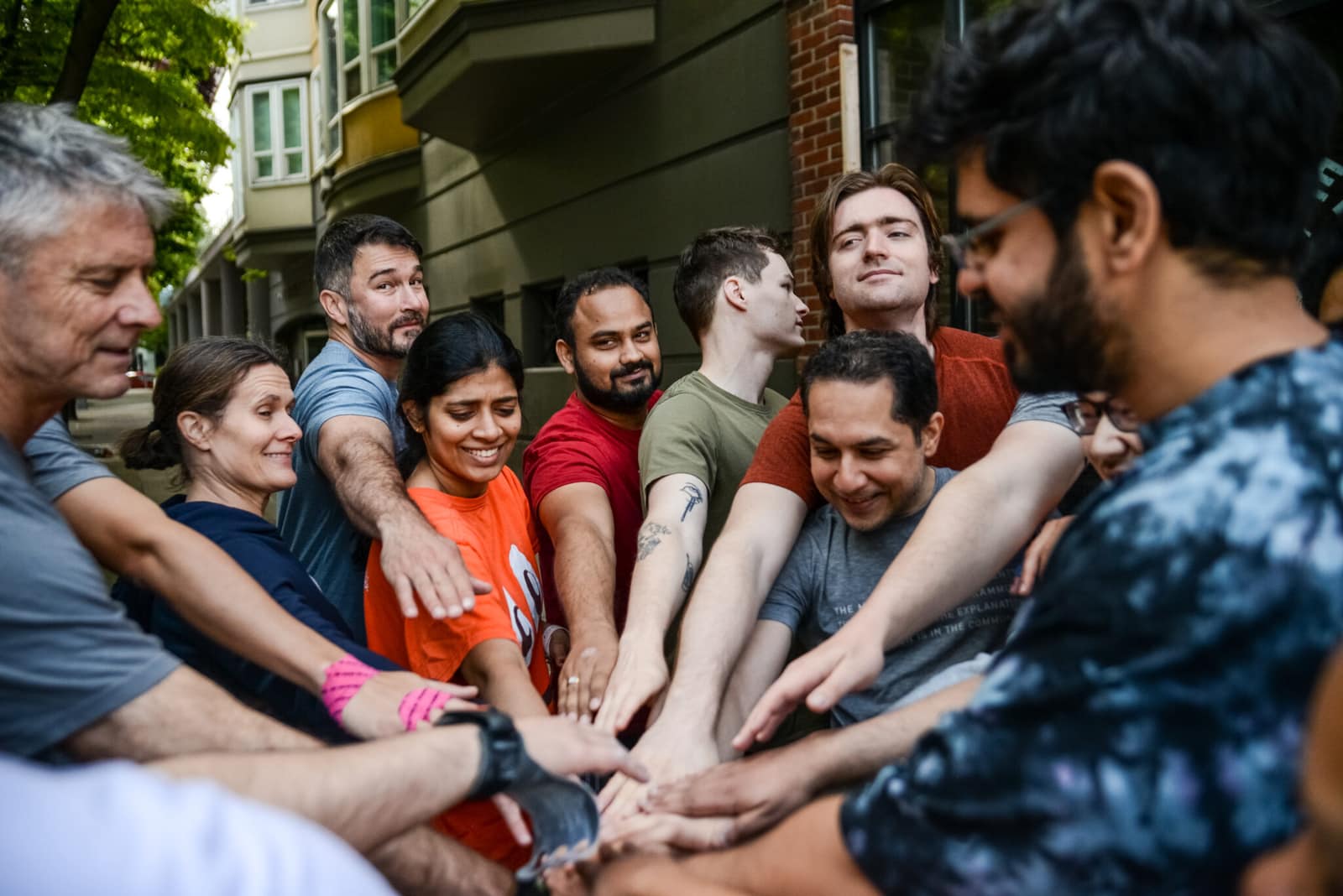
At Persistence Athletics we have run Murph every Memorial Day since 2014. Average attendance for the workout is 60 to 80 members across multiple heats. We partition the reps for most athletes (20 rounds of 5 pull-ups, 10 push-ups, 15 squats), and the gym is full from 7 AM to 1 PM with members rotating through. Jacque, our Head Coach (CFL3, Precision Nutrition Level 2), runs the front of the room and pairs first-timers with someone who has done it before, so nobody is alone at rep 150 of 200 push-ups. For more on what the day looks like, our community event recap covers the structure and atmosphere.
DT, Kalsu, and Daniel: the other named tributes
Beyond Murph, a handful of Hero WODs are programmed regularly at most CrossFit gyms. Each carries its own story.
DT (Major Andrew Dunwoody, USAF)
Major Dunwoody was a US Air Force officer killed in 2009 when his helicopter was shot down in Afghanistan. The workout DT is 5 rounds of:
- 12 deadlifts at 155 lb (105 lb scaled)
- 9 hang power cleans at 155 lb
- 6 push jerks at 155 lb
Total: 27 reps per round, 135 reps total. The workout takes 6 to 12 minutes for most prescribed athletes. The barbell triplet is a brutal test of upper body strength endurance because all three movements share grip and trap involvement. The grip is the limiter, not the legs, which is why I tell newer athletes to drop the bar and reset their hook grip rather than fight a failing grip mid-rep. We program DT at Persistence roughly twice a year.
Kalsu (Lt. Bob Kalsu, US Army)
Lt. Bob Kalsu was a Buffalo Bills NFL player and Army officer killed in Vietnam in July 1970. He was the only active NFL player to die in combat in Vietnam. The workout Kalsu is:
- 100 thrusters at 135 lb (95 lb scaled)
- Every minute on the minute, 5 burpees
So at minute 0, you do 5 burpees, then thrusters. At minute 1, 5 more burpees, then thrusters. You continue until you complete 100 thrusters. Most prescribed athletes finish in 18 to 30 minutes. The workout is one of the harder Hero WODs because the burpee penalty cuts into the time you have for thrusters, and the thrusters get progressively harder as fatigue accumulates. We program Kalsu once a year, usually around the anniversary of his death.
Daniel (Daniel Crabtree, Special Operations)
The workout Daniel is:
- 50 pull-ups
- 400m run
- 21 thrusters at 95 lb (65 lb scaled)
- 800m run
- 21 thrusters
- 400m run
- 50 pull-ups
Total: 100 pull-ups, 42 thrusters, 1.5 miles of running. Most prescribed athletes finish in 13 to 22 minutes. The mixed running and barbell stimulus tests aerobic capacity and grip endurance simultaneously.
A few others worth knowing
- Tom (Sgt. Tom Bagosy, USMC): 7 rounds of 7 muscle-ups + 7 squat snatches at 135 lb. A test for advanced athletes only.
- Adambrown (Petty Officer Adam Brown, Navy SEAL): Two rounds of squats, deadlifts, bench press, cleans, and runs. Long, brutal, takes 30+ minutes for most athletes.
- Holleyman (Sgt. Aaron Holleyman, Special Forces): 30 rounds of 5 wall balls, 3 handstand push-ups, 1 power clean at 225 lb. Volume monster.
The full list of Hero WODs is over 100 names. Each gym programs them differently. Most gyms hit the major ones (Murph, DT, Kalsu, Daniel) once or twice a year, with smaller Hero WODs scattered throughout.
If you have never done one and the volume in those numbers looks impossible, that is normal, and it is the whole reason we coach them in a room instead of handing you a PDF. Your first class is free and scaled to wherever you are starting.
Where Cindy and Fran fit in (and why they are not Hero WODs)
The most common confusion in CrossFit programming is between Hero WODs and "girl" WODs. They are not the same thing.
What the girl WODs are
The girl WODs are CrossFit's benchmark workouts, named with women's first names. The convention started with Greg Glassman in 2003. The most famous:
- Fran: 21-15-9 thrusters at 95 lb and pull-ups. Most-tested benchmark in CrossFit.
- Cindy: 20 minute AMRAP of 5 pull-ups, 10 push-ups, 15 squats.
- Helen: 3 rounds of 400m run, 21 kettlebell swings at 53 lb, 12 pull-ups.
- Grace: 30 clean and jerks at 135 lb for time.
- Diane: 21-15-9 deadlifts at 225 lb and handstand push-ups.
- Annie: 50-40-30-20-10 double-unders and sit-ups.
The girl WODs are tests, repeated periodically to measure progress. They are not memorial workouts. They are CrossFit's equivalent of timed mile tests in track or one rep max attempts in powerlifting. The naming convention is just convention.
Why the confusion
Hero WODs and girl WODs sit next to each other on most gym whiteboards and program calendars. Both have proper names. Both are usually programmed as named workouts a few times a year. The distinction is in the naming origin: girl WODs are benchmark tests with arbitrary first-name labels, Hero WODs are tributes with first or last names of actual fallen people.
If the workout's name is a first name (Cindy, Fran, Helen), it is a girl WOD. If the workout's name is a last name or honors a specific person (Murph, Kalsu, Holleyman, Adambrown), it is a Hero WOD. The exception is when a Hero WOD uses a first name (Tom, Daniel) and you have to know the story to know which category it is in.
How we run Hero WODs at Persistence Athletics
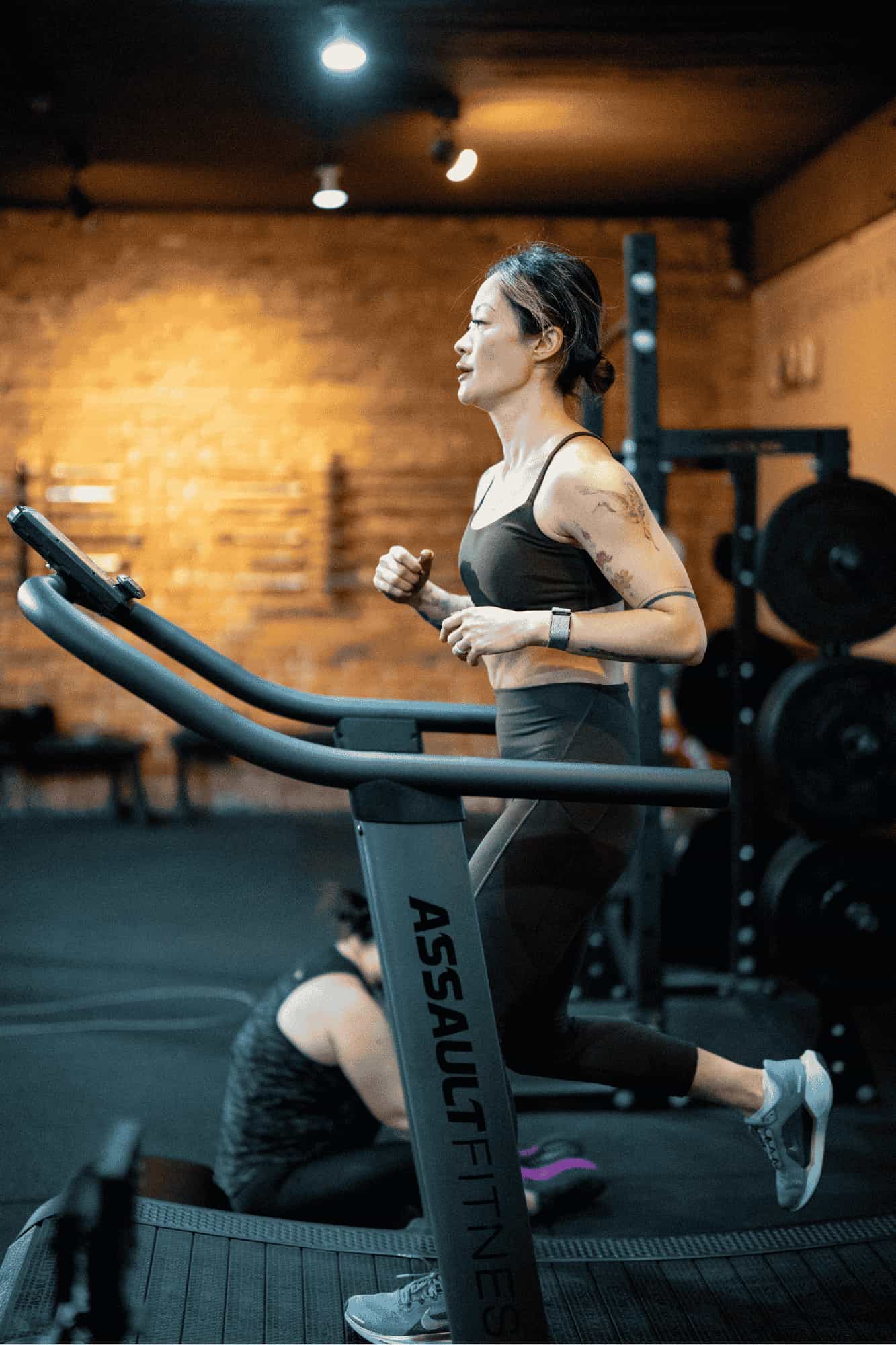
At our Belltown CrossFit gym, we program Hero WODs roughly 8 to 12 times a year. The biggest is Memorial Day Murph, which is a full-day event with 60 to 80 members across multiple heats. The smaller Hero WODs (DT, Daniel, Kalsu) appear in regular class programming a couple of times each per year.
The rules we follow when running a Hero WOD:
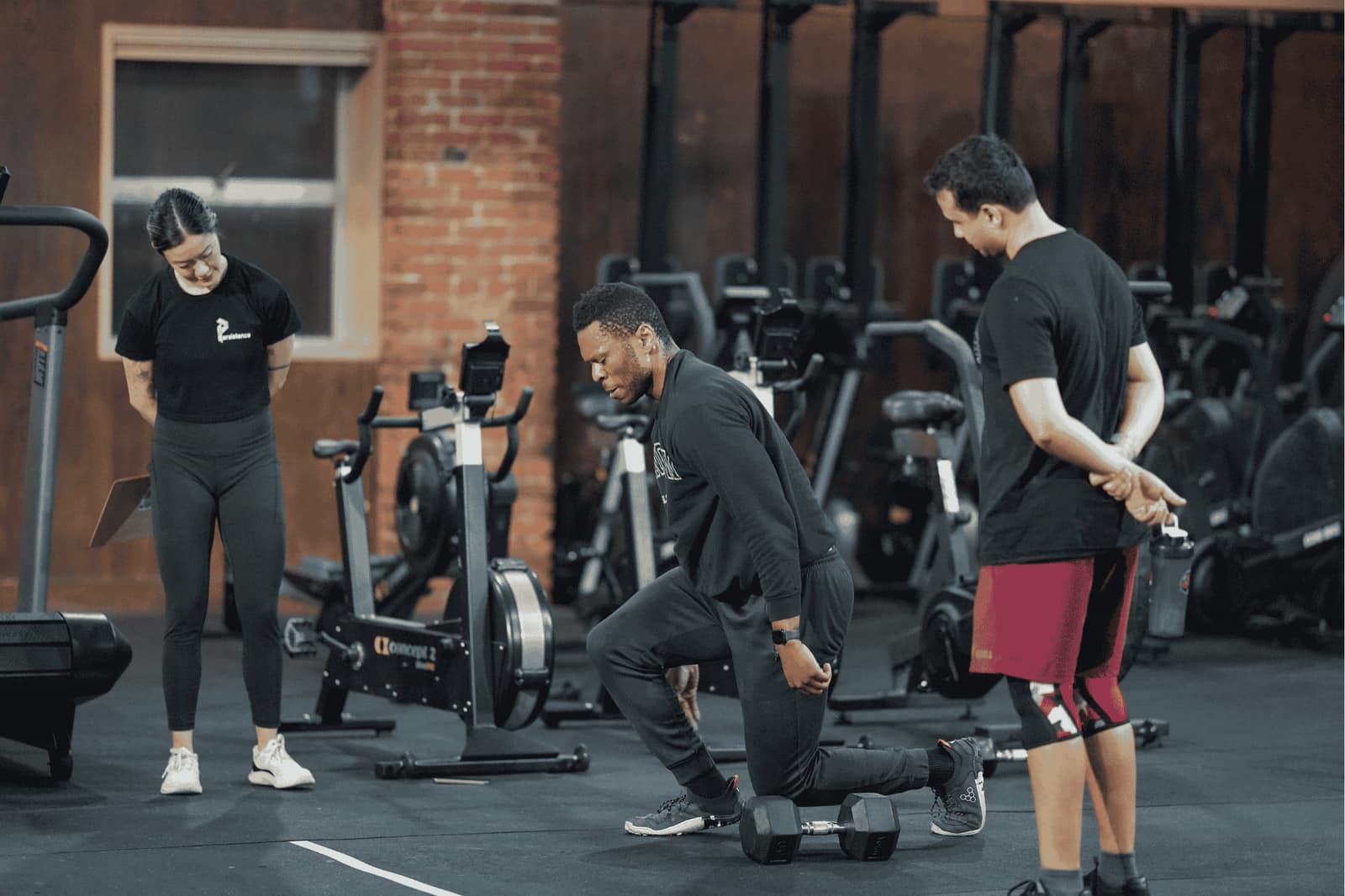
Read the story before the workout. The coach tells the room the name and the story of who the workout honors. The workout is a tribute, and the tribute does not work if the room does not know the story.
Scale aggressively for safety. Hero WODs are programmed at extreme volume. Beginners are scaled in reps, weights, and movement complexity. The point is to honor the workout, not to injure new members. Murph at full prescribed (with vest, unpartitioned) is for athletes who have been training 12+ months consistently.
No clock pressure for first-timers. Members doing a Hero WOD for the first time work to completion, not for time. The clock is for athletes who have done the workout before.
Acknowledge the cost. After the workout, the coach takes a beat to recognize the person honored. The community piece matters.
A concrete example of why we scale: Katie, who has 700-plus classes with us and built a strict gymnastics base over years of disciplined ring and pull-up work, does Murph unbroken sets that most members would partition. Right next to her on the same day, a member three months in does banded pull-ups and partitions the whole thing into 20 small rounds. Both finished. Both honored Murphy. That is the model. The volume bends to the athlete; the name does not.
For more on the team and culture at our gym, our about page covers the full picture, including the coaches who have led Memorial Day Murph since the start.
Why CrossFit gyms run them
Hero WODs serve a function that no other programming convention covers. They build a connection between a global community of athletes and the specific people whose deaths gave the workouts their names. A CrossFit member in Seattle in 2026 who does Murph on Memorial Day is participating in the same tradition as a CrossFit member in Texas in 2009. Both know the name Lt. Michael Murphy. Both did 100 pull-ups, 200 push-ups, and 300 squats in his honor.
The grief of the families and units of the fallen is not erased by Hero WODs. It is shared. The CrossFit community absorbs a small fraction of that grief and converts it into a workout that members will remember, talk about, and pass on to the next class of athletes.
That is the reason the tradition has lasted 20 years and counting. It is not the only reason CrossFit gyms exist, but it is one of the reasons the community runs deeper than at most fitness models. The Hero WODs are the load-bearing wall on that community structure.
Frequently Asked Questions
What is a Hero WOD in CrossFit?
A Hero WOD is a workout named in honor of a fallen military service member, first responder, or law enforcement officer who died in the line of duty. The first Hero WOD, Murph, was named after Lt. Michael Murphy, a Navy SEAL killed in Afghanistan in 2005. Most Hero WODs are programmed at extreme volume or load specifically to honor the difficulty of what the person sacrificed.
Is Cindy a Hero WOD?
No, Cindy is not a Hero WOD. Cindy is a 'girl' WOD, named under CrossFit's convention of giving benchmark workouts women's first names (Fran, Helen, Grace, Cindy). The girl WODs are benchmark tests, not memorial workouts. The two categories often get confused because they sit alongside each other in CrossFit programming, but the Hero WOD category is reserved for honoring the fallen.
Why is Murph done on Memorial Day?
Murph honors Lt. Michael Murphy, USN, killed in Afghanistan in June 2005. CrossFit gyms run Murph on Memorial Day as a tribute to all fallen service members, with Murph's name as the centerpiece. The Memorial Day Murph tradition started informally around 2009 to 2010 and is now run at thousands of CrossFit affiliates worldwide on the last Monday of May.
What are the most well-known Hero WODs?
Murph (Lt. Michael Murphy, Navy SEAL), DT (Major Andrew Dunwoody, USAF), Kalsu (Lt. Bob Kalsu, US Army), Daniel (Daniel Crabtree, Tier 1 Special Operator), Tom (Sgt. Tom Bagosy, USMC), Adambrown (Petty Officer Adam Brown, Navy SEAL), Holleyman (Sgt. Aaron Holleyman, US Army Special Forces). Each workout was designed by close friends or units of the fallen as a tribute.
Should beginners attempt Hero WODs?
Most Hero WODs are programmed at extreme volume and require scaling for anyone under 6 months of consistent training. Murph in full (1 mile run, 100 pull-ups, 200 push-ups, 300 squats, 1 mile run, in a weighted vest) takes most prescribed athletes 45 to 75 minutes and is brutal. We scale Hero WODs for beginners at Persistence so the tribute is preserved without exposing new athletes to volumes they cannot recover from.
Are Hero WODs safe to do solo at home?
The shorter Hero WODs (DT, Daniel, Tom) are safe at home with proper equipment and warm-up. Murph in full at home with no spotter and no scaling support is a poor idea unless you have months of high-volume bodyweight conditioning. Most Hero WODs were designed for coached gym settings, and the volume management is what makes them safe. Solo without scaling guidance is the most common injury setup.
Try a free first class at Persistence Athletics
If you want to be part of Memorial Day Murph 2027 or any of our Hero WOD events, the first step is a free class. We will scale the workout to your starting point and walk you through what an event day looks like at Persistence. Book your free class. Persistence Athletics, 3025 1st Ave, Belltown, Seattle, WA 98121. About 8 minutes on foot from Amazon, walkable from anywhere in Belltown, SLU, and downtown. Questions first? Call us at (206) 593-4236.
Want to take this further?
Talk to a coach about crossfit programming at Persistence Athletics.