
Should You Compete in CrossFit? An Honest Coach's Take
Should you compete in CrossFit? Open, throwdowns, local comps. The honest pros and cons from a CFL3 head coach in Belltown who has coached competitors for a decade.

Should you compete? Honest answer: depends on whether your kipping pull-up has a knee bend
The most common question I get from members in their second year of CrossFit is whether they should sign up for the Open or a local competition. The answer is not a clean yes or no. It depends on a few specific things that have nothing to do with how badly they want to compete and everything to do with whether they have the technical base to compete safely.
This is the honest framing. Some people should compete. Some people should not, at least not yet. The cost of competing too early is rarely catastrophic, but it is real, and the cost of waiting until you are ready is essentially zero. Most members at Persistence Athletics in Belltown who ask me this question have not earned the gymnastics base required for a clean competition performance. The fix is patience. The fix is not random comp registration.
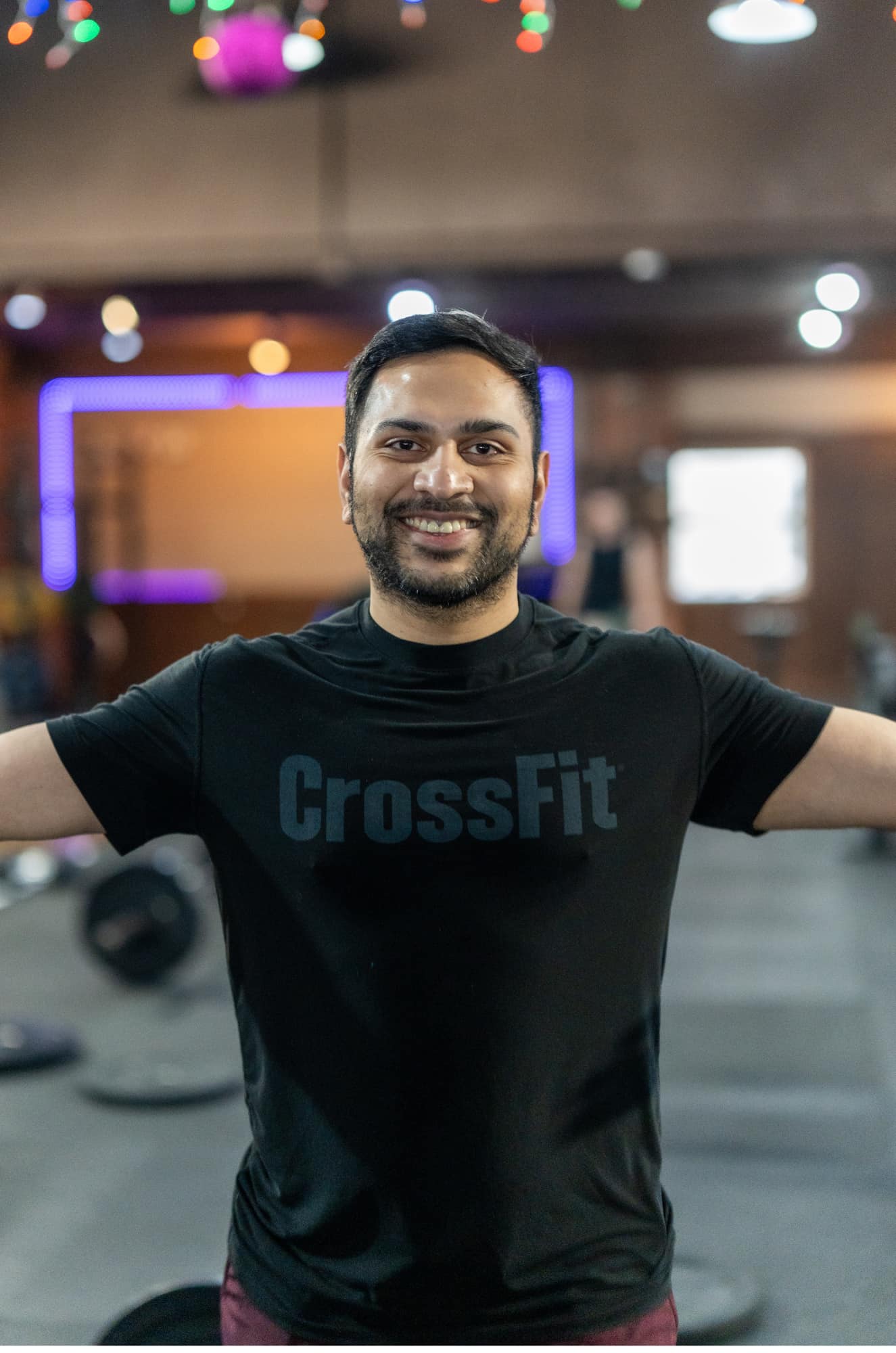
I am Ravi Dewangan, CFL3, MS in Strength and Conditioning, and CrossFit Seminar Staff. I have coached competitors at every level from local throwdowns to regional qualifiers for over a decade. This article is the honest case for and against competing, from someone who actually does this for a living. Updated June 2026.
Table of Contents
- The case for competing in CrossFit
- The case against competing too early
- The CrossFit Open and local throwdowns explained
- How to know if you are ready (the honest checklist)
- How we handle competition prep at Persistence
- Frequently Asked Questions
The case for competing in CrossFit
Competing produces real benefits when the athlete is ready. The benefits are not random and they are not abstract.
Focus and accountability
A competition date on the calendar 8 to 12 weeks out changes how you train. The cherry-picking goes away. The optional sessions become mandatory. The skills you have been ignoring (double-unders, handstand walks, ring muscle-ups) get drilled because you cannot avoid them in a comp. The accountability shifts from internal motivation to external deadline, and external deadlines are more reliable than internal motivation.
I have watched this turn a member's whole training year around. Devang came to us as a software engineer who could barely hold a hollow position. He has now logged over 700 classes, and the year he pointed at a comp was the year his lifts finally moved off a plateau they had been stuck on. Not because the comp was magic, but because the date on the calendar made him stop skipping the parts of training he did not enjoy. Most members hit the highest training volume of their year in the 12 weeks leading up to a competition. The capacity gain is real. Even athletes who place poorly in their first comp typically come out 10 to 20 percent stronger in their lifts and significantly cleaner in their gymnastics.
Milestone and identity
A first competition is a milestone. You walked in 2 years ago not knowing what an air squat was, and now you are competing against other CrossFit athletes in the same sport. The identity shift is meaningful and lasts. Members who compete once usually train more consistently for years afterward because they have a different relationship with the sport.
Community
Competition days are community-heavy. The athletes from your gym show up to support. You meet members of other Belltown and SLU gyms. The camaraderie is real and not theatrical. CrossFit is one of the few fitness communities where competitors at every level (local first-timer, regional qualifier, masters athlete) genuinely cheer for each other.
Tested capacity
Training capacity and competition capacity are different. Most athletes hit capacity in training that they cannot replicate under competition conditions, and most athletes also surprise themselves with what they can do in competition that they could not in training. The test reveals where you actually are. The reveal is valuable.
If you are still in your first year and reading this wondering where you stand, the honest move is to come train and let a coach tell you. Book your free first class, scaled to where you are today.
The case against competing too early
Competing too early carries real costs. The two big ones:
Injury risk
The most common injuries in CrossFit competition are not from the workout itself. They are from athletes attempting movements at loads or volumes they have not earned. The classic pattern: an athlete with 8 months of training signs up for a local comp, the comp programs a heavy clean ladder at 185 lb, the athlete attempts the lift with a poor position they have hidden in training, and the rep ends with a low back tweak that takes 6 to 8 weeks to clear.
The same applies to gymnastics. An athlete with a kipping pull-up that still has a knee bend (a sign the kip is not connected through the hip and shoulder properly) attempts a high-volume kipping pull-up workout in competition, and the shoulder takes the impact. Kipping pull-ups under fatigue are not the place to learn proper kip mechanics.
This is exactly why I am slow to push members toward gymnastics-heavy comps. Katie, who has logged over 700 classes here, is one of the cleanest gymnastics athletes in the gym, and she got there by spending months on strict pull-ups and ring work before she ever let the kip take over. That order matters. The strict strength is the insurance policy under the kip. Athletes who skip it to chase the flashier movement are the ones whose shoulders pay for it in a comp.
Ego damage and quitting
The more common cost is psychological. An athlete competes too early, performs in the bottom 25 percent of their division, takes the result personally, and quits or stops training as seriously. This is a worse outcome than injury because it ends the training arc entirely.
Most members who compete at the right time come out of the experience energized regardless of placement. Members who compete too early often come out demoralized. The fix is patience, not better mental toughness.
The "I want it" trap
Wanting to compete is not the same as being ready to compete. The athletes who push hardest to compete early are often the ones who are not ready, because the eagerness and the technical gap correlate. The athletes who are ready usually have a calmer, more curious relationship with competition. They sign up because the timing is right, not because they need it to validate their training.
If you are agitated about needing to compete, that is data. The agitation usually means you should wait 6 to 12 months and let the patience build the base.
The CrossFit Open and local throwdowns explained
Three categories of CrossFit competition exist, in order of accessibility:
The CrossFit Open (February to March)
The Open is the global qualifying event CrossFit runs every year. Three workouts are released, one per week, over 3 weeks in February and March. Athletes complete the workouts at their home gym with a judge and submit scores to CrossFit's leaderboard.
| Detail | Value |
|---|---|
| Cost | Around $25 |
| Duration | 3 weeks, 1 workout per week |
| Divisions | Rx, scaled, masters (35+, 40+, 45+, etc.), teens |
| Where | Your home gym with a judge |
| Skill required | Variable; scaled division accommodates most |
The Open is the most accessible CrossFit competition. Anyone with a CrossFit membership can sign up. The scaled division accommodates beginners and the Rx division accommodates competitive athletes. The atmosphere at gyms during Open season is usually electric. We host all 3 Open workouts at Persistence with judges and full programming.
The Open is the recommended first competition for most members. Low cost, low travel, friendly environment, real test of capacity.
Local throwdowns (year-round)
Local in-person competitions run throughout the year in the Pacific Northwest. Most are 1-day events with 3 to 5 workouts and run by individual gyms or regional organizations. Cost is typically $75 to $150 per athlete or per team.
Local throwdowns are higher pressure than the Open because they are in-person, judged live, and have spectators. They are also more skill-demanding because the workouts often include heavier loads or higher-skill gymnastics that the Open scaled division avoids.
The right time for a local throwdown is 18 to 24 months of consistent training, with clean gymnastics base movements and the ability to lift moderately heavy under fatigue.
Larger regional events and qualifiers
Beyond local throwdowns, regional and international events (West Coast Classic, Wodapalooza, Granite Games) run as multi-day events with 6 to 10 workouts. Cost is $150 to $400 plus travel. These are for serious competitive athletes with 3+ years of training and individual programming.
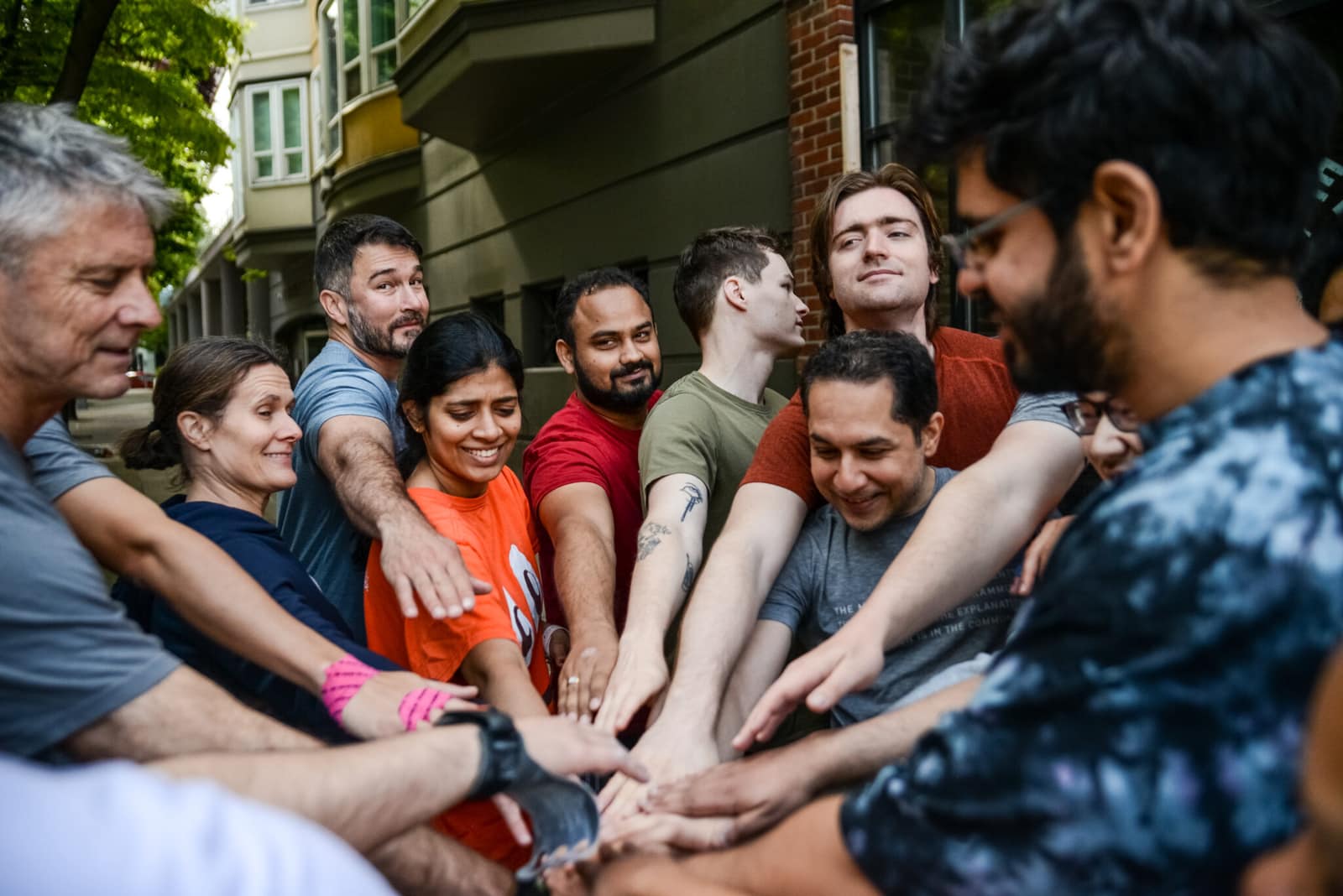
Most Persistence members never go beyond the Open and local throwdowns. That is fine. The fitness produced by training for and completing local-level competition is more than enough to be an outstanding generalist athlete for decades.
How to know if you are ready (the honest checklist)
The 6 questions to ask before signing up for any in-person CrossFit competition:
Is your kipping pull-up clean? No knee bend, hip-driven, can do 10+ unbroken under fatigue. If yes, proceed. If no, wait.
Can you do a clean and jerk at 70 percent of your one rep max for 10 unbroken reps with no form breakdown? Heavy barbell work under fatigue is where injuries happen. If you cannot do this, the lifts at competition load will be a problem.
Can you do double-unders for 60+ unbroken? Double-unders show up in nearly every competition. Athletes still working through them are at a competitive disadvantage and a fatigue disadvantage.
Do you have a handstand push-up (kipping or strict)? Most local throwdowns include some inversion work. Without one, you are scaling and may not place in your division.
Have you trained consistently for 12+ months? Open is reasonable at 12 months. In-person comps are better at 18 to 24 months. Less than 12 months is a recipe for injury or ego damage.
Are you signing up because you want to test where you are, or because you want validation? The first answer is healthy. The second is a flag. Wait 6 months and check again.
If you pass 4 or more of these honestly, sign up for the Open. If you pass all 6, an in-person throwdown is reasonable. If you pass 2 or fewer, the answer is clear: keep training, the comp can wait.
How we handle competition prep at Persistence
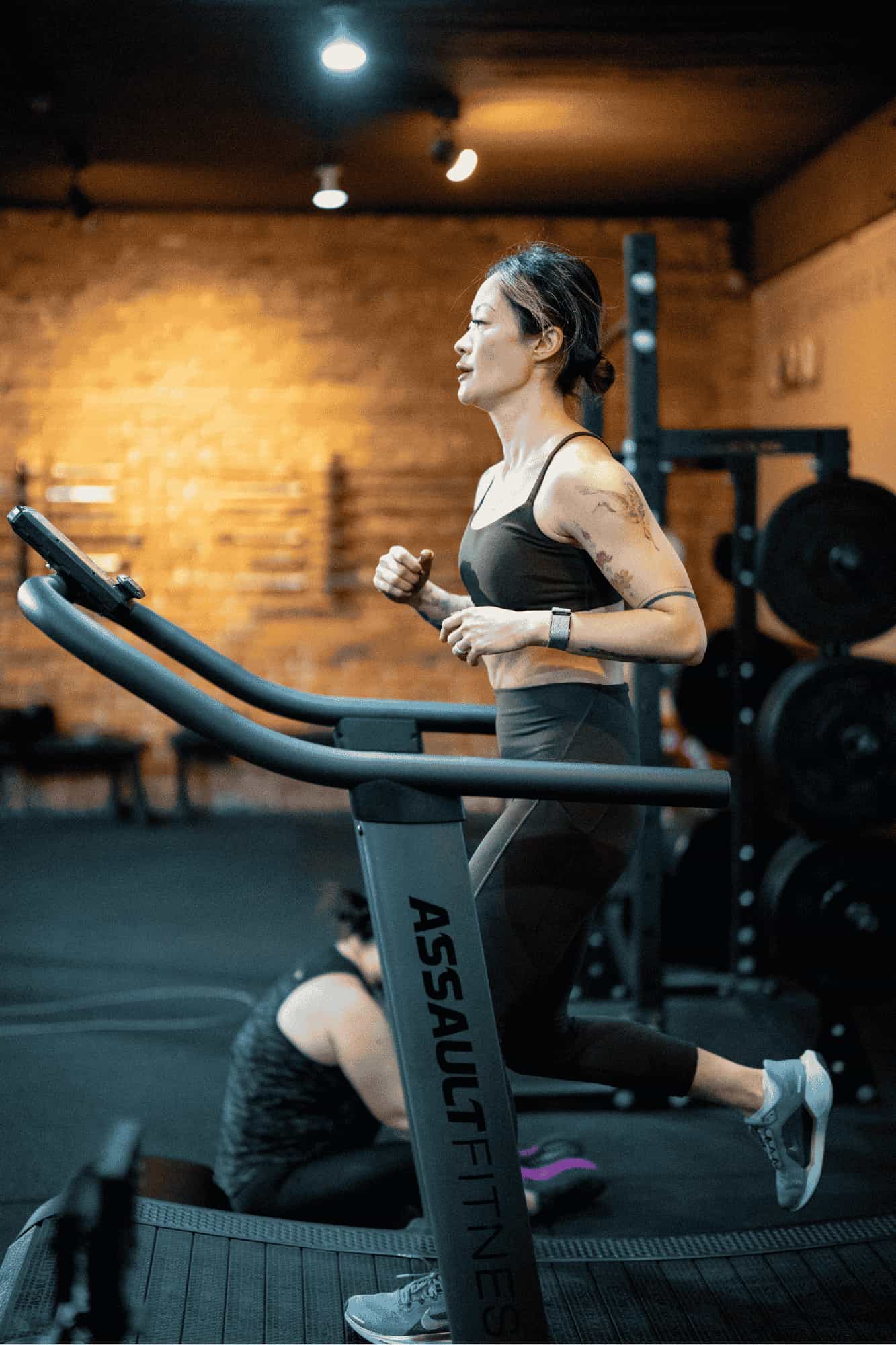
For members at our Belltown CrossFit gym who decide to compete, we run the prep as a layered structure on top of group classes.
The Open: minimal prep needed
For the Open, group class programming is sufficient. Most members hit the Open as a normal training week with the addition of the workout in place of the regular Friday class. No special prep beyond paying attention to the workout when it drops on Thursday night.
Local throwdowns: 8 to 12 weeks of targeted prep
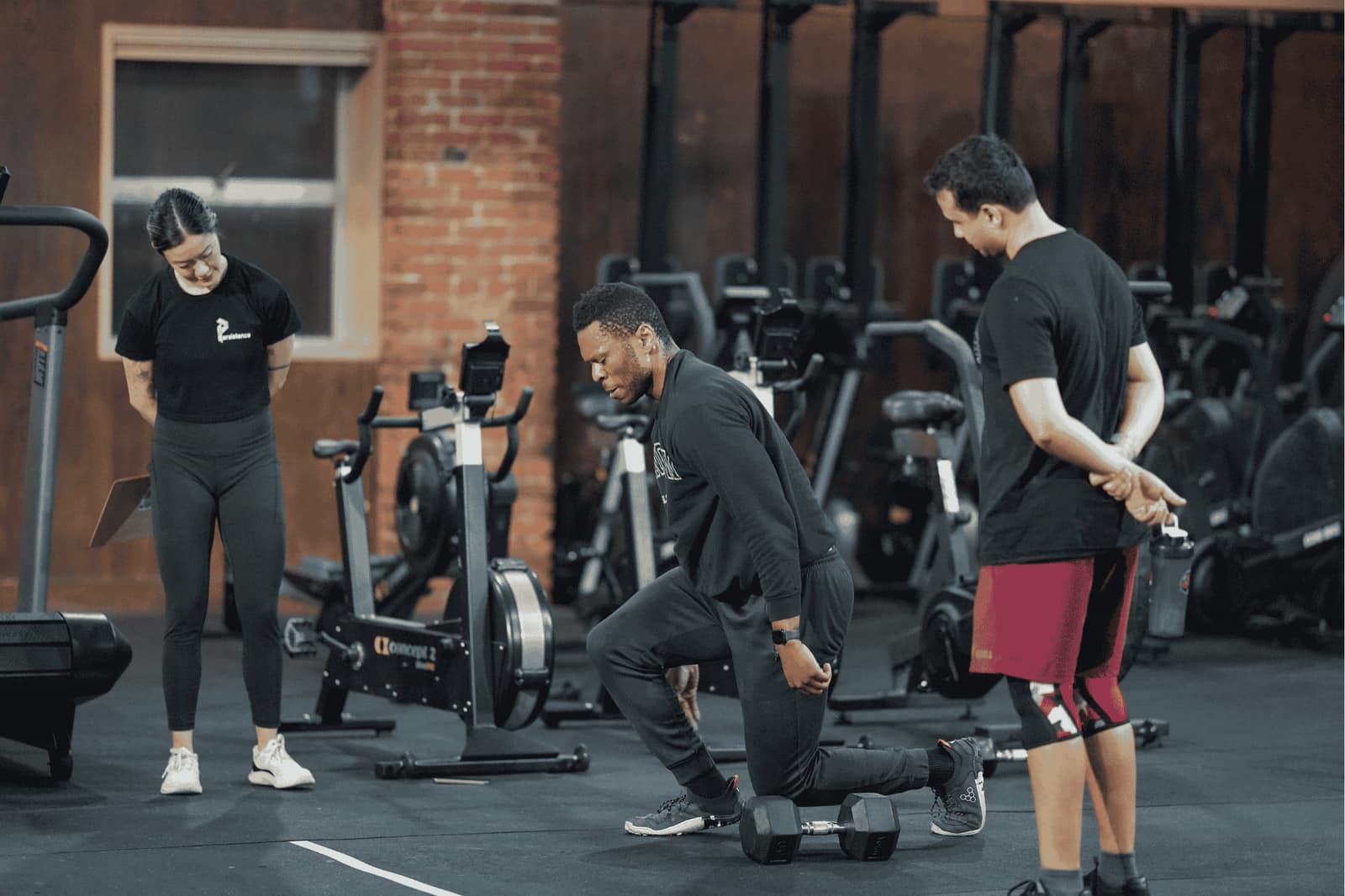
For in-person local comps, we layer 1 to 2 individual sessions per week onto group classes for 8 to 12 weeks before the event. The sessions target specific weaknesses identified in a pre-comp movement audit.
The audit covers: max lifts on the main barbell movements, gymnastics inventory (which movements you can do, at what volume), conditioning capacity at multiple time domains, and skill gaps that comp programming might exploit. Most athletes have 2 to 3 specific weaknesses, and 8 weeks is enough time to make meaningful progress on each. I sit down with the athlete, write the plan on the whiteboard, and we audit honestly. The point of the audit is not to feel good. It is to find the thing the comp will expose so we can fix it before the comp does.
For members who want a more comprehensive competition prep (training partner work, mental prep, comp simulation days), our personal training option is the right move. The 1-on-1 work in the 8 to 12 weeks before a comp is what closes the gap between "fit member" and "competitive athlete."
For more on the coaching team handling competition prep, see our coaches page.
The honest summary
Should you compete? If you have been training 2+ years and your gymnastics movements are clean, sign up for the Open in February. If you place top 30 percent in your division and want more, do a local throwdown 6 months later. If the Open lights you up, lean in. If it does not, you have your answer: train without comp pressure for the next year and reassess.
If you have been training 8 months and your kipping pull-up has a knee bend, do not sign up. Train for another year. The comp will still be there, and you will be better at it. Patience is the most underrated competitive advantage in CrossFit.
Frequently Asked Questions
How long should I train CrossFit before signing up for a competition?
12 to 24 months of consistent CrossFit training before your first competition, with cleanly executed gymnastics movements (kipping pull-ups without knee bend, double-unders, handstand push-ups). The Open is more forgiving and is reasonable at 12 months. Local in-person competitions are better at 18 to 24 months. The injury risk for under-prepared competitors is real and concentrated in the first competition.
What is the CrossFit Open?
The CrossFit Open is the global qualifying competition CrossFit runs every February to March. Three workouts are released, one per week, and athletes complete them at their home gym with a judge. Anyone can sign up for around $25 and there is a Rx, scaled, and masters division. The Open is the most accessible CrossFit competition and the recommended first comp for most members.
Do I need to compete to be good at CrossFit?
No. Competing is one of several training goals (longevity, body composition, sport prep, general fitness) and is a poor primary goal for most members. The athletes who train without competing produce excellent fitness outcomes for decades. The athletes who train only for competition often burn out in 3 to 5 years. Competing is a tool, not the destination.
What are the risks of competing in CrossFit too early?
The two main risks: injury and ego damage. Injury risk peaks when athletes try to lift loads or perform gymnastics movements they have not earned in training. Ego damage is the more common outcome: an athlete competes too early, performs poorly, gets discouraged, and quits training. Both are avoidable with patient progression. Most coaches recommend 12+ months of base building before any competition.
How much does it cost to compete in CrossFit?
The Open is around $25 to register. Local in-person throwdowns run $75 to $150 per athlete. Larger competitions with multiple events can run $150 to $300 plus travel. Team competitions (2 to 4 athletes) usually have higher per-team registration but split across the team. Compared to other sports, CrossFit competitions are inexpensive.
Should I get a coach if I want to compete in CrossFit?
Yes, if you are competing seriously. Group classes train general fitness and produce the base capacity needed for most local competitions. Beyond that point, individual programming with a coach is the right move. At Persistence we layer competition prep onto group classes for members who decide to compete, with sport-specific work in the 8 to 12 weeks leading up to the comp.
Try a free first class at Persistence Athletics
Whether or not you ever compete, the foundation is the same: consistent training in a coached environment. Your first class at Persistence Athletics in Belltown is free and scaled to your starting point. We will walk you through the structure, scale the workout to where you are, and answer the comp question honestly when it comes up. Book your free class. Persistence Athletics, 3025 1st Ave, Belltown, Seattle, WA 98121. About 8 minutes on foot from Amazon, walkable from anywhere in Belltown, SLU, and downtown. Questions first? Call us at (206) 593-4236.
Want to take this further?
Talk to a coach about crossfit programming at Persistence Athletics.