
Best CrossFit Workouts for Tech Workers (Desk Job Edition)
5 CrossFit workouts built for tech workers: hip mobility, posture, posterior chain, grip health. From a Belltown CFL3 coach 8 min from Amazon.

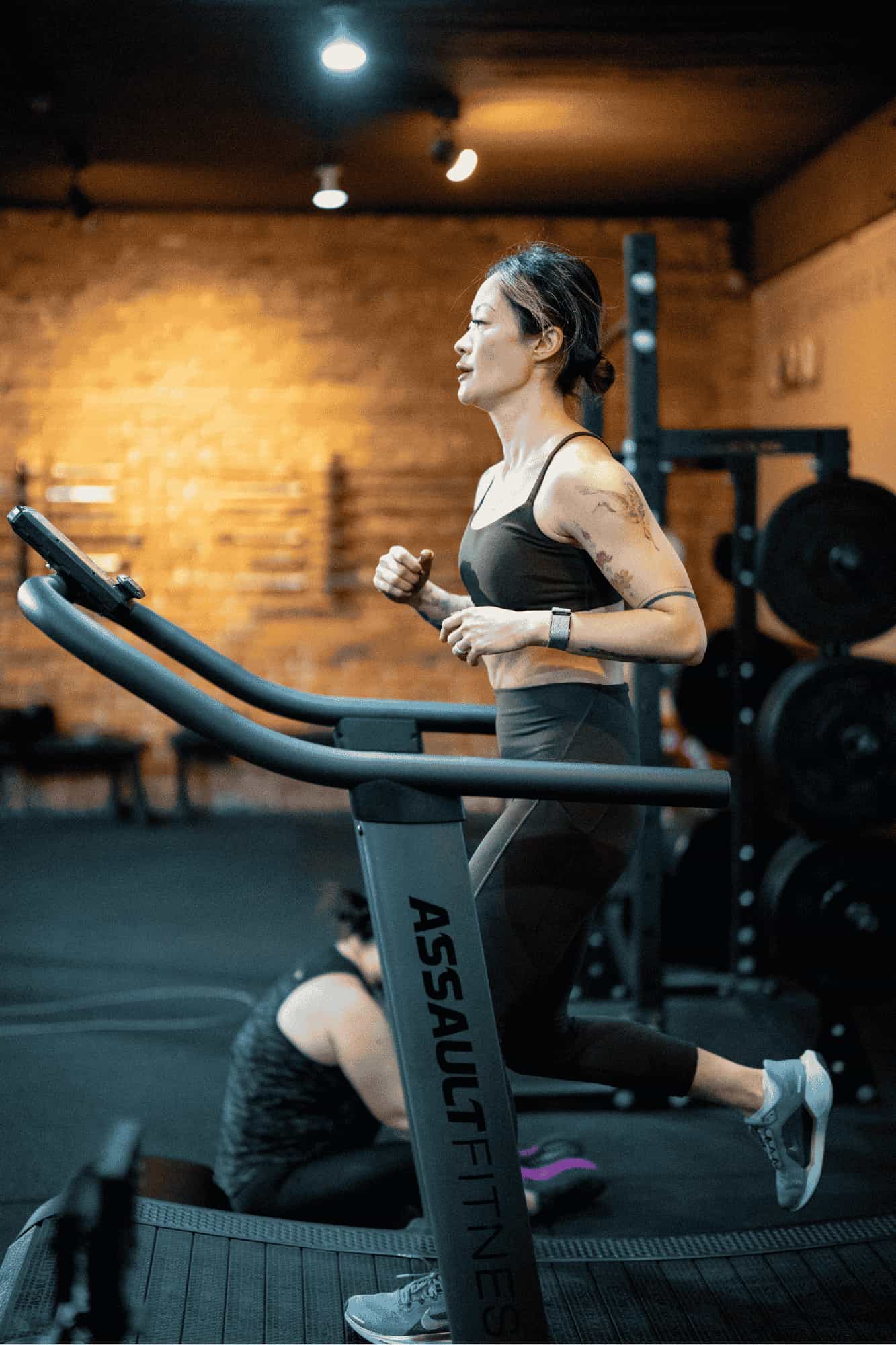
You sit 9 hours a day. Your gym should know that.
Most of our weekday lunch classes at Persistence Athletics are filled with the same people: Amazon engineers, Microsoft cloud developers, startup PMs from SLU, designers from the Belltown agencies. They walk over from their desks, train for an hour, and walk back. Most of them arrive with the same body story.
Tight hips. Rounded upper back. Forward-head posture. A glute medius that has not fired meaningfully in 8 years. Wrist and forearm fatigue from typing. A posterior chain that does not match the front of the body in strength. And a 60-minute lunch window where they need to fit a real workout, a shower, and the walk both ways.
The good news is CrossFit scales cleanly to this body. The right movements, programmed in the right order, undo most of what comes from coding 9 hours a day. The wrong movements, or no movements, make it worse over time.
I am Jacque Dewangan, CFL3 and Precision Nutrition Level 2. I have coached desk-bound athletes at Persistence in Belltown for over a decade. One I think about often is Aman, an engineer who came in essentially sedentary and trained patiently enough to qualify for HYROX over a couple hundred classes. He did not start strong. He started consistent. This article walks through the 5 movement patterns that produce the biggest change for desk-bound bodies, plus how we structure the lunch class for the SLU and Amazon crowd. Updated June 2026.
Table of Contents
- Why tech worker bodies need different programming
- The 5 movement patterns that fix desk damage
- A lunch-break workout that fits 60 minutes
- How we program for tech workers at Persistence Athletics
- The 12-week tech worker reset plan
- Frequently Asked Questions
Why tech worker bodies need different programming
Sitting for 8 to 10 hours a day produces a predictable set of physical adaptations. They are not character flaws. They are the body adapting to the position you put it in for 50 hours a week.
The big four:
Hip flexor shortening. Sitting puts the hip in 90 degrees of flexion for hours. The psoas and rectus femoris adapt by getting tight. This pulls the pelvis forward and contributes to lower back tightness.
Glute deactivation. Sitting on the glutes for hours teaches them to stay quiet. The brain forgets to fire them. The hamstrings and lower back take over the work, often poorly.
Thoracic flexion. Hunching forward at a screen rounds the upper back. The thoracic spine loses extension capacity. Shoulders round forward.
Forearm and wrist fatigue. Typing keeps the wrist in mild extension and the fingers in repetitive motion. Grip strength gets one-sided. Wrist mobility decreases.
A generic CrossFit program does some of this work by accident. A program that knows you sit all day does it on purpose.
The 5 movement patterns that fix desk damage
These are the 5 movement categories every tech worker should be hitting weekly. The names are different across coaches, but the patterns are universal.
1. Posterior chain strengthening
Why: Glutes and hamstrings need to be re-taught to fire. The posterior chain is the engine room of the body and it goes dormant under sitting.
Best movements: Romanian deadlift, conventional deadlift, hip thrust, single-leg Romanian deadlift, glute bridge.
Programming target: 2 to 3 sessions per week of focused posterior chain work, 6 to 12 reps per set.
2. Hip flexor mobility
Why: Tight hip flexors pull the pelvis into anterior tilt, which crunches the lower back and shuts off the glutes.
Best movements: Couch stretch (90-second holds), kneeling hip flexor stretch with reach, half-kneeling hip mobility flow, deep squat hold.
Programming target: Daily, even 5 minutes. Hits hard against 8 hours of sitting.
3. Thoracic extension and scapular retraction
Why: Counters the rounded-forward upper back from screen work. Without this, every overhead lift is compromised.
Best movements: Prone Y-T-W raises, foam roller thoracic extensions, banded face pulls, ring rows, scapular pull-ups.
Programming target: 2 to 3 times per week, 2 to 3 sets each.
4. Grip and forearm work
Why: Typing builds one specific kind of grip. Lifting requires the opposite. Wrist health depends on full-range movement.
Best movements: Farmers carries (heavy, 30 to 60 second walks), dead hangs from a pull-up bar, kettlebell hangs, wrist circles.
Programming target: 2 to 3 times per week, integrated into existing workouts.
5. Conditioning that fits the lunch window
Why: A 60-minute class has to include conditioning that produces a training effect without leaving you wrecked for an afternoon of meetings.
Best formats: 12-minute AMRAP, 4 to 6 round intervals at 70 to 80 percent effort, EMOM (every minute on the minute) for 12 to 15 minutes.
Avoid for lunch: 30+ minute hero workouts. Save those for the Saturday HYROX class, 9:30 to 11 AM, which is included in your membership.
A lunch-break workout that fits 60 minutes
Here is a lunch workout we run regularly at Persistence for the tech crowd. Total time including warm-up and cool-down: 55 minutes. Walk time from the Amazon Spheres to our door at 3025 1st Ave: about 8 minutes.
Warm-up (8 minutes)
- 90 seconds easy row
- 10 leg swings each leg
- 8 cossack squats
- 6 inchworms with push-up
- Scapular pull-ups, 2 sets of 5
- Couch stretch, 60 seconds each side
Strength (20 minutes)
Romanian deadlift, 4 sets of 8 at moderate load. Rest 90 seconds between sets. Focus on hip hinge mechanics and glute engagement at the top.
Conditioning (15 minutes)
12-minute AMRAP (as many rounds as possible):
- 12 kettlebell swings
- 10 ring rows
- 8 push-ups
- 200m run
Cool-down (5 minutes)
- Foam roller thoracic extensions, 90 seconds
- Pigeon stretch, 60 seconds each side
- Standing forward fold, 30 seconds
You walk back to your desk under your own power, you are not destroyed for the afternoon, and you have hit posterior chain, hip mobility, thoracic extension, conditioning, and grip in 55 minutes.
How we program for tech workers at Persistence Athletics
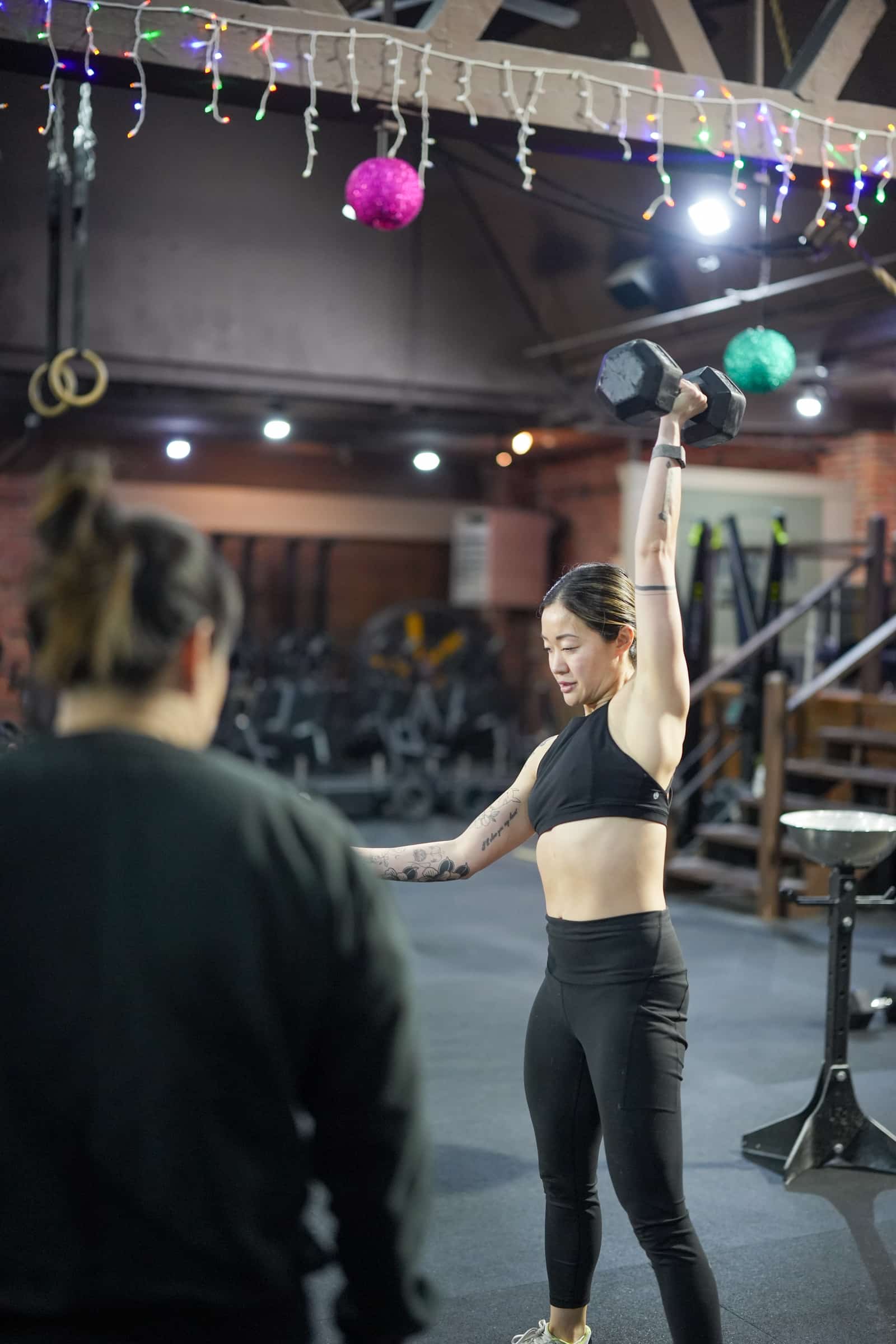
Our lunch class at Persistence Athletics is intentionally built for the SLU and Amazon worker. We are about 8 minutes on foot from the Amazon Spheres. Most of our 12 PM crowd are repeat regulars who walk over together.
The programming reflects what these bodies need. Every week includes:
- 2 dedicated posterior chain strength sessions (Romanian deadlift, deadlift, hip thrust)
- 1 thoracic mobility focus before the strength block
- Conditioning that caps at 18 minutes for lunch classes
- Hip flexor work integrated into every warm-up
- Grip-heavy carries built into Wednesday's session
AJ runs the lunch class most weekdays, with the rest of the crew covering the other slots. He coaches it with the tech worker schedule in mind: 75 minutes door to door including shower. He scales weights aggressively for first-timers and adds intensity for the regulars who are 12+ weeks in. With a coach-to-athlete ratio of roughly one to twelve, nobody hides in the back of the room. Take Devang, a software engineer who walked in as a true beginner and built a genuine strength base over a few hundred classes. None of that came from a hero day. It came from showing up on his lunch break, week after week, and letting the load climb slowly.
For the full schedule and all of our class times, our group classes page has the breakdown. For tech workers specifically, our gym near Amazon page covers exactly what makes the lunch class work for the SLU commute. Our coaches page lists every coach with their credentials, including the lunch crew.
If you are still in the research phase, the Seattle CrossFit guide walks through the broader landscape and helps you compare options across neighborhoods. Or just book a free class, come in on your lunch break, and see how your back feels at 3 PM.
The 12-week tech worker reset plan
If you have been at a desk for years and want a structured arc, this is the 12-week plan I run with most tech workers who join Persistence.
Weeks 1 to 4: Foundation
3 classes a week. Every class includes a hip flexor mobility piece, a posterior chain strength piece, and conditioning under 15 minutes. Loads stay light. The goal is pattern recognition and getting the body used to consistent training. Most members are sore for the first 2 weeks and feel measurably better by week 4.
Weeks 5 to 8: Loading
4 classes a week. Strength loads progress 2.5 to 5 lb per session on the main lifts. Conditioning intensity creeps up. Mobility work continues but shifts from "fix damage" to "maintain quality." This is when most tech workers start hitting their first PRs.
Weeks 9 to 12: Capacity
4 to 5 classes a week. Heavier strength sessions twice a week, longer conditioning twice a week, one mobility-focused session. By the end of week 12, the postural changes are visible. The lifts that felt heavy in week 1 feel light. Most members report sleeping better, sitting taller, and being less wrecked by long meeting days.
The 12-week arc is conservative on purpose. Tech workers come in stressed and chronically under-recovered. Pushing volume early backfires. The members who follow the arc patiently are the ones still training 3 years later. Pouria, who has logged something close to 1,100 classes over more than six years, is the living proof of that. The body that lasts is not the one that goes hardest in month one. It is the one that keeps showing up.
Frequently Asked Questions
What is the best workout for tech workers with desk jobs?
Tech workers benefit most from a routine built around posterior chain strengthening, hip mobility, and thoracic extension. Specifically: Romanian deadlifts, hip thrusts, prone Y-T-W raises, couch stretch holds, and short conditioning intervals like a 12-minute AMRAP. The combination directly counters the rounded posture, tight hips, and weak posterior chain that desk work creates.
Can I get a real workout in during a 1-hour lunch break?
Yes. A 60-minute coached class fits comfortably in a tech worker lunch window if the gym is within an 8-minute walk. At Persistence we run a 12 PM class specifically built for the SLU and Amazon lunch crowd: warm-up, focused strength piece, 12 to 15 minute conditioning, cool-down. Members walk back to their desk in 75 minutes total including shower.
How often should desk workers do CrossFit?
3 to 4 days a week is the sweet spot. Less than 3 and the desk-induced postural changes outpace the gym work. More than 5 without recovery does not produce better results because tech worker stress already taxes recovery. The members who progress fastest train 3 to 4 days, sleep 7+ hours, and walk between meetings.
What if my back already hurts from sitting all day?
Tell the coach before class. We scale every movement to work around existing back issues. The fastest fix for desk-induced back pain at our gym has been a combo of hip flexor mobility, glute activation, and gradual posterior chain strengthening. Most members with mild desk-related back pain feel measurably better within 6 to 8 weeks of coached training.
Can CrossFit fix bad posture from coding?
It can substantially improve it. The combination of thoracic extension drills, scapular retraction work, posterior chain strength, and hip mobility addresses the root causes of desk-rounded posture. We have had Amazon engineers come in with classic forward-head, rounded-shoulder posture and look measurably different in 12 weeks. The change is structural, not just temporary.
Is CrossFit too intense for someone who sits all day?
Not when scaled properly. The whole point of a coached gym is that intensity scales to your starting point. We have desk workers who could barely squat to a chair on day one and are squatting real load with confidence 6 months later. The scaling makes CrossFit one of the best fits for sedentary professionals starting from zero.
Try a free first class at Persistence Athletics
If you sit at a desk all day and you are ready to undo the damage, your first class at Persistence Athletics in Belltown is free, and we will scale it to your starting point. Trial slots that fit a working schedule include Saturday 8:00 AM and weekday evenings at 6:30 PM (Friday 6:00 PM). Book your free class at 3025 1st Ave, Belltown, Seattle, about 8 minutes on foot from the Amazon Spheres and walkable from anywhere in SLU. Questions first? Call us at (206) 593-4236.
Want to take this further?
Talk to a coach about crossfit programming at Persistence Athletics.