
Fat Loss While Training Hard: What Actually Works
Honest fat loss strategy for athletes training 4 to 6 days a week. The deficit ranges that work, what does not, and a real client case study.

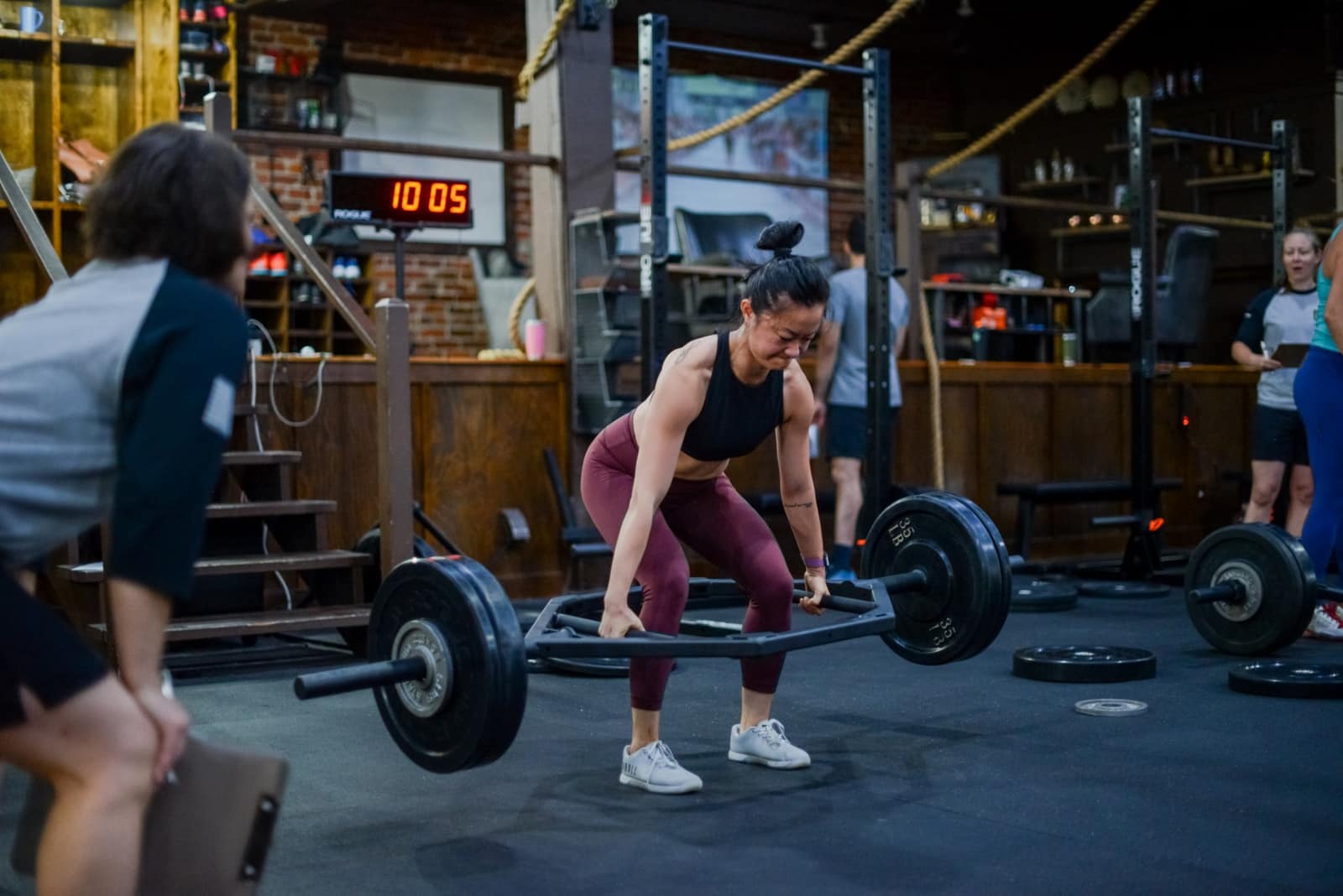
Most fat loss advice does not survive contact with hard training
Most fat loss content is written for sedentary people. The protocols are built for someone training 0 to 2 hours a week, not 6 to 10. When CrossFit and HYROX athletes try to apply that advice, the wheels come off in 2 to 4 weeks: fatigue, missed lifts, food obsession, eventual rebound.
I see it most often in January. Someone who has been training with us for a year decides to drop fifteen pounds, finds a 1,200-calorie plan online, and three weeks later they are dragging through the Saturday HYROX class at 9:30 AM looking gray. The plan was not built for someone who also has to row, ski-erg, and sled-push for ninety minutes. That is the gap this post is meant to close.
This is the honest version, written for athletes who actually train hard. The deficit ranges that work, the protein targets that protect lean mass, the carb cycling that keeps performance up, and a real member case study from our floor at Persistence Athletics in Belltown.
I am Jacque Dewangan, CFL3 and Precision Nutrition Level 2, head coach at Persistence Athletics. I have run this exact framework with dozens of members on 1st Ave, and I have also run it on myself between competition seasons. Updated June 2026.
Table of Contents
- The honest deficit range for athletes
- The protein non-negotiable
- Carb structure: training days vs rest days
- A real member cut: 18 lb in 16 weeks with strength held
- How we coach fat loss at Persistence Athletics
- What does not work
- Frequently Asked Questions
The honest deficit range for athletes
The sustainable fat loss range for athletes training 4 to 6 days a week is 10 to 20 percent below maintenance.
| Deficit | Calorie cut per day (180 lb athlete, 2700 maintenance) | Weight loss rate | Sustainability |
|---|---|---|---|
| 10% | 270 cal | 0.4 to 0.6 lb/wk | High; weeks to months |
| 15% | 405 cal | 0.6 to 1.0 lb/wk | High; standard cut |
| 20% | 540 cal | 0.8 to 1.2 lb/wk | Moderate; intermediate cut |
| 25% | 675 cal | 1.0 to 1.5 lb/wk | Low; aggressive cut |
| 30%+ | 810+ cal | 1.5+ lb/wk | Very low; not recommended for athletes |
Most athletes who succeed at fat loss long-term run 10 to 15 percent deficits. The reason is not weight loss speed (faster is technically possible) but adherence and training quality.
Why aggressive deficits fail for athletes
At 25 percent or above, the body has 4 visible problems:
- Strength drops. Working sets feel heavier within 2 weeks. Top sets fall.
- Recovery drags. Soreness lingers. Sleep quality declines.
- Hunger interferes with adherence. Most athletes break the diet within 3 to 4 weeks.
- Metabolic adaptation kicks in. The body lowers daily expenditure. Weight loss stalls.
The athletes who lose 30+ lb successfully usually do it across 6 to 9 months at modest deficits, not 12 weeks at extreme deficits. I think of Pouria, who has been showing up for more than six years and well past a thousand classes. Nobody who trains like that got there by crash dieting. They got there by keeping the work sustainable for years, and your nutrition has to be just as sustainable as your attendance.
The protein non-negotiable
The single most important variable during a cut is protein. The target is 1 g per pound of bodyweight, every day.
For a 180 lb athlete, that is 180 g of protein. For a 200 lb member, 200 g. Higher protein during a cut:
- Protects lean mass (strength stays)
- Increases satiety (less hunger)
- Has a higher thermic effect (small but real metabolic benefit)
- Supports recovery (training does not collapse)
The athletes who go below 0.8 g/lb during a cut typically lose 30 to 50 percent of their weight loss as muscle instead of fat. The athletes who hit 1.0 g/lb keep most of the muscle and lose mostly fat. The difference is dramatic.
How to actually hit 200 g of protein per day
For a 200 lb member cutting, here is a typical structure:
| Meal | Protein source | Amount |
|---|---|---|
| Breakfast | 5 eggs + Greek yogurt | 50 g |
| Pre-workout | Whey shake (1 scoop) | 25 g |
| Lunch | 8 oz chicken breast | 60 g |
| Snack | Cottage cheese 1 cup | 28 g |
| Dinner | 6 oz salmon or lean beef | 40 g |
Total: 203 g.
Most cuts fail because the member tries to hit protein with one big dinner instead of distributing across the day. Spread protein across 4 to 5 meals and the daily total becomes much easier to hit. When a member tells me they "just cannot eat that much protein," nine times out of ten the real problem is that breakfast is a coffee and lunch is a granola bar, and they are trying to cram 150 grams into dinner. Front-load it and the math stops feeling impossible.
If you want a second set of eyes on your numbers, our nutrition coaching starts with two weeks of just looking at what you already eat before we change a single thing.
Carb structure: training days vs rest days
The trick to keeping training quality during a cut is to protect carbs around training and pull the deficit from rest-day carbs and from fat.
Training day structure
- Protein: 1 g/lb
- Carbs: 1.5 to 2.0 g/lb (keep solid for performance)
- Fat: 0.3 to 0.4 g/lb (lower to absorb deficit)
For a 180 lb athlete cutting at 15 percent: 180 g protein, 270 to 360 g carbs, 54 to 72 g fat. Roughly 2300 calories.
Rest day structure
- Protein: 1 g/lb (same)
- Carbs: 1.0 to 1.2 g/lb (lower; less training demand)
- Fat: 0.4 to 0.5 g/lb (slightly higher for satiety)
For the same athlete: 180 g protein, 180 to 220 g carbs, 72 to 90 g fat. Roughly 2050 calories.
The 250-calorie difference between training and rest days creates a weekly deficit through carb cycling without compromising training-day performance.
A real member cut: 18 lb in 16 weeks with strength held
Here is a real one from our floor. An Amazon engineer in his late 30s, training with us 4 to 5 days a week, walked the 8 minutes over from his office and told me he wanted to drop about 20 pounds. Started at 195 lb, wanted to get to 175 to feel and move better. His one worry, the same one almost everyone has, was that he would lose the strength he had spent two years building. He kept training 4 to 5 days a week the whole way through. Here is how it actually went.
Week 0 starting point
- Weight: 195 lb
- Training: 4 to 5 days a week (mix of CrossFit and strength)
- Maintenance calories: 2700 (estimated from 4-week tracking)
- His main fear: losing his deadlift, which he had worked hard for
The plan
- Deficit: 15 percent (cut to 2300 calories on training days, 2050 on rest days)
- Protein: 200 g/day (1 g/lb)
- Carbs: 320 g training days, 220 g rest days
- Fat: 60 g training days, 75 g rest days
- Training: same as before, no extra cardio
Weeks 1 to 4
- Weight loss: 5 lb (1.25 lb/week initially, mostly water in the first week)
- Training: no noticeable strength drop
- Adherence: high; meal prep on Sundays helped
Weeks 5 to 8
- Weight loss: 4 lb (slowing to 1 lb/week as expected)
- Training: deadlift working sets held steady, no drop
- Adjusted: added a small mid-day snack to manage afternoon hunger
Weeks 9 to 12
- Weight loss: 5 lb (1.25 lb/week, accelerated due to summer training volume)
- Training: hit a new deadlift personal best in week 11, lighter on the bar and stronger
- Mood and energy: stable; sleep good
Weeks 13 to 16
- Weight loss: 4 lb final
- Final weight: 177 lb (target was 175, close enough)
- Final deadlift: above where he started, not below
- Body composition: visibly leaner; strength held
Total: 18 lb lost in 16 weeks, deadlift stronger than when he started
The key variables that made it work:
- Modest deficit (15 percent, not 25)
- High protein (1 g/lb every day)
- Carb cycling (training days protected)
- Consistent training (no extra cardio added)
- Meal prep discipline (Sundays were structured)
After the cut, he moved to maintenance for 8 weeks before deciding whether to cut further. He chose to stay at 177 because he felt good, lifts were strong, and adherence at maintenance was easier. That is the part most people miss: the goal is not the lowest number on the scale, it is a number you can hold while still training the way you want to.
If you want to see what training like that engineer feels like, come do a session with us first. Book a free class at Persistence Athletics in Belltown, and we can talk through where a cut would actually fit your week.
How we coach fat loss at Persistence Athletics

In our nutrition coaching program, most fat loss engagements run 12 to 16 weeks. The structure for almost every member looks like that engineer's cut: modest deficit, high protein, carb cycling, no cardio additions.
The first 2 weeks are baseline tracking. We compute current intake, set targets, and adjust portion sizes. From week 3 forward, the plan runs and we adjust monthly based on weight trend and training feedback.
This is also where the context of someone's life matters more than any spreadsheet. I coached Sofi through her return after having a baby, and a textbook 15 percent deficit was not the right first move for her. We started by rebuilding consistency and protein, kept calories at maintenance, and only opened a deficit once sleep and energy came back. Postpartum, masters athletes, anyone managing a health condition, none of them gets the cookie-cutter version. The framework bends to the person.
For members in group classes, no additional training is needed during a cut. The training stimulus is already there. Adding more cardio just digs into recovery without adding fat loss.
For members on personal training, the structure can be even tighter because the coach sees the lifts every week and can flag strength drops early. PT plus nutrition coaching together is the highest-success-rate combination for fat loss while training hard.
The main thing we coach is patience. 12 to 16 weeks feels long. The members who push for faster lose more muscle, stall sooner, and rebound. The members who run the modest plan finish in better shape, with their strength intact, and with the skill to maintain.
What does not work
For honesty's sake, here is what does not work for fat loss while training hard, and why.
- Hours of cardio. Eats recovery, no extra fat loss vs. a structured deficit. Cardio is fine for cardio fitness but the wrong tool for fat loss in someone already training hard.
- Zero-carb diets. Tanks training quality within 2 to 3 weeks. CrossFit and HYROX are glycolytic. Carbs are fuel.
- Skipping meals. Causes overeating later. Adherence collapses by week 3.
- Fasted training every day. Briefly works, long-term tanks lifts. Use fasted training selectively (rest days, light sessions), not as a default.
- Juice cleanses, detoxes, extreme protocols. Fast water loss, fast rebound. No sustainable fat loss.
- 30+ percent deficits. Strength drops, recovery drags, adherence collapses. Most athletes break in 3 to 4 weeks.
If your current fat loss plan is on this list, the plan is not the problem. The category is.

Frequently Asked Questions
How big a calorie deficit can I run while training hard?
10 to 20 percent below maintenance is the sustainable range for athletes training 4 to 6 days a week. That is roughly a deficit of 250 to 500 calories per day, leading to 0.5 to 1 lb of weight loss per week. Larger deficits (25+ percent) trigger fatigue, strength loss, and recovery problems within 2 to 3 weeks. The athletes who succeed long-term run modest deficits for longer.
Will I lose strength while cutting?
Some, but less than most people fear. Athletes running modest deficits (10 to 15 percent) with high protein (1 g/lb) and consistent strength training typically maintain 90 to 95 percent of their lifts during a 12 to 16 week cut. Larger deficits or low protein lead to faster strength loss. The case study below shows a member who lost 18 lb while holding onto his deadlift.
How much protein do I need while cutting?
1 g per pound of bodyweight, non-negotiable. Higher protein protects lean mass during a deficit. Lower protein (under 0.8 g/lb) accelerates muscle loss and slows fat loss. For a 200 lb member cutting, that is 200 g of protein per day every day. The protein target stays constant; carbs and fat absorb the deficit.
Should I cut carbs to lose fat while training?
No, especially not on training days. CrossFit and HYROX are glycolytic. Cutting carbs on training days kills performance and recovery. The right structure is to keep training-day carbs solid (1.5 to 2.0 g/lb) and pull the deficit from fat or from rest-day carbs. Members who slash carbs on training days typically stall their progress within 4 weeks.
How long should a fat loss phase last?
12 to 16 weeks for most members, then a maintenance phase before the next cut if needed. Cutting longer than 16 weeks straight typically leads to metabolic adaptation, loss of training intensity, and rebound weight gain when the deficit ends. The right rhythm is cut-maintain-cut-maintain in cycles, not endless dieting.
What does not work for fat loss while training hard?
Hours of cardio, zero-carb diets, skipping meals, fasted training every day, juice cleanses, and extreme deficits. All of these produce fast initial weight loss but compromise strength, recovery, and adherence. The athletes who succeed at fat loss while training hard run modest deficits, hit protein targets, train consistently, and let the body recompose over 12 to 16 weeks.
Try a free first class at Persistence Athletics
If you want to lose fat without losing your lifts, this is the framework we run with members at Persistence Athletics in Belltown. Your first class is free and scaled to you, and it includes a chat with a Precision Nutrition Level 2 coach about whether nutrition coaching makes sense alongside your training. Book your free class at Persistence Athletics, 3025 1st Ave, Belltown, Seattle. We are 8 minutes from Amazon and walkable from anywhere in downtown. Questions first? Call us at (206) 593-4236.
Want to take this further?
Talk to a coach about nutrition programming at Persistence Athletics.