
How to Choose a Personal Trainer in Seattle
A 7-step buyer's guide for choosing a personal trainer in Seattle. Credentials, fit, intake, trial sessions. Written by a CFL3 head coach in Belltown.

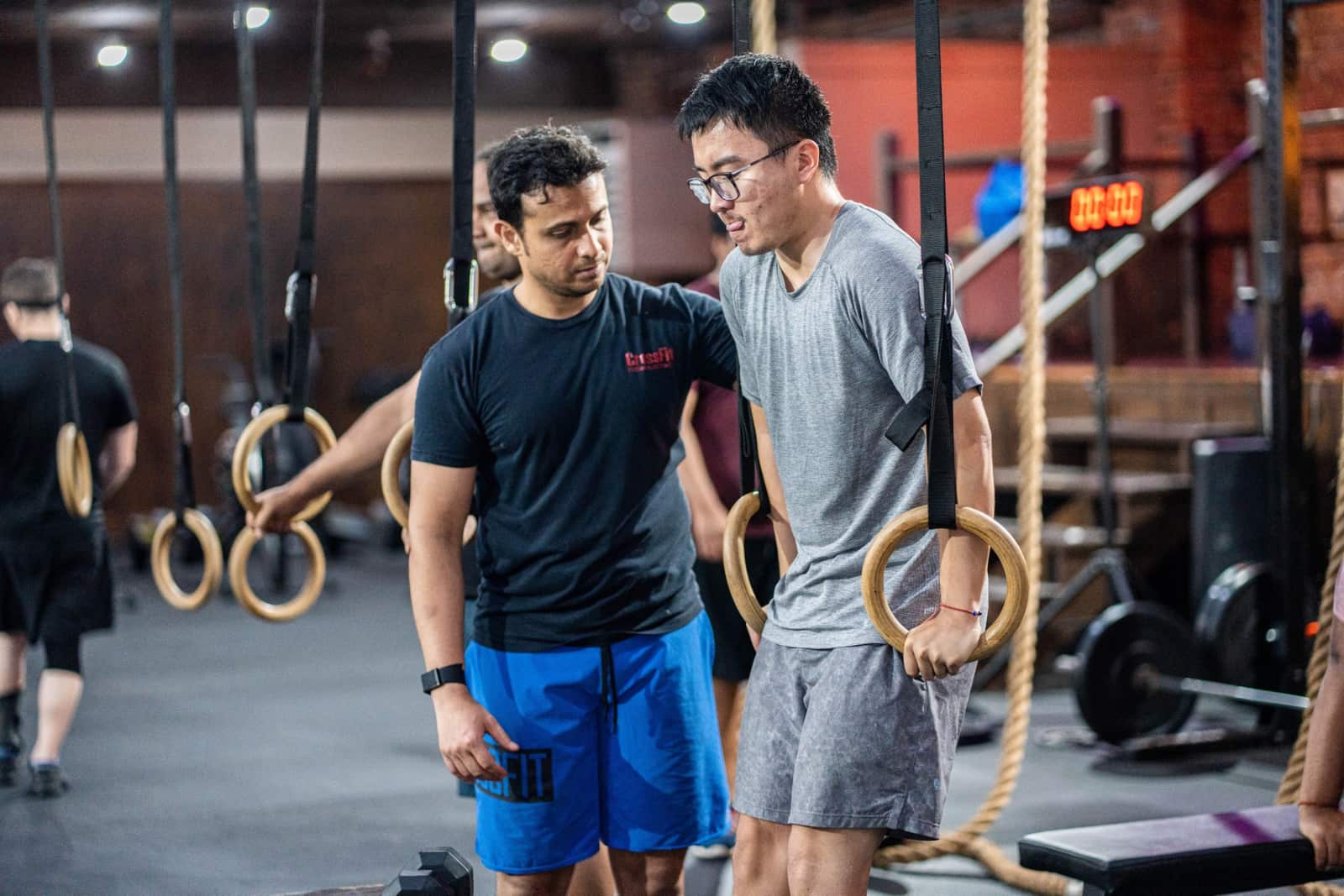
Picking a personal trainer in Seattle is a $5,000 decision
If you train with someone twice a week for a year at $100 a session, that is over $10,000. Even at $80 a session for one session a week, it is over $4,000.
Most people in Seattle pick a trainer the way they pick a coffee shop. Walked past it. Saw a sign. Booked a session. Then stuck around for six months out of inertia, even when something felt off.
This is the longer version of the conversation I have with people who walk into Persistence Athletics on 1st Ave in Belltown when they ask how to evaluate trainers in Seattle. The seven-step framework below applies whether you are looking at our gym, a chain like Equinox, a 1-on-1 storefront in Capitol Hill, or a strength-focused operation in Ballard. I am Jacque Dewangan, CFL3 and Precision Nutrition Level 2, head coach at Persistence Athletics. Updated June 2026.
Table of Contents
- Why most people pick the wrong trainer
- The 7-step framework for choosing a trainer
- How credentials actually map to outcomes
- How we coach the choice at Persistence Athletics
- The 5 questions to ask any trainer in your first call
- Frequently Asked Questions
Why most people pick the wrong trainer
The most common pattern I see when someone transfers to Persistence from another Seattle gym is the same story. They picked their last trainer based on convenience or a friendly first impression, then discovered six months in that the trainer did not actually have the credentials, programming chops, or attentiveness to move them toward their goal.
I had a version of this exact conversation a few weeks ago with a software engineer who walked in off 1st Ave. He had paid two different downtown trainers for a year and a half and could not tell me what his program was building toward. Compare that to Devang, who came to us as a near-beginner and is now one of our stronger lifters after a few years of consistent, structured progression. Same starting profile, an engineer who sits at a desk all day. The difference was never effort. It was whether the coaching had a plan behind it.
The three failure modes:
- Convenience-first. Picked the trainer at the gym closest to home or work. Never evaluated whether the trainer was actually qualified for the goal.
- Personality-first. Picked the trainer they hit it off with at a meet-and-greet. Friendly is not the same as competent.
- Price-first. Picked the cheapest option in the neighborhood. Underpaid trainers are usually undertrained.
The right way to pick a trainer involves a process. Not a long one, but a deliberate one. Here is the framework.
The 7-step framework for choosing a trainer
Step 1: Verify credentials
Ask for the cert. Look it up. The major reputable certifying bodies for general personal training are NASM, NSCA-CPT, ACE, and ACSM. For specialty work:
- CrossFit: CFL2 minimum, CFL3 for serious coaching
- Olympic lifting: USAW Level 1 or 2, or a CFL3 with weightlifting focus
- Powerlifting: USAPL coach cert or CSCS
- Nutrition: PNL1 or PNL2, or a registered dietitian (RD/RDN) for clinical work
- Corrective / rehab adjacent: NASM-CES, or work in coordination with a PT
A degree in exercise science, kinesiology, or strength and conditioning is a strong plus on top of the cert. A trainer with no cert and no relevant degree is not a trainer.
Step 2: Assess specialty fit
A great trainer for general weight loss is not necessarily a great trainer for HYROX prep. A great strength coach may not be a great fit for postpartum return-to-training.
Match the specialty to the goal. Ask the trainer what their last 5 clients were working on. If none of them sound like you, the fit is probably wrong. When Sofi came back to training after having her baby, she did not need a generalist who would hand her a bootcamp. She needed someone who understood postpartum return, what to load and when, and what to leave alone for a while. That is specialty fit.
Step 3: Evaluate the intake process
Good trainers run a real intake. That means a movement assessment (squat, hinge, push, pull, lunge), a goal-setting conversation, an injury history review, and a discussion of training history. Bad trainers skip the assessment and put you straight into a workout.
If your first session is a workout instead of an assessment, the trainer is selling sweat, not coaching. The two are different products.
Step 4: Match training style
Some trainers are drill-sergeant types. Some are quiet observers who give one cue per set. Some are highly verbal and walk you through every rep. None of these are wrong. They are wrong for a specific person.
If you hate being yelled at, do not hire a drill sergeant. If you need external accountability and high-energy coaching, the quiet observer will frustrate you. Ask, in your first call, "what is your coaching style?" and notice whether the answer matches what you want.
Step 5: Check the gym environment
The trainer is half the equation. The gym itself is the other half. Walk in at the time you would actually train. Notice the noise level, the cleanliness, the equipment condition, the music, the energy.
A trainer in a beautifully equipped, well-run gym has tools to work with. A trainer in a cluttered, broken-equipment gym is fighting their environment every session, even if they are individually excellent.
Step 6: Test communication
Send the trainer a message between sessions. Ask a follow-up question. Notice the response time and quality. Trainers who go silent between sessions are signaling the level of attention you will get long-term.
The coaches we hire at Persistence are expected to respond to client messages within 24 hours during the work week. That is the standard you should expect anywhere you train.
Step 7: Trust the trial session feel
The most important step is the cheapest. Do a trial session before you commit to a package. Most reputable Seattle gyms offer one. After the trial, ask yourself:
- Did the trainer listen during intake?
- Did the program match my level?
- Did I feel coached, not just pushed?
- Would I want to come back tomorrow?
If three of four are yes, sign up. If two or fewer, keep looking.
How credentials actually map to outcomes
People assume credentials are bureaucratic checkboxes. They are not. Each cert tests a specific skill set, and the right cert for your goal genuinely changes what your trainer can do.
| Credential | What it tests | Best for |
|---|---|---|
| NASM-CPT, ACE-CPT | General PT competency, basic programming, anatomy | General fitness, weight loss, beginner training |
| CSCS | Strength and conditioning, programming for athletes | Sport prep, performance training |
| CFL2, CFL3 | CrossFit movement coaching, scaling, programming | CrossFit, hybrid athletics, HYROX |
| USAW L1/L2 | Olympic lifting technique and progression | Snatch, clean and jerk, weightlifting prep |
| MS Strength and Conditioning | Graduate-level program design, biomechanics, periodization | Advanced lifters, plateau-breakers, complex cases |
| PNL1, PNL2 | Behavior-based nutrition coaching | Body recomp, sustainable nutrition habits |
| RD / RDN | Clinical nutrition and medical nutrition therapy | Disease management, eating disorder recovery |
The honest read: most people doing general fitness can hire a solid CPT-level trainer and get good results. The cert difference matters most when goals get specific (sport, plateau, injury, postpartum, body recomp at scale, masters athlete).
Here is one example of where it shows up. Aman came to us a sedentary engineer and ended up qualifying for HYROX. That arc does not happen by accident or by enthusiasm alone. It happens when a coach can periodize the work, read where you are stalling, and adjust. That is the part the cert is supposed to test for, and the part you are paying for when the goal gets specific.
Persistence coach roster
For context, here is the credential stack our coaches carry, so you can compare to what you are evaluating elsewhere:
- Ravi Dewangan, CFL3, MS Strength and Conditioning, CrossFit Seminar Staff. Heads programming, strength coaching, and 1-on-1 PT for advanced lifters.
- Jacque Dewangan, CFL3, PNL2. Head coach. Group classes, beginner PT, gymnastics progressions, and nutrition coaching.
- AJ, CFL coach, and the rest of the crew (Aannesha, Muthu, Brayan) run weekday classes and HYROX-focused work.
That is a lot of credential per square foot for a gym our size. Compare it to whoever you are evaluating. Nutrition coaching here runs through me as a Precision Nutrition Level 2 coach, so the same person watching your training also has eyes on the food side when you want it.
How we coach the choice at Persistence Athletics
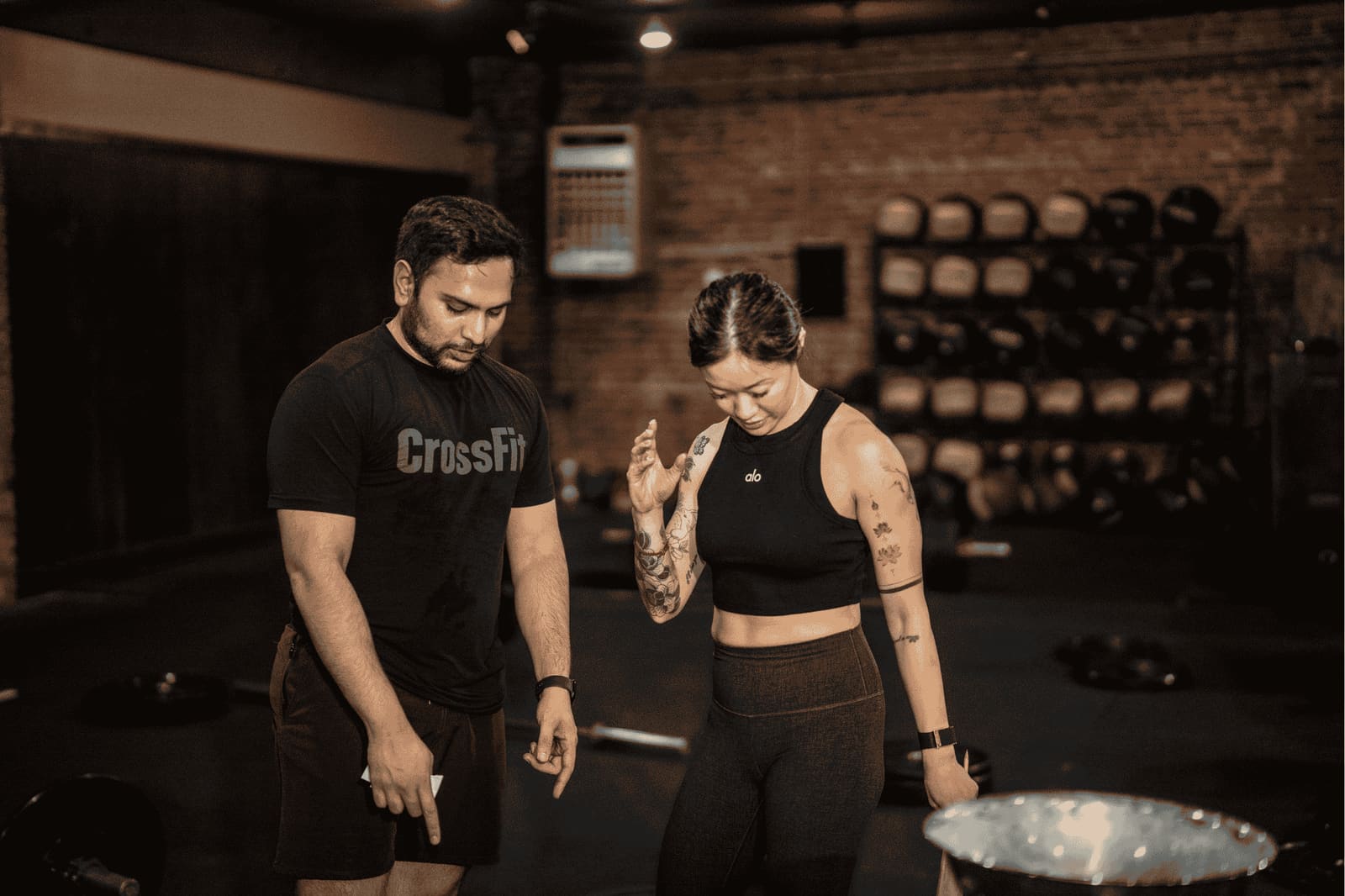
When someone walks into Persistence considering personal training, the first thing we do is figure out whether PT is even the right product. About half the time, the right answer is group classes for the first 60 days, then re-evaluate. PT is the right answer when there is a specific issue: a chronic injury, a plateau that needs targeted work, a sport prep cycle, postpartum return, or a goal that demands precision (HYROX qualifier, masters competition).
We run a free intro before any PT commitment. The intro is the trial session. We do a movement screen, talk through goals, and the prospective client meets the coach we would assign. About 70 percent of intros become PT clients. The 30 percent who do not are usually either better fit for group classes or not ready to commit at the dollar level PT requires. Both outcomes are fine. I would rather route someone to the right product than sell them the expensive one.
If you want to compare cost openly, our pricing page has the rate structure published. We do not gate it. The general Belltown PT market sits in a wide range, which we cover in detail on our Belltown personal trainer page.
For a wider view of our coaching staff before you reach out, the coaches page has bios and credentials for everyone.
The 5 questions to ask any trainer in your first call
Use these in any first conversation with a prospective trainer in Seattle, anywhere. They expose fit fast.
What is your highest-level certification, and where did you take your most recent continuing ed? Trainers who keep learning name a recent course. Trainers who stopped at their entry-level cert get vague.
What does a typical week of programming look like for someone with my goal? Listen for specifics. A great trainer can describe their structure in 60 seconds. A weak one stumbles or generalizes.
Tell me about a recent client who started in a similar place to me. What did the first 12 weeks look like? This tests whether they have actually coached someone like you, or are just going to figure it out as they go.
What is your cancellation and rescheduling policy? Less about the policy itself, more about how clearly they answer. Murky answers signal trouble down the road.
If we work together for 12 weeks and I am not making progress, what is your process? Good trainers have a re-assessment protocol. Weak ones say "we'll just keep working hard."
If you are evaluating Persistence, the answers to all five are on our website or in the intro call. Ask them anyway. Hear the answers.
Frequently Asked Questions
What credentials should a personal trainer in Seattle have?
At minimum, a nationally recognized cert (NASM, NSCA-CPT, ACE, ACSM) or a discipline-specific cert relevant to your goals (CFL2 or CFL3 for CrossFit, USAW for Olympic lifting, PNL1 or PNL2 for nutrition). A degree in exercise science or strength and conditioning is a strong plus. Trainers working with injuries or chronic pain should have a corrective exercise specialty or work in coordination with a physical therapist.
How many sessions should I do before I judge a trainer?
Three. The first session is intake and assessment. The second is the trainer testing programming on you. The third is when you start to feel whether the relationship is going to work. If you do not feel coached, listened to, and challenged appropriately by session three, the fit is wrong. Most reputable Seattle trainers will not lock you into long packages before this trial window.
Is it worth paying more for a trainer with advanced credentials?
If your goal is general fitness, a solid CPT-level trainer with good people skills is plenty. If you are training for a sport, recovering from injury, or trying to break a strength plateau, the difference between a CPT and a CFL3 with an MS in strength and conditioning is significant. Pay for the credential when the goal demands it.
What is the difference between a personal trainer and a strength coach?
A personal trainer typically holds a CPT and works with general population clients on weight loss, muscle tone, or basic fitness. A strength coach has additional credentialing (CSCS, CFL3, USAW) and specializes in performance-based programming for athletes or experienced lifters. The line is blurry, but if you have specific performance goals, ask whether the trainer has coached someone with similar goals before.
Should I choose a trainer at a chain gym or a boutique gym?
Chain gym trainers tend to have lower hourly rates but variable credentials and high turnover. Boutique gyms like ours in Belltown employ fewer, more credentialed coaches who stay long-term. The right answer depends on your budget and goals. For complex goals, the boutique model usually wins. For basic fitness on a tight budget, a chain gym CPT can work.
How do I know if a trainer is the right fit before I commit?
Use a free trial or paid intro session. Pay attention to whether they listen during intake, whether they coach to your level (not above or below), and whether you feel safe asking questions. A trainer who talks more than they listen in the first session is a red flag. So is one who pushes you to commit to a long package before you have done a single workout together.
Try a free first class at Persistence Athletics
If you want to evaluate Persistence as part of your trainer search, your first class is free and scaled to your level. You will meet a CFL3 coach, get a movement screen, and find out whether PT, group classes, or a hybrid is the right fit for your goals. No pressure, no commitment to a package. Book your free class at Persistence Athletics, 3025 1st Ave, Belltown, Seattle, WA 98121. About 8 minutes from Amazon and walkable from anywhere in downtown Seattle. Questions first? Call us at (206) 593-4236.
Want to take this further?
Talk to a coach about personal training programming at Persistence Athletics.