
Best Shoes for HYROX (and Why It Matters)
What to look for in HYROX race shoes, what categories actually work, and what coaches and members at Persistence Athletics in Belltown Seattle wear.

Race day is the wrong time to test new shoes.
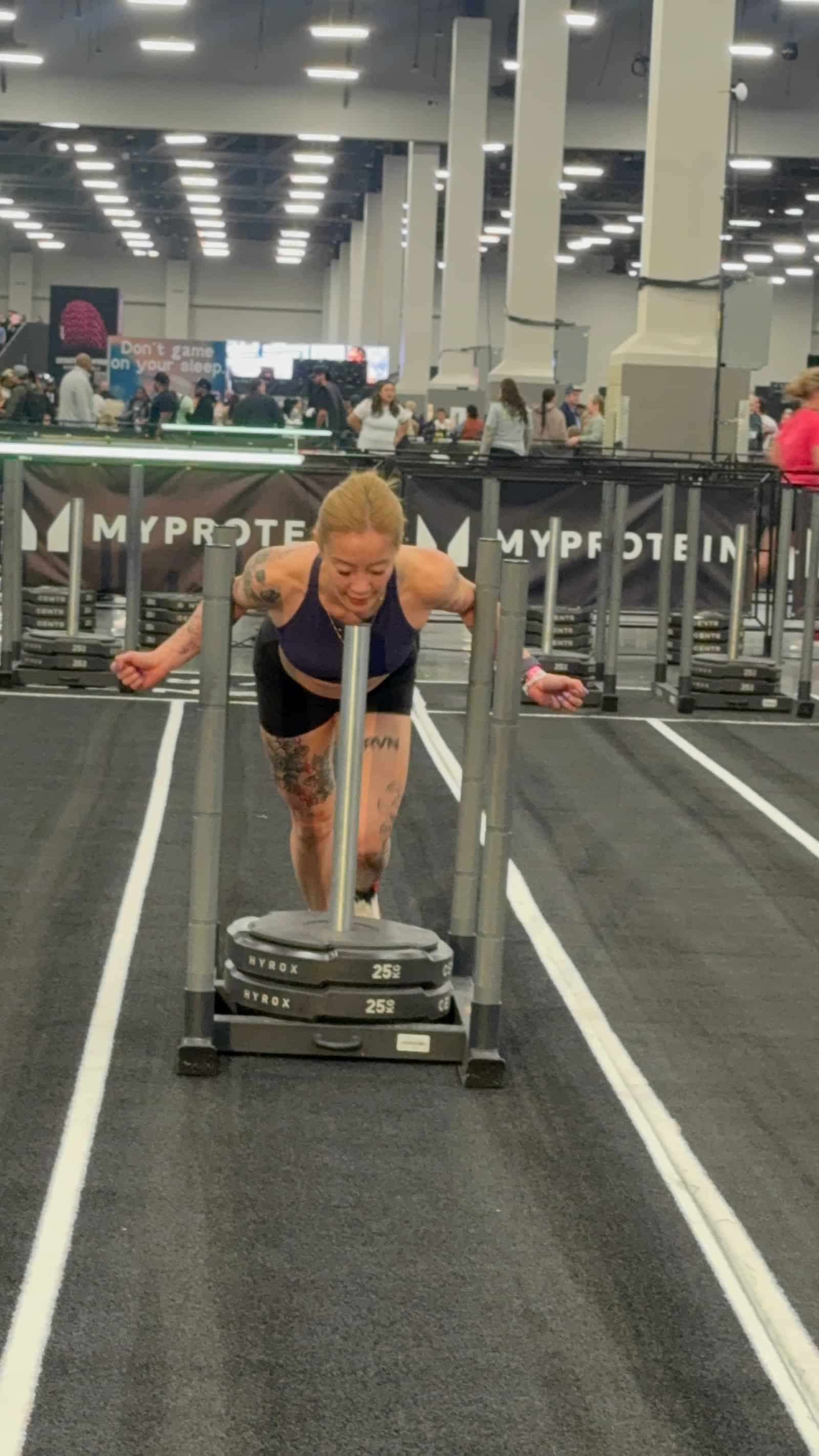
Every season at Persistence Athletics in Belltown, I see at least one first-time HYROX racer show up to our Saturday class with a brand new pair of shoes they bought the week before their race. They wanted "the right HYROX shoe" and waited until the last minute. By kilometer 3 they have a hot spot on the heel. By the sled push the toe box is pinching. By the wall balls they are racing with a blister, and their finish time is 4 minutes off what it should have been.
Shoe choice for HYROX is not a fashion decision and it is not a marginal gain. It is one of the few pieces of gear that can either save you 30 to 60 seconds across the race or cost you 3 to 5 minutes plus a blister. The good news: there is no single correct shoe. There are categories of shoes that work, things to look for, and things to avoid. If you understand the categories, you can pick a pair you trust. Seattle adds one wrinkle: most local HYROX training and the races run on indoor turf or rubber flooring, and our wet-season gym floors get slick by station 5, so outsole grip matters more here than the brand marketing admits.
I'm Ravi Dewangan, CFL3, MS in Strength and Conditioning, and CrossFit Seminar Staff. I have raced HYROX, coached racers through it, and watched dozens of pairs of shoes succeed and fail under HYROX-specific stress. This guide covers what to look for, what categories work, and what we actually wear at Persistence. Updated June 2026.
Table of Contents
- What HYROX actually demands from a shoe
- The 3 shoe categories that work for HYROX
- What to look for: the 5 features that matter
- What we wear at Persistence Athletics
- How to break in your race shoes
- Frequently Asked Questions
What HYROX actually demands from a shoe
HYROX is a hybrid event. 8 km of running broken into 1 km segments. 8 functional stations: SkiErg, sled push, sled pull, burpee broad jumps, row, farmers carry, sandbag lunges, wall balls. Your shoe has to handle all of it.
Each piece demands something different.
- Running (8 km total). Cushion, energy return, breathability. A pure running shoe optimizes for this.
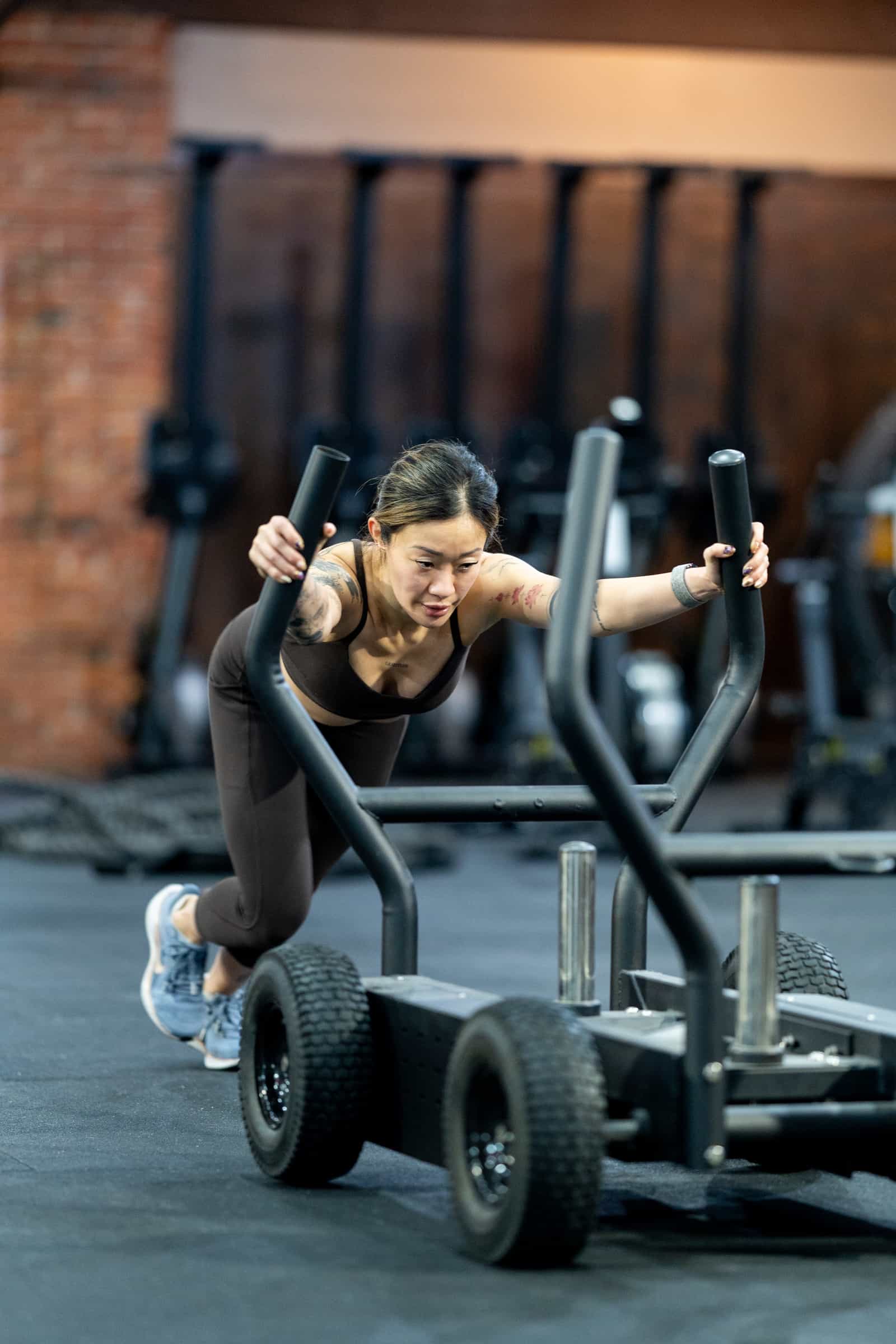
- Sled push and pull. Forefoot grip, firm midsole, low heel slip. A pure lifting shoe is overkill but a pure running shoe compresses too much.
- Burpee broad jumps. Firm midsole for the jump, grippy outsole for the burpee floor portion. Stack height matters less than stability.
- Wall balls. Stable platform under the squat, decent heel-to-toe transition.
- Row, SkiErg, sandbag lunges. Less shoe-specific. Whatever works for the others usually works here.
The shoe that wins HYROX is the one that compromises well across all of these, not the one that wins any single demand. A pure running shoe with 35 mm of stack and a 10 mm drop will feel great on the runs and terrible everywhere else. A pure lifting shoe will feel unbeatable on the wall balls and will crush your knees by kilometer 4.
When I coach the Saturday HYROX class, the shoe failures I see are almost always one of those two extremes: the road runner who floats on the runs and folds on the sled, or the lifter who is locked in for wall balls and shuffling by the second 1 km segment. The middle of the range is boring and it wins.

The 3 shoe categories that work for HYROX
Three categories of shoe consistently produce good HYROX results. Pick from these and you are 90 percent of the way to the right pair.
Category 1: CrossFit-style trainers. Nike Metcon, Reebok Nano, NoBull Trainer, TYR CXT, and similar. Flat or near-flat heel (4 to 6 mm drop), firm midsole, grippy outsole, stable forefoot. These shoes were built for hybrid functional fitness work, which is exactly what HYROX is. They handle the sled stations cleanly and the running is acceptable for 8 km. This is the most common HYROX shoe across all skill levels.
Category 2: Dedicated HYROX or hybrid trainers. A few brands now make shoes specifically marketed for HYROX or for hybrid endurance racing. They lean slightly more toward running than a Nano or Metcon (a touch more cushion, slightly higher stack) while keeping the firm sled-friendly midsole. If you find one that fits and you can train in it for 6 to 8 weeks, this is often the optimal choice for racers who do well on the running but want station support.
Category 3: Firm, low-drop running trainers. Some racers prefer a running shoe with a low drop (4 to 6 mm) and a firm midsole rather than a max-stack plush trainer. These work for HYROX if you understand the trade-off: better runs, slightly less stable sleds. Athletes with strong sled mechanics can get away with this. First-timers usually do better with a Category 1 shoe.
What does not work: max-stack road runners (too much compression on sleds), barefoot or zero-drop minimalist shoes (no cushion for 8 km), and dedicated weightlifting shoes (rigid heel ruins the runs).
What to look for: the 5 features that matter
When you are evaluating a specific shoe, check these 5 features. They predict HYROX performance better than brand or model name.
Heel-to-toe drop: 4 to 8 mm. Lower than 4 mm gets aggressive for first-timers. Higher than 8 mm starts to feel unstable on sleds. Most CrossFit-style trainers sit at 4 to 6 mm, which is the sweet spot.
Midsole firmness. Press your thumb into the midsole. If it deforms easily, it will compress under sled load and waste force. You want a midsole that feels firm but not rock hard. Hybrid trainers usually nail this.
Stack height: under 30 mm. Above 30 mm and the shoe gets unstable on lateral movement (broad jumps) and squat patterns (wall balls). Under 20 mm tends to under-cushion across 8 km. The 22 to 28 mm range covers most good HYROX shoes.
Outsole grip. HYROX runs are typically on indoor turf or rubberized flooring. Aggressive lugs are not necessary, but you do want a tacky rubber compound that grips when wet. Sweat-soaked turf is a real condition by station 5.
Toe box width. Wide enough that your toes splay during the wall ball squat. Pinched toe boxes cause problems in the back half of the race when feet swell. Most CrossFit-style trainers are roomy enough. Some narrow performance runners are not.
A shoe that hits all 5 of these is a candidate. A shoe that misses 2 or more is a no. If you want a coach to look at your current pair before you spend money, bring them to the Saturday class and we will stress-test them on a real sled. Book a free class and your first one is free.
What we wear at Persistence Athletics

Persistence Athletics in Belltown runs a HYROX program as a Saturday 9:30 to 11:00 AM class, included in every membership, with members training for races across the calendar year. Across our racers and coaches, the shoe choices fall into consistent patterns.
Coach Ravi (myself): I race in a hybrid CrossFit-style trainer with a 4 mm drop, firm midsole, and 24 mm stack. I keep two pairs in rotation across my prep block, one slightly newer than the other. The newer pair becomes the race shoe; the older pair stays in training rotation. By race day the race shoes have 4 to 6 weeks on them, which is the right amount of break-in without being beat up.
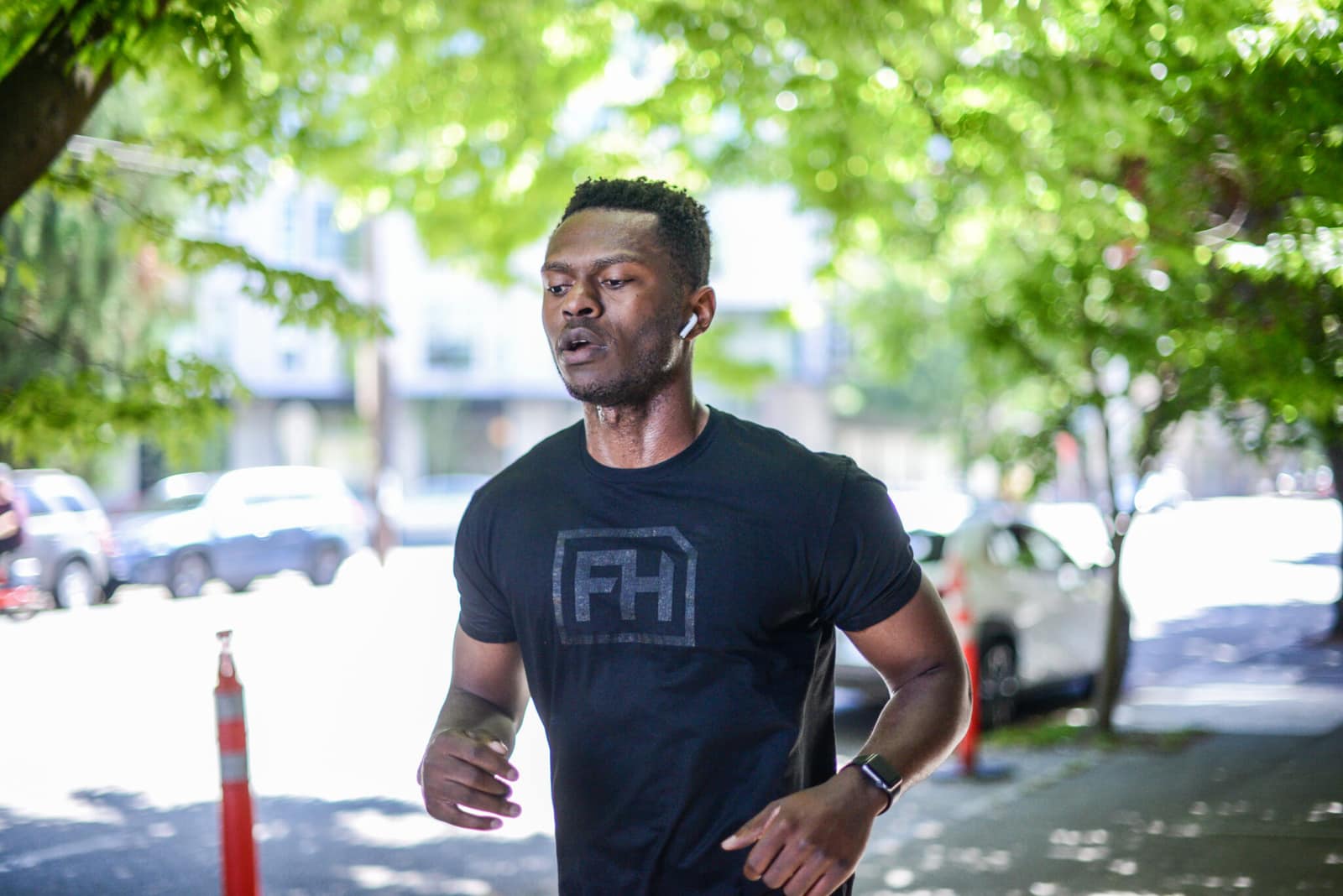
Aman is a good example of the running-leaning racer. He came to us as a sedentary engineer and trained up to a HYROX qualifier, and his runs are now the strongest part of his race. He prefers the slightly more running-leaning Category 2 shoe, a dedicated hybrid trainer. His mechanics on the sled are clean enough that the marginal stability hit does not cost him time, and he gets the run-pace benefit.
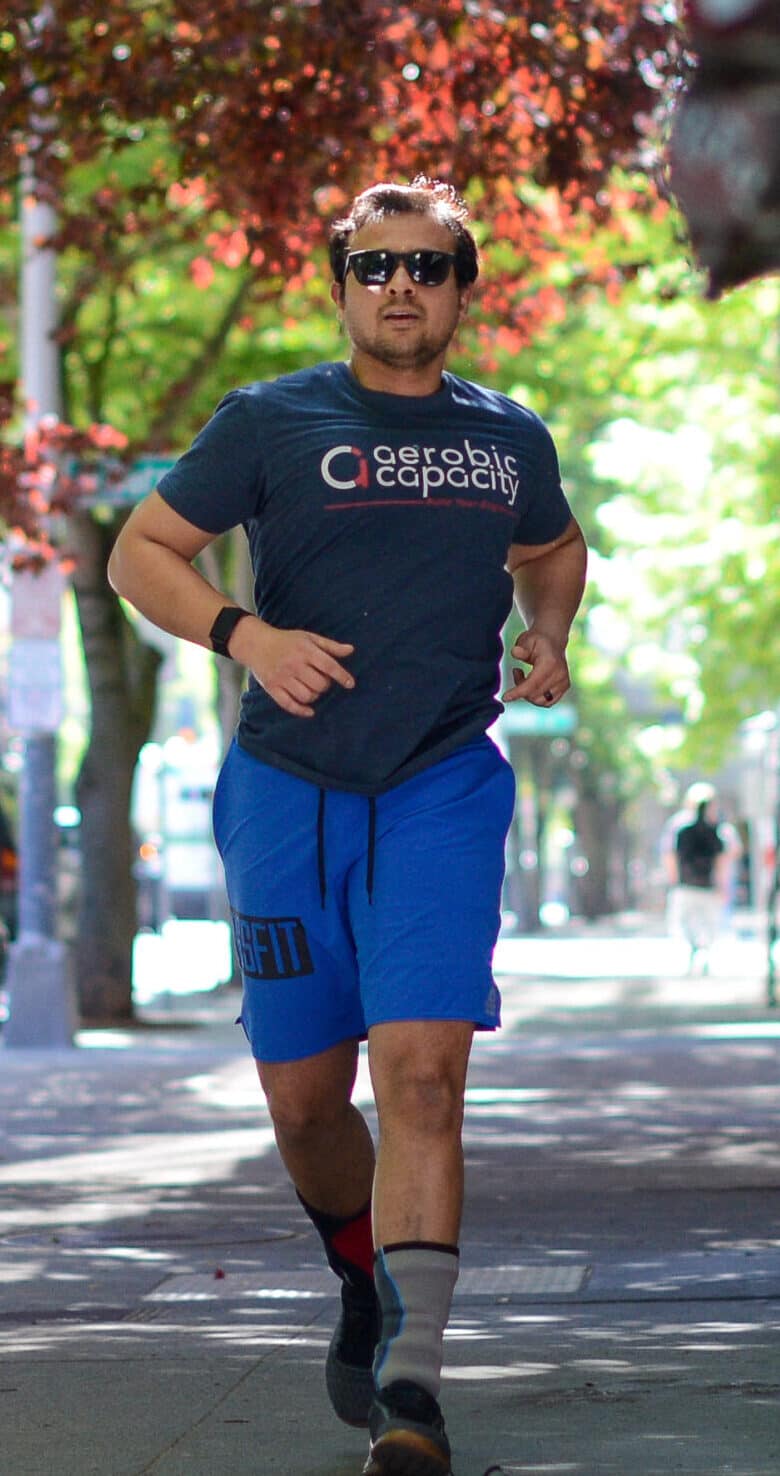
Katie is the opposite case, and a useful one. She has logged over 700 classes here and built one of the most disciplined movement bases in the gym, the same patience she put into her strict pull-ups and ring work. She wears a Category 1 CrossFit trainer (Reebok Nano-style) because she values the stability through the wall balls and broad jumps. The marginal slowdown on the runs is worth the consistent station execution, and for her it is.
The thing all three of us share: we trained in the race shoe for 6 to 8 weeks before race day. Shoe choice is a long-cycle decision, not a race-week decision. We also rotate two pairs through prep so the race-day shoe is broken in but not depleted.
For the Saturday HYROX class in Belltown and how it fits a Seattle race build, see our HYROX in Seattle page. For how we run HYROX programming inside our group classes, come check out the Saturday HYROX class.
How to break in your race shoes
Once you have picked a category and a specific shoe, here is the break-in protocol I give every athlete.
- Weeks 1 to 2: low-stress runs only. Easy 20 to 30 minute runs. Identify hot spots, lacing issues, heel slip. Return the shoe if anything is wrong.
- Weeks 3 to 4: introduce stations. Do your normal HYROX-style metcons in the new shoes. Sleds, broad jumps, wall balls. Confirm the shoe handles each piece.
- Weeks 5 to 6: race-pace simulations. Do at least 2 race-pace partial sims in the shoe. The shoe should feel familiar across all 8 stations.
- Week 7: full simulation in the shoe. One full sim, treated like race day. This is the dress rehearsal for the shoe as much as the body.
- Week 8 (race week): keep them clean and rest. Do not buy a new pair. Do not switch. Trust the prep.
The athletes who follow this protocol show up to race day with shoes that feel like an extension of their feet. The athletes who skip it show up with new shoes and a 4-minute penalty hidden in their heels.
Frequently Asked Questions
What kind of shoe should I wear for HYROX?
A versatile training shoe with a flat or near-flat heel (4 to 8 mm drop), a firm midsole that can handle sled work, and an outsole grippy enough for running on indoor turf. CrossFit-style trainers (Nike Metcon, Reebok Nano, NoBull) and dedicated hybrid trainers all work. Avoid pure running shoes (too soft for sleds) and pure lifting shoes (too rigid for 8 km of running).
Can I race HYROX in regular running shoes?
You can, but you will lose efficiency on the sled push and pull. Soft, max-cushion running shoes compress under sled load and waste force. If you must race in running shoes, pick a firmer, lower-stack model with a stable heel rather than a plush max-stack trainer. Better option is a hybrid trainer that handles both running and station work.
Do I need different shoes for HYROX Doubles versus Singles?
No. The same shoe works for both formats. Doubles has slightly less running per athlete (you split the runs with your partner) so you can lean very slightly more toward a station-friendly shoe, but the difference is minimal. Pick one shoe that handles both, and train in it consistently.
How long should I break in race shoes before HYROX?
Train in your race shoes for at least 6 to 8 weeks before race day. New shoes on race day are how you discover the heel slip, the toe box pinch, or the lacing problem at kilometer 4 of a race. By race day the shoe should feel familiar across all 8 stations and 8 km of running, including at race pace.
Are weightlifting shoes ever worth wearing for HYROX?
No. The hard heel, raised drop, and stiff outsole that make a lifting shoe great for back squats are the same features that make it terrible for 8 km of running and burpee broad jumps. HYROX is a hybrid event. Use a hybrid shoe. Save the lifters for your strength days.
What do coaches and members at Persistence Athletics wear for HYROX?
Most of our HYROX racers wear hybrid CrossFit-style trainers (Nano, Metcon, NoBull) or dedicated HYROX trainers from a few brands now making them. Coach Ravi Dewangan trains in a hybrid trainer with a 4 mm drop and firmer midsole. Members rotate between two pairs across prep so race-day shoes feel fresh but familiar.
Try a free first class at Persistence Athletics
If you are training for HYROX and want to test your shoe choice in a real HYROX-style class, your first class at Persistence Athletics in Belltown is free and scaled to where you are. Come to the Saturday HYROX class at 9:30 AM and run a full station rotation in your shoes.
Book your free class. Persistence Athletics, 3025 1st Ave, Belltown, Seattle. About 8 minutes on foot from Amazon, walkable from anywhere in downtown Seattle. Questions first? Call us at (206) 593-4236.
Want to take this further?
Talk to a coach about hyrox programming at Persistence Athletics.