
SMART Goals That Actually Work in CrossFit and Strength Training
SMART goals applied to fitness with concrete examples. Vanity goals vs process goals, 3 client examples. From a CFL3 coach in Belltown, Seattle.

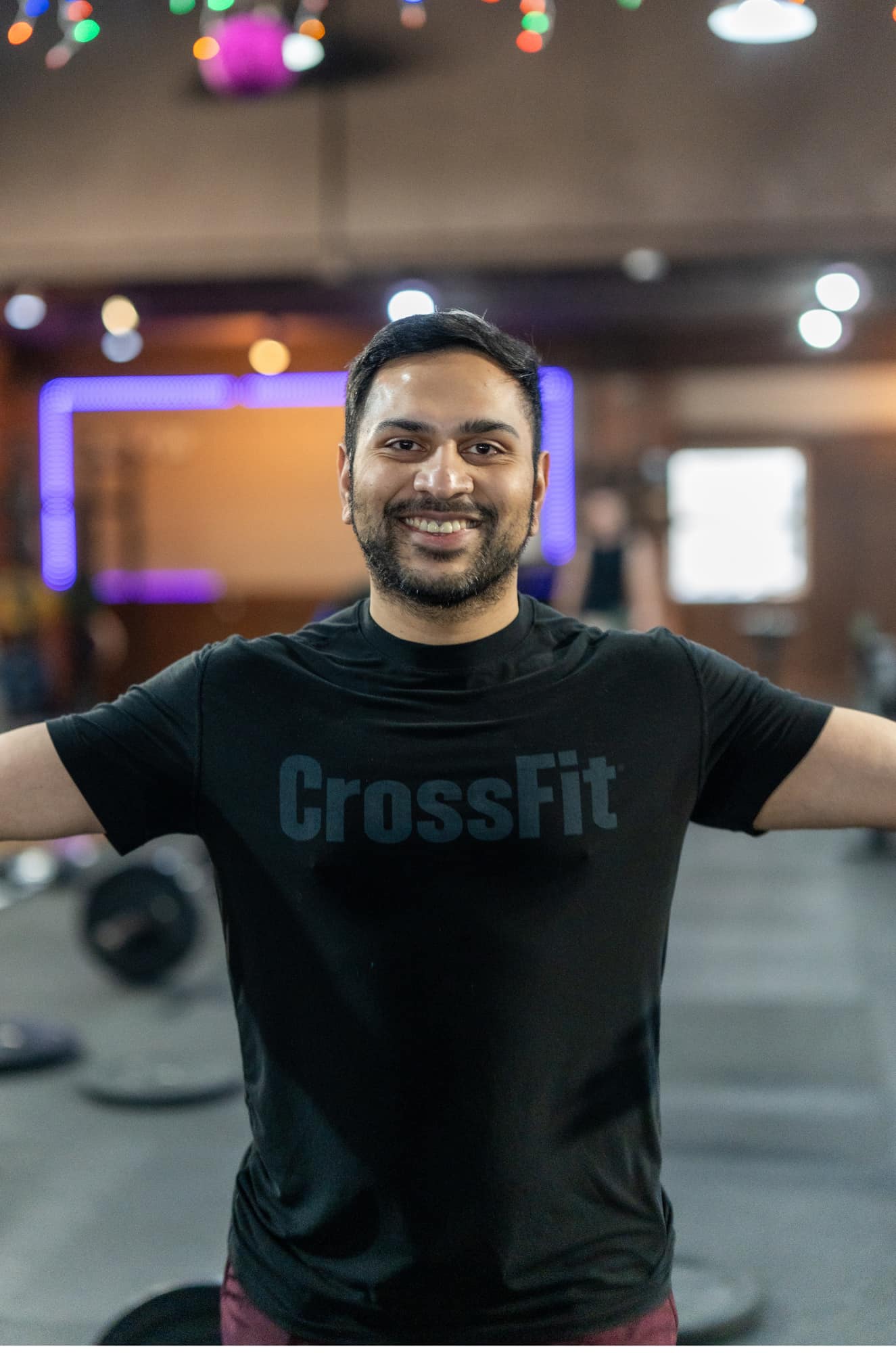
"Get stronger" is not a goal. It is a wish.
The most common conversation I have with new personal training clients at Persistence Athletics goes like this. They sit down for their intake session, eight minutes off the walk from Amazon, and they tell me they want to "get stronger." I ask them what number on what lift, by when, and why. They pause. Almost nobody has thought about it that specifically, and that is fine. That is what the intake is for.
This post is the framework I use to turn vague fitness wishes into goals that are actually testable. It is the SMART goal model applied to CrossFit and strength training, with concrete examples from real members on our floor. Not motivational, not rah-rah. It is the mechanics of how a goal gets from "I want to get stronger" to "back squat 250 lb by week 12, training 4 days a week, eating 0.8g protein per pound." That second version is testable. The first version is not.
I'm Ravi Dewangan, CFL3, MS Strength and Conditioning, CrossFit Seminar Staff. I work most of the goal-setting conversations on the strength side of the gym. Updated June 2026.
Table of Contents
- The 5 letters of SMART, applied to fitness
- Vanity goals vs process goals: run both
- Three client examples
- How we set goals at Persistence Athletics
- Frequently Asked Questions
The 5 letters of SMART, applied to fitness
The SMART framework is older than the modern fitness industry and most members have heard of it. The application to fitness is where it usually breaks down.
Specific
Bad goal: "Get stronger."
Good goal: "Back squat 250 lb."
The specificity has to be a number on a lift, a body composition target with units, or a measurable performance outcome (5K time, HYROX time, pull-up count). If you cannot put a number on it, it is not a goal. It is a vibe.
Measurable
Specific implies measurable, but specifically the measurement has to be one you will actually take. Tape measure, scale, lift PR, video time stamp on a workout. If you do not have a measurement system, the goal does not exist. We log every member's strength numbers after class, so the measurement is built in here, but if you train alone, you have to build that habit yourself.
Achievable
This is the most often-missed letter. The goal has to be achievable given your training age, your starting point, and the time you have.
For an intermediate lifter (1 to 3 years of training), 5 to 10% on a major lift over 12 weeks is achievable with structured programming. For a beginner, 15 to 25%. For an advanced lifter (5+ years), 2 to 5%.
A new lifter setting a 25 lb gain on the back squat over 12 weeks is on track. An 8-year lifter setting the same goal is setting up for frustration. The right target scales with the lifter.
Relevant
Does this goal actually matter for your life? If you have a goal of bench-pressing 315 lb but you do not enjoy benching and your real goal is hybrid fitness, the bench goal is irrelevant. It will not motivate you because it is not actually what you want.
The Relevant check is the gut check. Read the goal back to yourself. Do you actually care about this number? If the honest answer is "not really," go back to the drawing board. Find the number that you actually care about. Katie, who has been with us over 700 classes, did not chase an arbitrary squat number. She wanted strict pull-ups and clean ring work, and every goal she set pointed at gymnastics. That is what relevance looks like in practice.
Time-bound
Without a date, the goal drifts. The date forces structure. Give yourself a specific number of weeks (8, 12, 16) and write it down.
Time-bound also forces the Achievable check to be honest. A goal that requires 5% gain in 4 weeks is different from a goal that requires 5% gain in 16 weeks. The math determines whether the timeline works.
Vanity goals vs process goals: run both
The most useful distinction in fitness goal-setting is between vanity goals and process goals.
A vanity goal is the outcome you want. Lose 20 lb. Deadlift 405. Get a strict pull-up. These are the goals members come in with. They are real and they motivate. They also do not tell you what to do today.
A process goal is the daily practice that produces the outcome. Train 4 days a week. Eat 0.8g protein per pound bodyweight. Sleep 7+ hours. These are the goals that drive the action.
Successful members run both. The vanity outcome goal at 12 weeks gives the work direction. The process goals at the daily level give the work traction. If you want the cleanest living example of a process goal compounding, look at Pouria. He is past 1,100 classes over six-plus years here. He did not get there chasing a single number. He got there by showing up, week after week, which is the ultimate process goal.
Members who only run vanity goals end up motivated but unstructured. Members who only run process goals end up structured but uninspired. The pair, set up together, is what works.
Three client examples
Example 1: Beginner, body recomp goal
Vanity goal: Lose 20 lb in 16 weeks.
Process goals: Train 4 days a week (3 group classes + 1 PT). Eat 1500 to 1700 calories a day with 130g protein. Walk 8000+ steps a day. Sleep 7 hours.
Achievable check: 20 lb in 16 weeks is 1.25 lb per week. At the high end of sustainable but achievable for someone starting from a high baseline. Pass.
Outcome at week 16: 18 lb lost. Slightly under goal but well within target zone. Process goals were met roughly 85% of weeks. The nutrition piece was the hard part, which is why we routed it to Jacque (CFL3, Precision Nutrition Level 2) for the calorie and protein targets rather than guessing at them.
Example 2: Intermediate lifter, plateau-breaking
Vanity goal: Back squat 250 lb by week 12 (current 1RM 230 lb).
Process goals: Run a 12-week block periodization template. Train 4 days a week. Hit 0.8g protein per pound bodyweight. Sleep 7 hours.
Achievable check: 9% gain over 12 weeks. Within range for an intermediate lifter. Pass.
Outcome at week 12: Hit 245 lb on test day. Missed by 5 lb but within 2% of target. We re-tested at week 14 with a fresher taper and cleared 255 lb. The lesson the lifter took from it: the miss was a recovery problem, not a strength problem.
Example 3: Software engineer, sport prep
Vanity goal: Finish HYROX under 90 minutes (first race).
Process goals: Run the 12-week HYROX prep template. 6 training days a week. Specific running mileage targets each week. Specific station-rehearsal targets each week.
Achievable check: 90 minutes is realistic for a strong-but-not-elite first-time HYROX racer with structured prep. Pass.
Outcome at race day: Goal met, comfortably under the line. This is the same Devang from the HYROX post: a software engineer who walked in a true beginner, logged 700-plus classes, and built himself into a HYROX-ready athlete one block at a time. The number was the easy part once the process goals were locked in.
In all three cases the structure was the same: vanity outcome goal at 12 to 16 weeks, process goals at the daily and weekly level, structured program connecting the two.
How we set goals at Persistence Athletics
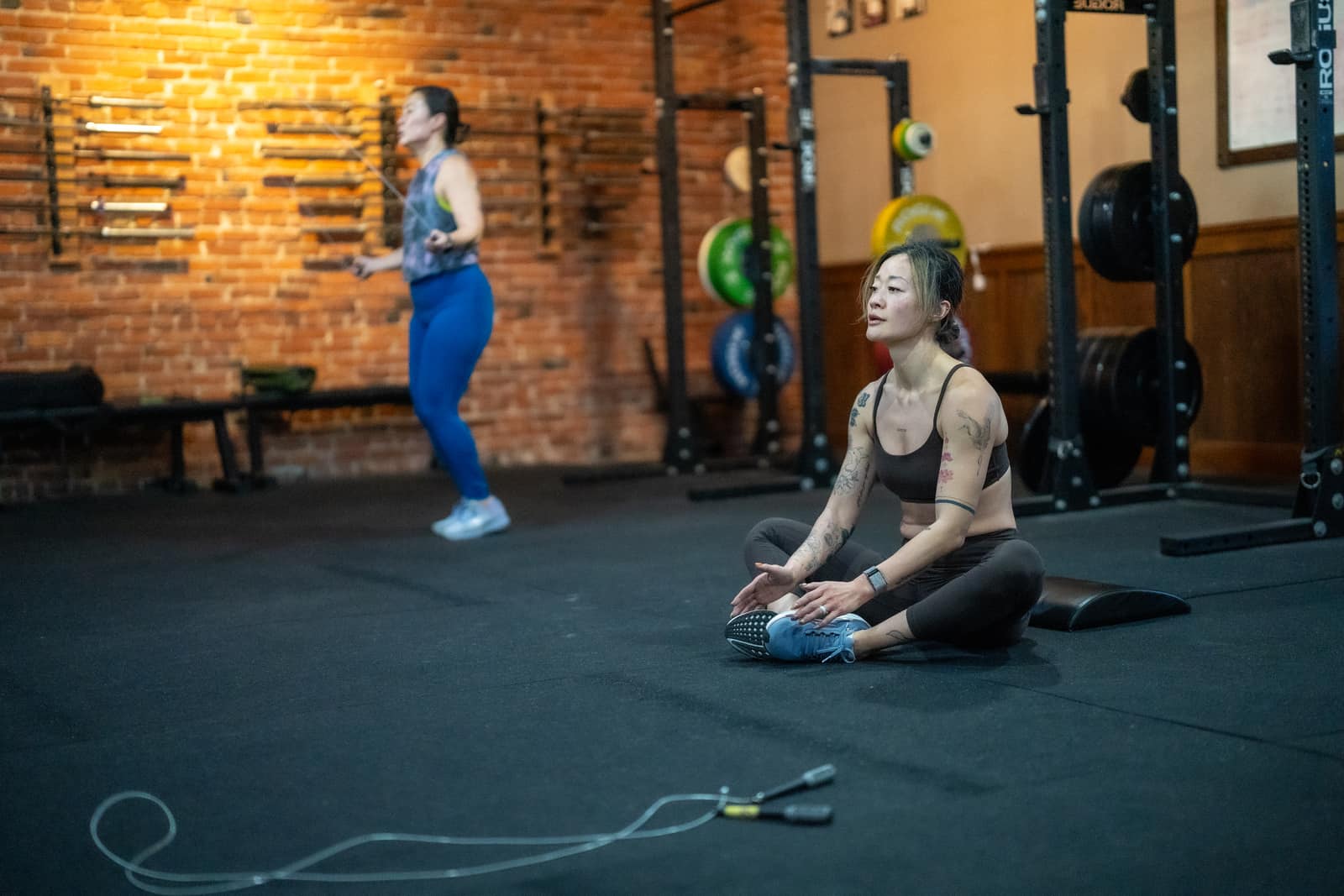
The first PT session at Persistence is always a goal-setting and intake session. The structure:
- Member states the vanity goal in their own words.
- Coach sharpens the goal to SMART specifics (specific number, measurable, achievable for their training age, relevant to their life, time-bound).
- Coach proposes the process goals (training frequency, nutrition target, sleep, recovery) that connect to the outcome.
- Both write it down. The goals are revisited at week 4 and week 8 of the engagement.
The single biggest goal-setting error we correct in this conversation is the Achievable check. Members consistently set targets that are either too soft (advanced lifters under-shooting) or too aggressive (beginners over-shooting). The training-age-appropriate target is the foundation of a goal that actually gets hit. With a coach-to-athlete ratio of roughly 1 to 12 in our classes, the coach on the floor actually knows your numbers, so the Achievable check is grounded in what you have been logging, not a guess.
For personal training, this conversation is the start of every engagement. For group classes, the same goal-setting is available informally with the head coach. The full coaching team, including AJ and the rest of the crew, is on the coaches page.
If you want a structured goal-setting conversation with a credentialed coach, book a free class and the engagement starts there.

Frequently Asked Questions
What are SMART goals applied to fitness?
SMART goals are Specific, Measurable, Achievable, Relevant, and Time-bound. Applied to fitness, that means goals like 'back squat 250 lb by week 12' instead of 'get stronger.' The Specific and Measurable parts force you to define what success looks like with a number. The Achievable, Relevant, and Time-bound parts force you to set a target that fits your life and your timeline. SMART goals work because they are testable. Vague goals are not.
How much strength can I gain in 12 weeks?
For an intermediate lifter (1 to 3 years of training), a 5 to 10% gain on a major lift over 12 weeks is realistic with structured programming. For a beginner, 15 to 25% is possible. For an advanced lifter, 2 to 5%. The right SMART goal scales with your training age. A first-year lifter targeting 5% in 12 weeks is under-shooting. An 8-year lifter targeting 20% is setting up for failure.
What is the difference between a vanity goal and a process goal?
A vanity goal is the outcome you want (lose 20 lb, get visible abs, deadlift 405). A process goal is the daily practice that produces the outcome (eat 0.8g protein per pound bodyweight, train 4 days a week, sleep 7 hours). Vanity goals motivate but do not provide a daily plan. Process goals provide the plan. The most successful members at Persistence run both: a vanity outcome goal at 12 weeks and process goals for what they will do this week.
Should I set short-term or long-term fitness goals?
Both, layered. The 12-week goal is the action-driving target (back squat 250 lb by week 12). The 12-month goal is the direction-setting target (compete in a local strength meet, finish a HYROX race, build to bodyweight strict pull-ups). The weekly goals are the process targets that produce both. The combination is what works. Just one tier and the program loses either direction or daily traction.
What if I do not hit my SMART goal in the time frame?
Reassess, do not abandon. Most missed goals are missed because the timeline was too aggressive (most common), the program was structurally wrong (next most common), or recovery was insufficient. Adjust the variable that was off and re-set a new SMART goal with a slightly longer timeline. Members who miss once and adjust hit the new target the second time roughly 80% of the time.
Do I need a coach to set good fitness goals?
Not strictly. The SMART framework is straightforward enough to apply on your own if you have training history to anchor your numbers. A coach is most useful for the Achievable check (is this realistic for my training age?) and the program design that connects the daily process to the 12-week outcome. Members who set their own goals and hit them tend to be experienced. New trainees benefit substantially from a coach in the goal-setting conversation.
Try a free first class at Persistence Athletics
If you want a coach who will turn "get stronger" into a number on a lift by a date, that is what the first session is for. Your first class at Persistence Athletics is free and scaled to wherever you are starting. Book your free class at 3025 1st Ave, Belltown, Seattle, WA 98121. 8 minutes from Amazon, walkable from anywhere downtown. Questions first? Call us at (206) 593-4236.
Want to take this further?
Talk to a coach about mindset programming at Persistence Athletics.