
5 Pre-Workout Meals for Optimal Performance in Seattle Gyms
What to eat before training (and when), from a Belltown CrossFit coach. Five real meals our members use, plus the timing rules that make them work.

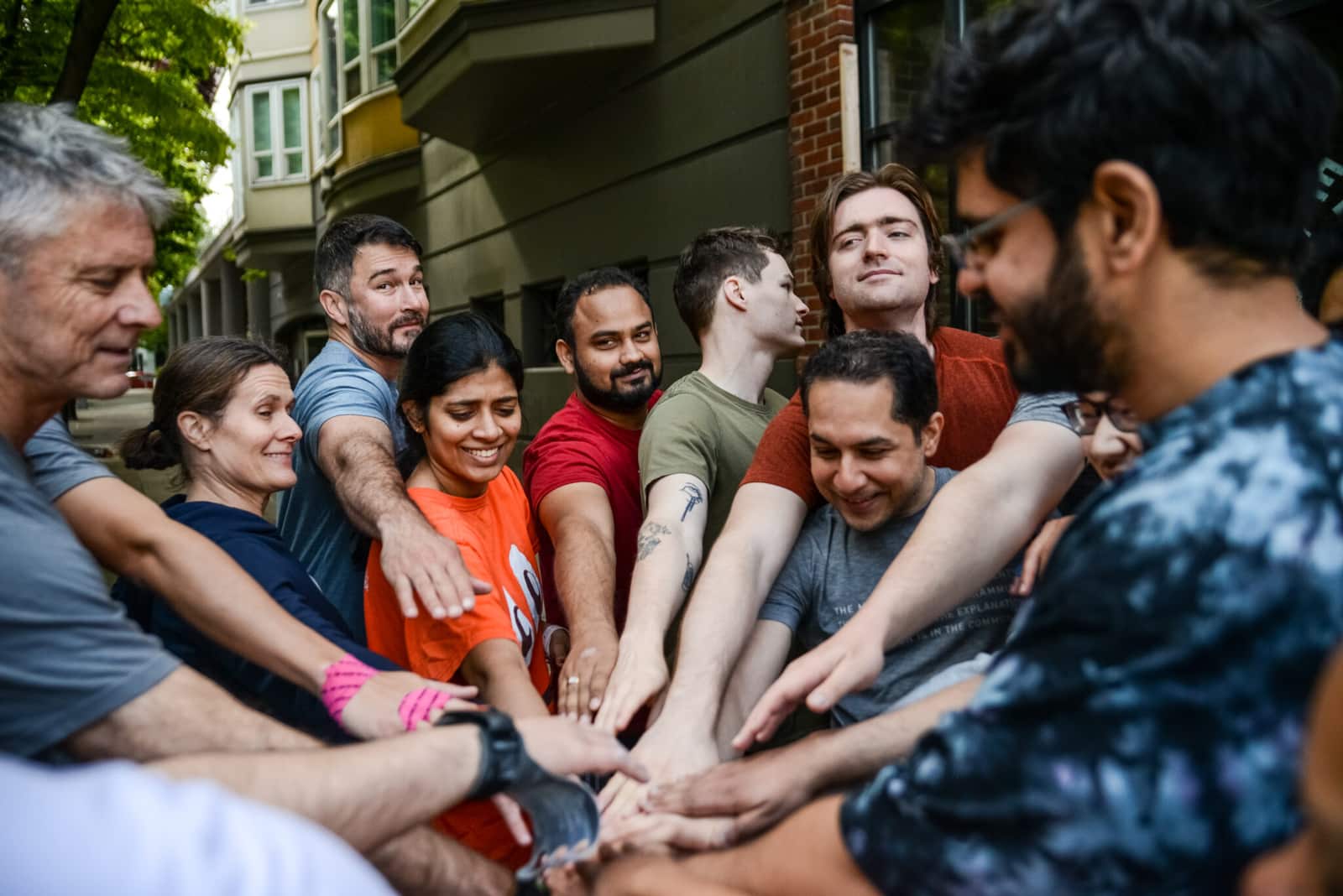
What you eat in the 90 minutes before class is doing more work than most people realize
It is 5:15 AM. You are standing in front of your fridge in Belltown, you are training in 75 minutes at Persistence Athletics, and you have absolutely no idea whether to eat anything, eat something light, or skip food entirely.
This is the most common nutrition question I get from members in their first month at the gym. Not "what supplement should I take," not "should I count macros." Just: what do I actually eat before class?
I'm Jacque Dewangan, a CrossFit Level 3 coach (CFL3) and Precision Nutrition Level 2 coach (PNL2). I have been coaching at Persistence Athletics in Belltown for nearly a decade. In that time I have watched thousands of pre-workout meals go right and wrong. The pattern is clear, and the rules are simpler than you would guess.
This article is the version of that conversation we usually have at the front desk after class. Five real pre-workout meals our members use, the timing rules that make them work, and what to do when you are short on time, short on appetite, or training right after a desk job at Amazon eight minutes up the street. Updated June 2026.
Table of Contents
- What should you eat before a workout?
- How long before a workout should you eat?
- 5 pre-workout meals our members actually use
- How we coach pre-workout fueling at Persistence Athletics
- Plan your week of pre-workout meals in 10 minutes
- Frequently Asked Questions
What should you eat before a workout?
The short answer: carbs, a small amount of protein, and a moderate amount of fluid. The longer answer is that the type of carb and the timing matter more than the calories.
Carbs are your nervous system's preferred fuel for high-intensity work. CrossFit, HYROX, strength training under load, all of these tax your fast-twitch muscle fibers, which run primarily on glycogen. If you train depleted, you will hit your interval pace one round too few, miss the lift, or finish wall balls a minute slower than you should have. I watch it happen on the floor: the member who skipped breakfast is the one staring at the barbell on the last round, not because they are weak but because the tank is empty.
Protein in the pre-workout meal is not about muscle building (that is post-workout). It is about not feeling hollow during the session. Roughly 10 to 20 grams is plenty.
Fat and fiber, on the other hand, slow digestion. They have a place in your day, just not the 90 minutes before class. A greasy breakfast burrito, a kale salad, and a coffee with heavy cream all sit in your stomach during the warm-up and make the first metcon round miserable.
The simple rule we coach
If you can answer "yes" to all three of these, the meal is good:
- Are there carbs?
- Is there 10 to 20 grams of protein?
- Is the fat and fiber low to moderate?
If yes to all three, eat it 60 to 90 minutes before class. The body will do the rest.
How long before a workout should you eat?
Timing matters more than most articles let on. The right meal at the wrong time still ends in a heavy stomach and a slower workout.
Here is the cheat sheet I give every new member:
| Meal size | Eat this far before training |
|---|---|
| Heavy meal (rice + chicken + vegetables) | 2 to 3 hours |
| Normal meal (Greek yogurt + berries + honey) | 60 to 90 minutes |
| Small snack (banana + peanut butter) | 20 to 30 minutes |
| Fluid only (water + electrolytes) | Up until class starts |
Most of our Belltown members are professionals coming straight from a desk job, a lot of them from Amazon a short walk away. The 6:30 PM class is the trickiest slot because the last real meal was lunch at noon and there is no good window to eat a full dinner before training. The fix is a small snack at the desk around 4:30 PM, a normal meal after class, and you sleep better than you would have anyway.
For 5:30 AM and 6:30 AM classes, most members do best on a 100 to 200 calorie snack with a glass of water. Anything bigger feels heavy.
5 pre-workout meals our members actually use
These are the meals our coaches recommend most often. Pick the one that fits your time window. None of these require special ingredients, and none of them are expensive.
1. Greek yogurt with berries and a drizzle of honey
Best for: 60 to 90 minutes before class. Plain Greek yogurt gives you 15 to 18 grams of protein. Berries are easy carbs. The honey adds a small fast-burning carb hit. Total prep time: 45 seconds.
2. Scrambled eggs with roasted sweet potato
Best for: 90 minutes to 2 hours before training. Two eggs plus a half cup of sweet potato is the classic. Eggs handle the protein, sweet potato handles the slow-burning carbs. Skip butter and heavy oils, this meal is best when light. Devang, a software engineer who has been with us for years and is now a fixture at the 6:30 AM class, has been on this combo for almost two years. He came in closer to a beginner and built into one of our stronger members one quiet 6:30 AM at a time, and the boring, identical pre-workout breakfast is part of why.
3. Overnight oats with banana
Best for: 60 to 90 minutes before class. Made the night before. Half a cup of oats, almond milk, sliced banana, a teaspoon of nut butter if your session is going to be intense. This one is forgiving, easy on the stomach, and travels well if you eat it on the bus down from First Hill to 1st Ave.
4. Grilled chicken with white rice
Best for: 2 to 3 hours before training, especially heavy strength sessions. The classic "training day" meal. Lean protein plus fast-absorbing carbs. Eat this at 4:00 PM if you are training at 6:30 PM. Skip the spicy seasonings and heavy sauces, save those for a different meal.
5. Banana with natural peanut butter
Best for: 20 to 45 minutes before class. The minimum effective dose. One banana plus a tablespoon of nut butter is roughly 200 calories of usable energy. This is what to eat when you forgot to plan, when the schedule got moved, or when you are training so early that anything bigger feels wrong.
How we coach pre-workout fueling at Persistence Athletics

We do nutrition coaching at Persistence the same way we coach lifting: simple, repeatable, and built around what you actually eat already. We are not interested in handing you a 7-day meal plan that lasts 4 days before you fall off.
The first thing we ask new members is when they train. Then we work backwards: what is your last meal before that session, and how much time is between them? 90 percent of pre-workout problems get solved with two changes: shifting one meal earlier in the day, and adding a small snack closer to class.
I run our nutrition coaching program, and a lot of the early sessions are pre-workout focused, especially for members who started at Persistence after years of training fasted with no real plan. The fix is rarely dramatic. It is almost always a 200-calorie snack at the right time. Sofi, who came back to training after having her first baby, is a good example: she was nervous that she had no time and no appetite at 6:30 AM. We did not overhaul her diet. We added a few bites of fruit and toast before class and moved her real breakfast to after drop-off. That was the whole intervention, and her energy in class turned around inside two weeks.
For a deeper dive on what to eat after training, our companion piece on protein timing for CrossFit and strength training covers the recovery side of the same conversation.
If you have not joined a class yet, the first one is free and fully scaled to wherever you are starting, and you can book it directly without committing to anything else.
Plan your week of pre-workout meals in 10 minutes
This is the practical 10-minute exercise we run with every new nutrition coaching client.
Step 1. Open your calendar. Mark your 5 training sessions for the week.
Step 2. For each session, write down the time. Then write the time of your previous meal.
Step 3. Calculate the gap. If the gap is under 60 minutes, the previous meal is your pre-workout meal. If the gap is between 60 minutes and 3 hours, you need a small snack between them. If the gap is more than 3 hours, your pre-workout meal needs to be larger.
Step 4. From the 5 meals above, assign one to each training session based on time available.
Step 5. Buy the ingredients on Sunday. The whole week of pre-workout food costs under $25.
That is the entire planning system we coach. It is boring on purpose. Boring works.
A real example
Aman, a software engineer who came to us close to sedentary and trained all the way up to qualifying for HYROX, is the cleanest version of this I can point to. He trains the 6:30 AM class three mornings a week and the 6:30 PM class twice a week, and his weekly pre-workout food is identical every week:
- 3x mornings: half a banana with a teaspoon of peanut butter, eaten around 5:55 AM, with a cup of coffee.
- 2x evenings: Greek yogurt with berries at 4:30 PM at his desk, water through the afternoon.
Total time spent thinking about it after the first week: zero. That repeatability is exactly what carried him to the HYROX start line. Our HYROX class itself runs Saturday 9:30 to 11:00 AM and is included in every membership, so when he wanted race-specific work, the fueling pattern was already automatic.
Frequently Asked Questions
What should I eat before a CrossFit class?
Something with carbs and a small amount of protein, eaten 30 to 90 minutes before class. Greek yogurt with berries, oats with banana, or a small bowl of rice with eggs all work. Avoid heavy fat or fiber within an hour of training. If you only have 15 minutes, a banana and a tablespoon of nut butter is enough fuel for a 60-minute class.
How long before a workout should I eat?
60 to 90 minutes is the sweet spot for a normal-sized meal. For a heavier meal with chicken, rice, and vegetables, give yourself 2 to 3 hours. For a small snack like a banana with peanut butter, 20 to 30 minutes is plenty. Train on an empty stomach if your session is light or under 45 minutes and you tolerate it well.
Is fasted training a bad idea before CrossFit?
It depends on the session. A 5:30 AM strength session at moderate intensity, you can do fasted if you handle it. A 6:30 PM HYROX-style metcon, you will burn out fast without fuel. Most members at Persistence eat 60 to 90 minutes before evening classes and a smaller snack 20 to 30 minutes before morning classes.
Do I need a pre-workout supplement?
No. Real food handles 95 percent of what most members need. If your goal is body composition or you are training under-fed all day, food beats powder every time. Pre-workout supplements are not bad, but they are not a substitute for actually eating before you train. Caffeine 30 minutes before a hard session is the one supplement worth considering.
What if I am not hungry before morning classes?
Most members are not. Train on a small snack: half a banana, a handful of dried fruit, or a piece of toast with peanut butter. Eat your real first meal after class. Force-feeding a full breakfast at 5 AM is uncomfortable and not necessary for a 60-minute class.
Should I eat differently before HYROX training versus a regular class?
Yes, slightly. HYROX taxes your aerobic system harder than most CrossFit metcons, so you need slightly more carbs and a little extra fluid. A bowl of oats with banana 90 minutes out, plus 16 to 20 oz of water, works for most of our HYROX athletes on Saturday mornings. Our HYROX class runs Saturday 9:30 to 11:00 AM and is included in every membership.
Try a free first class at Persistence Athletics
If pre-workout fueling has been stopping you from training the way you want, the fix is usually one short conversation with a coach. Your first class at Persistence Athletics in Belltown is free and scaled to your starting point. We will help you set up a fueling routine that fits your day, not the other way around.
Book your free class at 3025 1st Ave, Belltown, Seattle, WA 98121. We are 8 minutes from Amazon and walkable from anywhere in Belltown, SLU, and downtown Seattle. Questions first? Call us at (206) 593-4236.
Want to take this further?
Talk to a coach about nutrition programming at Persistence Athletics.