
Protein Timing for CrossFit and Strength Training
How much protein, when, and what actually moves the needle for CrossFit and strength athletes. From a Belltown nutrition coach who has coached the question 1,000 times.

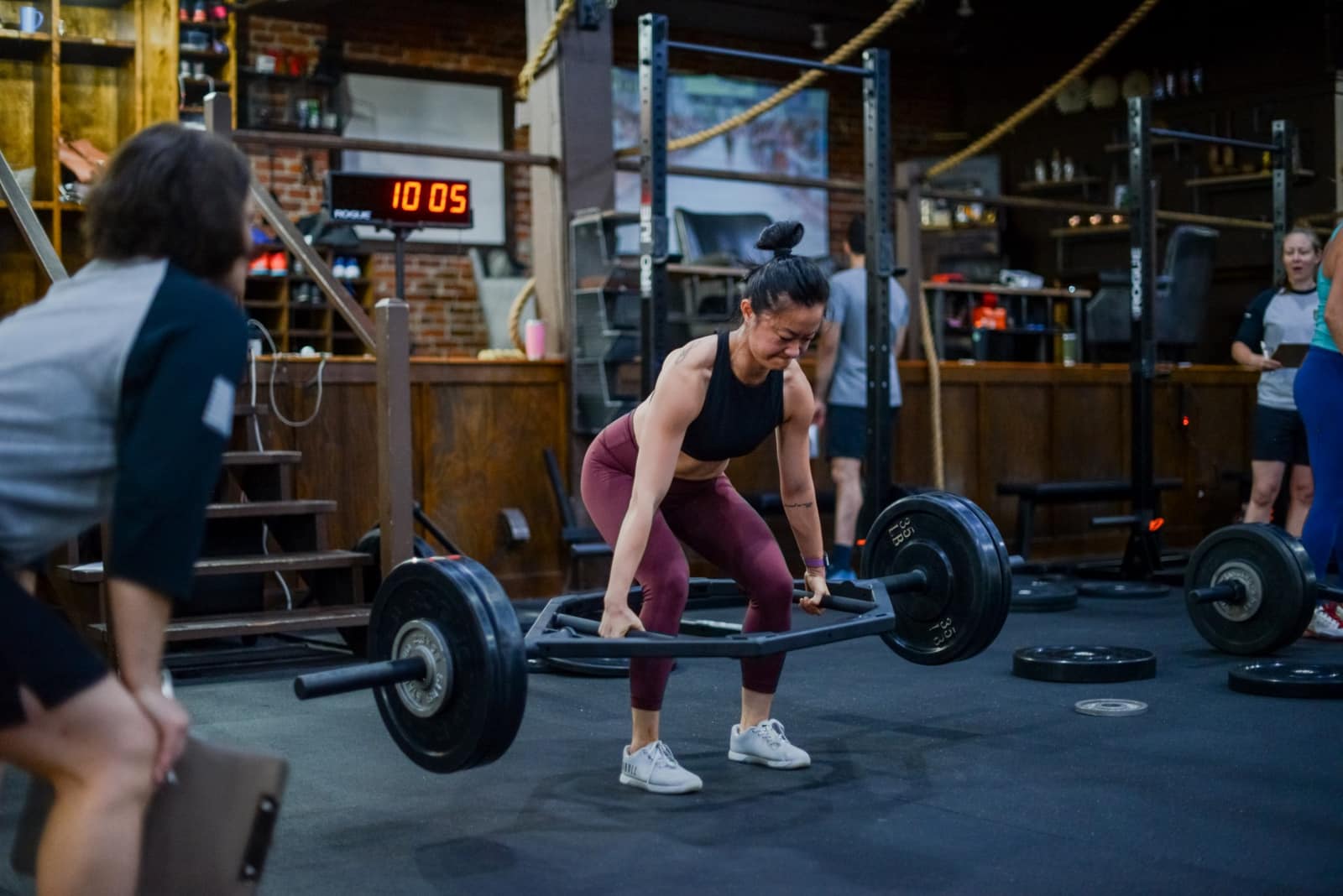
You probably worry about protein timing more than you should
Of all the nutrition questions I get at Persistence Athletics, this one is in the top three: when do I need to eat my protein?
I get it asked at the front desk after the 6:30 PM class. I get it asked in our intro nutrition consults. I get it asked by members who have been training with us for years and still feel like they are missing something.
Here is the short answer: the strict 30-minute anabolic window is mostly a supplement-industry story. Total daily protein matters more than the exact minute you eat it. You have a 4-to-6-hour window after training to fuel recovery, not 30 minutes. And most of you are already getting it close to right.
I'm Jacque Dewangan, CFL3 and Precision Nutrition Level 2 (PNL2). I coach nutrition at Persistence Athletics on 1st Ave in Belltown, about an eight-minute walk from the Amazon towers, where a lot of our members work as engineers, PMs, and scientists. I have coached this exact question with a few hundred of them. The pattern of what works is clear, and it is much simpler than the supplement aisle wants you to believe. Updated June 2026.
Table of Contents
- What does protein actually do for CrossFit and strength athletes?
- How much protein do you need per day?
- When should you eat protein around training?
- How we coach protein timing at Persistence Athletics
- A simple protein-timing template you can copy this week
- Frequently Asked Questions
What does protein actually do for CrossFit and strength athletes?
Protein is the building block your body uses to repair muscle tissue after training. CrossFit, strength training under load, and our Saturday HYROX class all create small amounts of muscle damage. Protein supplies the amino acids your body uses to repair that damage and add a small amount of new tissue, which over months becomes the strength you see in the bar.
That is the whole job. Protein does not directly fuel the workout (carbs do that). Protein does not directly burn fat (a calorie deficit does that). Protein is the recovery raw material.
The two amino acids that matter most for muscle building are leucine and isoleucine. Whey, eggs, chicken, beef, and most dairy are leucine-dense. Plant sources are leucine-lighter, which is why vegetarians and vegans typically need more total protein to hit the same threshold.
What this means for your training
If you train CrossFit 3 to 5 times a week and your daily protein is dialed in, your recovery is mostly handled. The exact minute you eat that protein is a small variable on top of the big one (total daily intake). New members spend most of their nutrition mental energy on the small variable. We try to redirect them to the big one.
I see this most clearly with our software engineers. Devang is a good example. He came to us as a near-beginner and has built a serious strength base over a few hundred classes, and the through-line was never a clever supplement. It was eating enough, consistently, on a schedule a busy work calendar could actually hold.
How much protein do you need per day?
The number that has held up across most credible research:
| Goal | Protein per pound bodyweight |
|---|---|
| Maintenance, light training | 0.6 to 0.8 g/lb |
| Active CrossFit / strength training | 0.7 to 1.0 g/lb |
| Fat loss while training hard | 1.0 to 1.2 g/lb |
| Aggressive muscle gain | 1.0 g/lb (more is rarely better) |
For a 160 lb member training CrossFit 4 days a week, that is roughly 110 to 160 grams per day. Spread across 3 to 4 meals, that is 30 to 45 grams per meal.
The number sounds large until you start tracking it for a few days. A typical day for a member who is hitting it without trying:
- Breakfast: 3 eggs + Greek yogurt = 30 g
- Lunch: chicken bowl from a Belltown lunch spot = 40 g
- Snack: protein bar or shake = 20 g
- Dinner: salmon + rice + vegetables = 35 g
- Total: 125 g
That is enough for almost everyone. No supplement stack required.
When should you eat protein around training?
This is where the science differs from the supplement marketing. The honest summary:
The "anabolic window" is real but it is roughly 4 to 6 hours wide, not 30 minutes. Your body has elevated muscle-protein-synthesis activity for hours after training, and as long as a protein-containing meal lands somewhere in that window, you are fine.
The practical implications:
- If you eat a protein-containing meal within 1 to 2 hours before training, you do not need to immediately slam protein after.
- If you trained fasted, a meal with 25 to 40 grams of protein within an hour after is the right move.
- If your previous meal was 4+ hours before training, eat sooner after, not later.
Our companion piece on pre-workout meals covers the front side of this. If you have the pre-workout meal handled, the post-workout side becomes much more flexible.
A note on whey
Whey protein hits your bloodstream within 30 to 45 minutes. Real food takes 2 to 3 hours to fully digest and release amino acids. Both work. Whey is faster and more convenient, food is more satisfying and provides everything else (carbs, micronutrients, fluid). Most of our members use whey occasionally, real food most of the time.
How we coach protein timing at Persistence Athletics
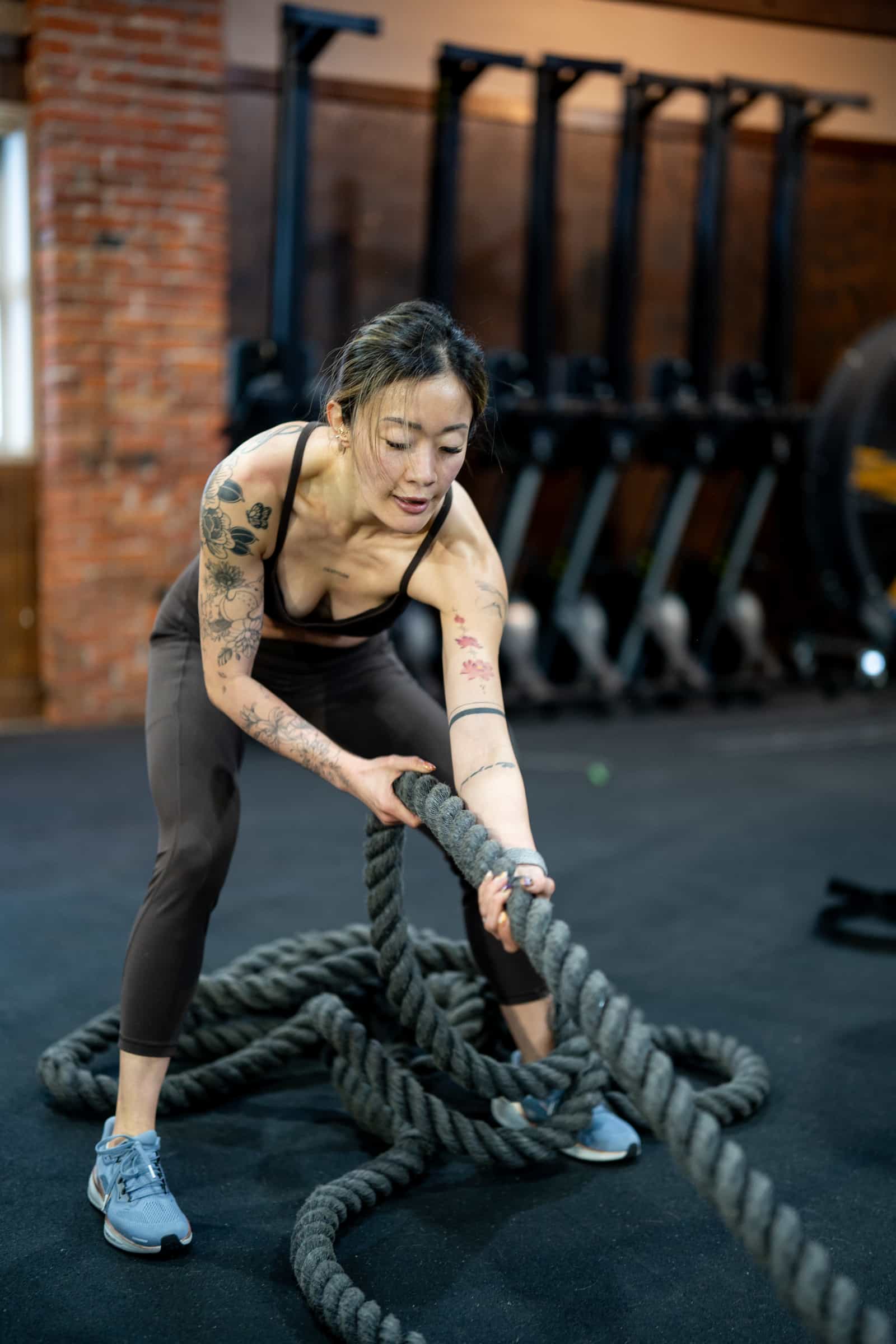
We approach protein the same way we approach lifting: get the big rocks right first, refine the details later.
When a new member starts our nutrition coaching program, the first conversation is almost never about timing. It is about amount. Most members are eating 60 to 90 grams of protein a day and wondering why they are not recovering well. We add a meal or boost an existing one to get them to 100 to 130 grams. The recovery improvement shows up in two weeks, before timing has been touched at all.
Once total intake is locked in, we look at distribution. Three meals at 35 grams of protein each, evenly spaced, beats one meal at 80 grams and two meals at 15 grams. The body can only use so much in a single meal. Spreading it out keeps muscle protein synthesis ticking through the day.
That is roughly all we coach on timing. The rest is training and consistency.
For members training strength specifically, we add one detail: a meal with 30 to 40 grams of protein within 2 hours of the heavy session. That is it. No special pre-workout shakes. No 30-minute window stress. Just real food at roughly the right time, repeated for months.
If you have not joined a class yet, you can book your free first class and stop by the front desk to chat about nutrition.
A simple protein-timing template you can copy this week
This is the template we hand to every new member. It is not optimal, it is good enough, which is what actually gets done.
Step 1. Calculate your target. Bodyweight in pounds × 0.85 = grams of protein per day.
Step 2. Divide by 4. That is your per-meal target.
Step 3. Eat that amount in 4 places across the day:
- Breakfast (or the meal closest to wake-up)
- Lunch
- Pre or post training (whichever is closer in time)
- Dinner
Step 4. For each meal, the protein source is one of: eggs, chicken, fish, lean beef, Greek yogurt, cottage cheese, tofu/tempeh, or a whey shake.
Step 5. Repeat for 4 weeks. Do not change anything else.
Most members hit their protein target within 7 to 10 days of running this template. Most see better recovery within 14. The system is intentionally boring.
What this looked like for one member
Sofi came back to training with us after having her first baby, on broken sleep and very little spare time. Like a lot of new moms returning to the gym, she was barely eating 60 to 65 grams of protein a day and felt wrecked between sessions. We did not touch her training. We just rebuilt her protein around a schedule a newborn would allow:
- Breakfast: Greek yogurt + berries = 22 g
- Lunch: chicken or salmon bowl = 40 g
- Pre-class snack: protein shake = 25 g
- Dinner: tofu stir fry or chicken curry = 30 g
Total: 117 g. A few weeks in, the heavy-legs feeling after morning class faded and she stopped dreading the recovery between days. Her training did not change. Her food did. That is the whole point: the boring lever moves first.
Frequently Asked Questions
Does the anabolic window matter for CrossFit athletes?
The anabolic window exists, but it is closer to a 4 to 6 hour window, not 30 minutes. As long as you eat enough protein in the meal before training and the meal after, you are inside the window. Most CrossFit athletes worry about this far more than the science supports. Total daily protein matters more than the exact minute you eat it.
How much protein do I need per day for CrossFit?
0.7 to 1 gram per pound of bodyweight per day is the working range we use at Persistence. A 160 lb member needs roughly 110 to 160 grams. If your goal is fat loss while training hard, push toward 1 gram per pound. If you are maintenance, 0.7 grams per pound is plenty.
Is whey protein better than food for post-workout?
Not better, just faster and easier. Whey hits your bloodstream within 30 minutes, food takes longer. For CrossFit, that speed difference rarely matters. A real meal within 90 minutes of training is fine. Whey is useful when you are away from food, traveling, or training right before a meeting.
Should I take BCAAs?
If you are eating enough protein, no. BCAAs are already in whey, chicken, eggs, and fish. The marketing on BCAAs is decades old and the science has moved on. Spend the money on real food or whey instead.
How much protein in one sitting can my body absorb?
Older studies said 25 to 30 grams per meal. Newer research shows the body can use 50 to 60 grams in a meal for muscle protein synthesis when training is involved. Practically, 30 to 40 grams per meal is the sweet spot for most members. Splitting daily protein across 3 to 4 meals beats jamming it all into one.
What if I am vegetarian or vegan?
Plant protein works, you just need more total volume to hit the same muscle-building threshold. Lentils, tofu, tempeh, and pea protein powder are the practical staples. Aim for 1 gram per pound bodyweight to compensate for the lower leucine content in plant sources. Several Persistence members train hard vegetarian and have made real progress on every major lift.
Try a free first class at Persistence Athletics
If you are training hard and your nutrition has been the missing piece, we coach this every day. Your first class at Persistence Athletics in Belltown is free and scaled to where you are. After class, talk to a coach about your protein situation and we will help you sort it in 10 minutes.
Book your free class. Persistence Athletics, 3025 1st Ave, Belltown, Seattle. Questions first? Call us at (206) 593-4236.
Want to take this further?
Talk to a coach about nutrition programming at Persistence Athletics.