
Online vs In Person Personal Training: When Each Works
Honest breakdown of online vs in-person personal training. When each wins, when each fails, and the hybrid model that works best for most lifters.

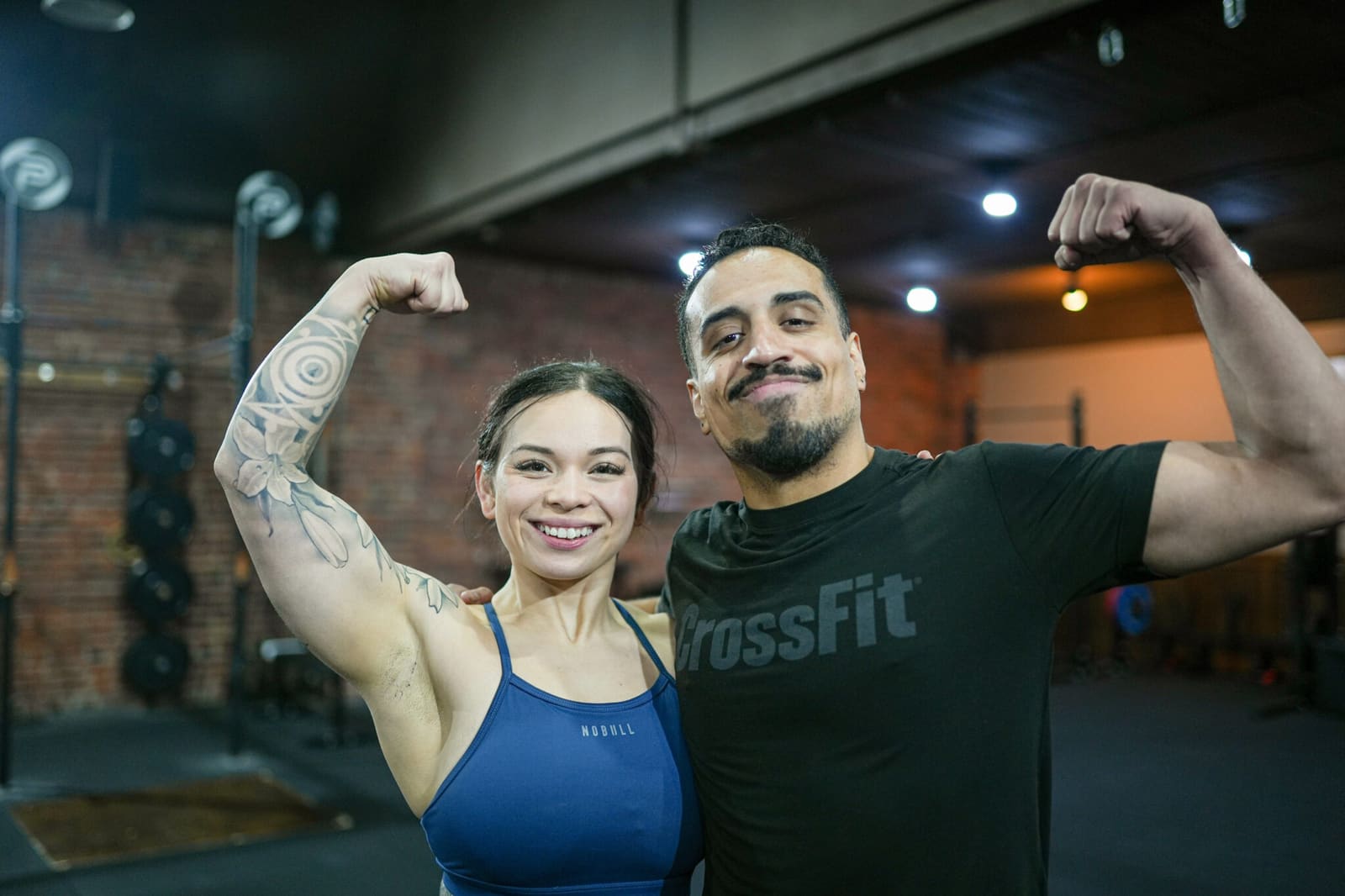
Two formats, very different problems they solve
The online versus in-person personal training conversation tends to get framed as a competition. It is not. Online and in-person solve different problems. Either one can be excellent for the right goal, and either one can be a waste of money for the wrong goal.
I have coached both formats at Persistence Athletics in Belltown. We are primarily an in-person gym. Most of what we do is hands-on coaching at 3025 1st Ave, about an 8-minute walk from the Amazon campus. But we keep a small number of online members, mostly established athletes who moved out of Seattle and want to hold onto their programming with us. The pattern of who succeeds in each format is consistent enough to make real recommendations from it.
I am Jacque Dewangan, head coach at Persistence Athletics. CFL3 and Precision Nutrition Level 2. Updated June 2026.
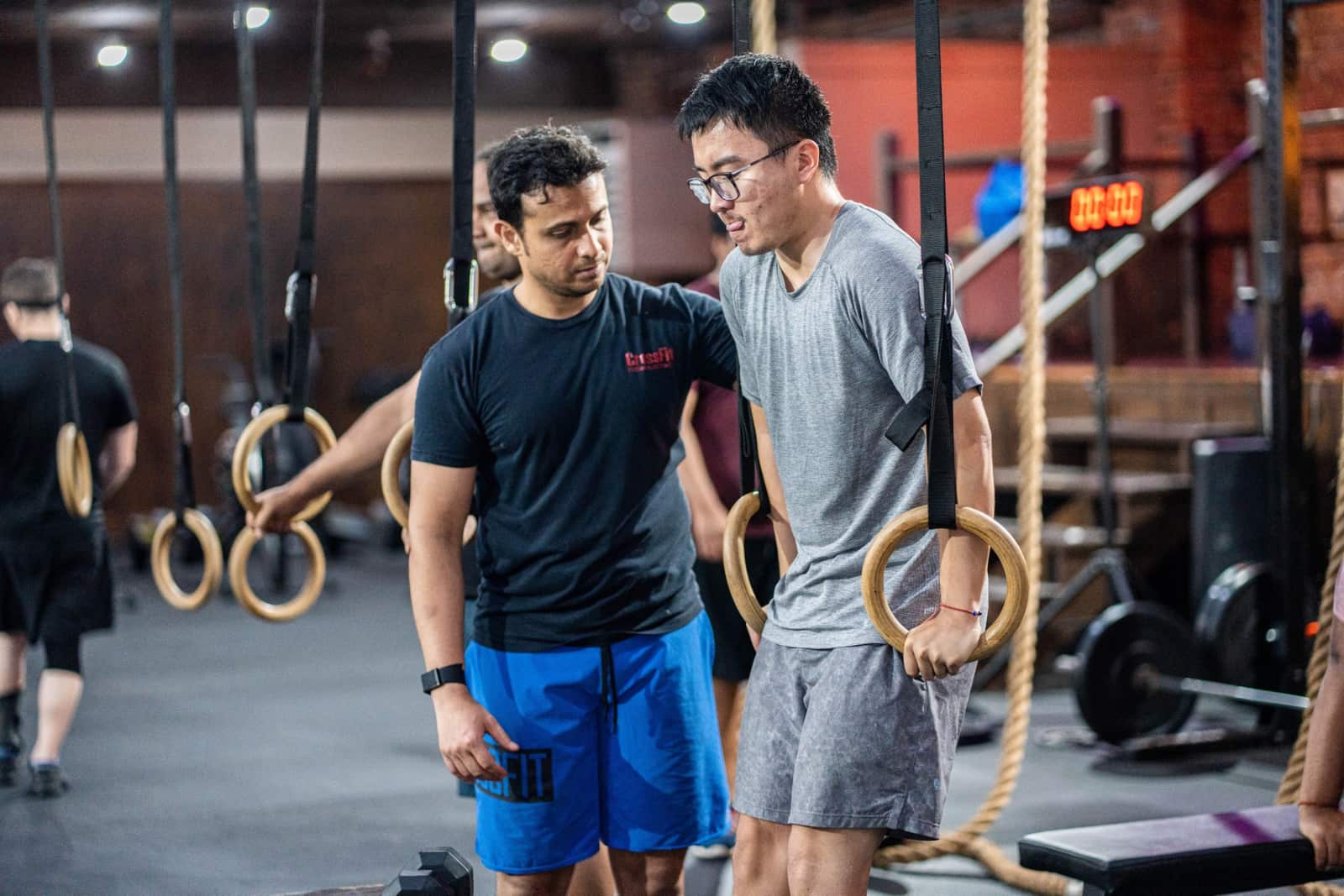
Table of Contents
- What you actually buy with each format
- When online personal training works
- When in-person personal training wins
- The hybrid model: why it is growing
- Cost comparison: per dollar, what do you get?
- How Persistence handles online and in-person
- Frequently Asked Questions
What you actually buy with each format
The marketing for both formats blurs together. Both promise "personalized coaching" and "real results." The product underneath is genuinely different.
| What you get | Online PT | In-Person PT |
|---|---|---|
| Programming written for you | Yes | Yes |
| Real-time form correction | No (delayed via video) | Yes |
| Hands-on cueing or assist | No | Yes |
| Coach feels muscle tension or compensation | No | Yes |
| Weekly check-ins | Yes (video, text, or call) | Yes (in person) |
| Accountability presence | Moderate (digital) | High (booked appointment) |
| Equipment access | Whatever you own | Full gym setup |
| Cost per month | $150 to $400 | $640 to $1,200 |
The big difference is what happens during the actual rep. Online coaches can write you a great program and review video after the fact, but they cannot cue you mid-rep when your knee is caving in. In-person coaches can.
For some lifters, that mid-rep cueing is the entire point of hiring a coach. For others, the program is the point and they trust themselves on form. Both can be right.
When online personal training works
Online wins for three specific profiles. If you are not one of these, the format is probably wrong.
1. Experienced lifter who needs programming, not technique work
You have 5+ years of training history. Your squat, deadlift, and press are clean. You log your sessions, video your max sets, and trust yourself to self-correct minor form drift. What you actually need is a smarter program than you can write for yourself, plus weekly accountability.
This is the highest-value use case for online PT. You are paying for the coach's programming brain, not their eyes during your warm-up. The cost is much lower than in-person because you do not need the in-person service. Devang, one of our software engineers, is a good picture of this profile now. He started as a near-total beginner and has logged 724 classes since, building from his first wobbly air squat to advanced strength work. Six years in, he could hold his own with a written program and video review. Day one, no chance. The format that fits you depends entirely on where you are on that arc.
2. Niche specialty where the right coach is not local
You are training for a 100-mile ultra and want a coach who has actually programmed for ultras. You are a masters powerlifter chasing a meet PR. You are a gymnastics-focused athlete looking for someone who competed in the sport. The pool of coaches with that exact specialty in any one city is small. Online opens up the country.
For specialty fits, online makes more sense than picking a generalist locally just because they are 10 minutes away. Match the specialty first.
3. Geographic constraint or heavy travel
You live in a town without a serious strength gym. You are deployed, on a sabbatical, on a 6-month overseas assignment. You travel 3 weeks out of 4 for work. In-person scheduling does not align with your life.
For these cases, online is the only realistic option. A great online coach with weekly video review beats no coach. The accountability is digital but it is real.
Where online struggles
Online struggles for beginners learning movement patterns from zero. Sending a beginner a written program and a few demo videos is asking them to learn complex motor skills (squat, hinge, press, snatch) without real-time cueing. They can get close, but the form drift compounds, and by month 3 they have grooved patterns that will take longer to fix than they would have taken to learn correctly the first time. We see this with transfer members regularly. Ravi, our head S&C coach, spends a real chunk of his week un-teaching a hinge that someone learned wrong off a phone screen.
Online also struggles when accountability needs to be physical. For some lifters, a digital reminder ("complete your session today") does not move the needle. A booked in-person session does. Know yourself.
When in-person personal training wins
In-person clearly wins in five cases:
1. Beginners learning movement patterns
The first 12 weeks of any new lifter's training is about grooving clean patterns: squat, hinge, push, pull, lunge, carry. The cueing density required to do this well is high. In-person coaches can correct in real time, adjust load on the fly, and feel when the bar path is drifting. Online cannot.
If you are new to lifting, in-person for the first 12 to 16 weeks is the highest-impact decision you can make. The patterns built early stick.
2. Post-injury return
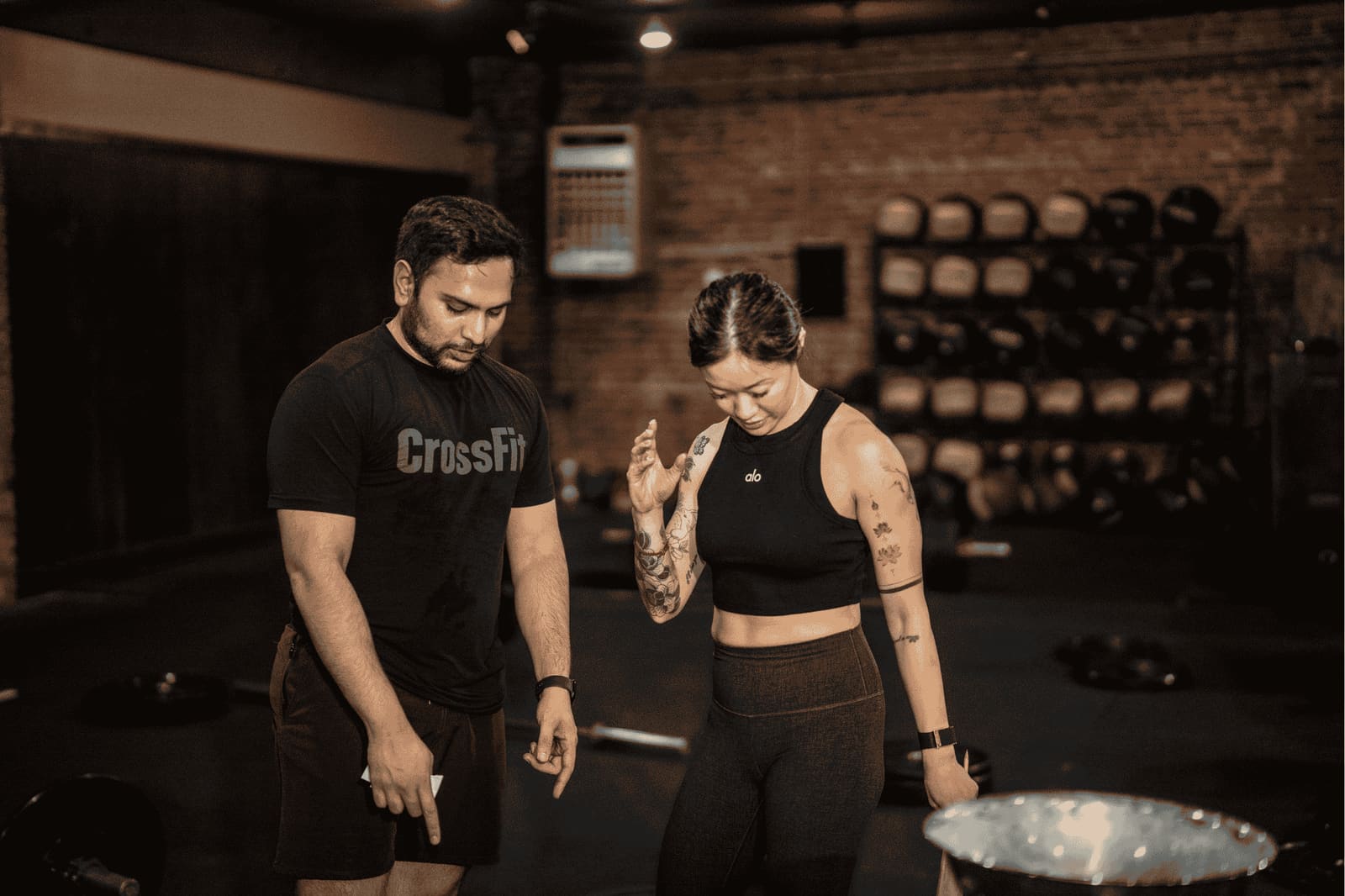
ACL, rotator cuff, lower back, hip. Returning from a serious injury requires a coach watching every rep, adjusting load between sets, and reading how the joint feels in real time. Online cannot see what your knee is doing under load. In-person can.
Eric is the case I point to most. He came to us with chronic back pain and a long history of working around it. Over hundreds of sessions in the room, with a coach adjusting load and watching position rep by rep, he built to strict pull-ups. That arc does not happen over a video feed. You need eyes on the exact moment the back rounds, and you need them every single set. Post-injury work is in-person, always.
3. Technical skill acquisition
Learning the snatch, the clean, the muscle-up, the handstand walk. These are motor skill problems, not programming problems. The skill curve is steep, the failure modes are subtle, and you cannot self-coach them effectively. Katie is the example I use. She has logged over 700 classes and built her strict pull-ups and ring work through patient, in-person gymnastics progressions, with a coach catching the millimeter-level position errors that a phone camera flattens out. The cueing density required to make a snatch or a ring muscle-up look right takes a coach in the room with you.
If technical skill work is your goal and you are local, this is reason enough to come train in person. Book a free first class and we will screen where your movement actually is before you spend a dollar on programming.
4. Severe gym anxiety
For members where anxiety is the actual barrier (and we see this more than people expect), the booked in-person session is the entire intervention. The accountability of "I have to show up, the coach is expecting me" is the thing that breaks the avoidance loop. Online does not have the same physical pull.
After 4 to 8 weeks of in-person, many of these members can transition to group classes or hybrid. But the bridge has to be physical first.
5. Hands-on cueing and load assistance
Some coaching is literally physical: a hand on the lower back to cue extension, a finger on the lat to cue depression, a spot on a heavy set, a load adjustment between sets. Online cannot do any of this.
For lifters where physical cueing matters (and it matters more than most people realize), in-person is the only option.
The hybrid model: why it is growing
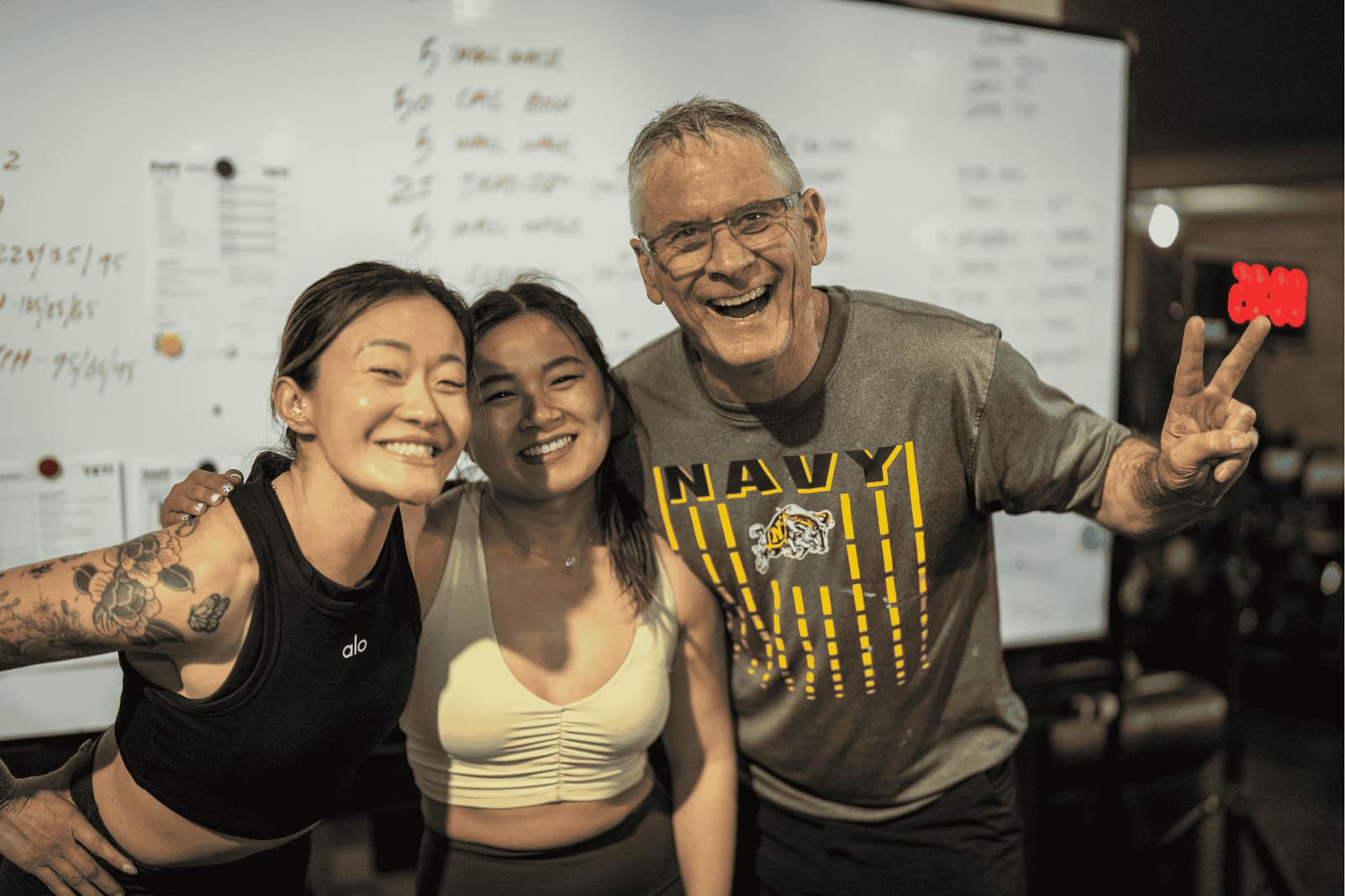
Hybrid personal training (1 to 2 in-person sessions per week plus online programming for the days between) is the fastest-growing pattern we see. It works because it captures the best of both:
The in-person sessions handle skill work, form check, technical complexity, and the high-density coaching that requires hands-on attention.
The online programming structures the days you train solo, gives you a clear plan, and provides weekly check-ins so the coach knows how the week went.
Most of our PT members at Persistence end up in a hybrid pattern within 8 to 12 weeks of starting. The first weeks are heavily in-person (foundation work). Once the patterns are clean and the lifter is logging well, we drop in-person to once a week and add online structure for the other sessions.
For example, a typical hybrid week:
- Tuesday: In-person session, 60 minutes. Squat focus, accessory work, form check.
- Thursday: Solo session at the gym, programming sent ahead. Athlete logs and sends notes.
- Saturday: In-person session. Deadlift focus, conditioning piece, week debrief.
- Off days: Optional walking or mobility, sent in the app.
The total cost is roughly 60 percent of pure in-person twice a week, with similar progress because the high-attention work is preserved.
Cost comparison: per dollar, what do you get?
Honest math on what each format costs per month:
| Format | Monthly cost | What you get | Best dollar value for |
|---|---|---|---|
| Online programming only | $150 to $400 | Written program, weekly check-in, optional video review | Experienced lifter who self-coaches form |
| In-person 1x/week | $320 to $600 | Weekly hands-on session, programming for solo days | Maintenance, advanced lifter, post-foundation |
| In-person 2x/week | $640 to $1,200 | Two weekly hands-on sessions, full coverage | Foundation phase, post-injury, technical learning |
| Hybrid (1 in-person + online) | $400 to $700 | Weekly hands-on plus structured solo days | Most members past foundation phase |
The cheapest is online programming. The most expensive is twice-a-week in-person. The middle range is hybrid, which is also where most lifters end up after the first 12 weeks. (If group classes fit your goal better than 1-on-1, that is a separate and cheaper conversation: our weekly plans run $69 to $89 with no contract, and our coach-to-athlete ratio sits around 1 to 12, so you still get eyes on your lifts.)
For most members, hybrid is the long-term sustainable answer. Front-load in-person for the foundation phase, then taper to a sustainable hybrid pattern.
How Persistence handles online and in-person
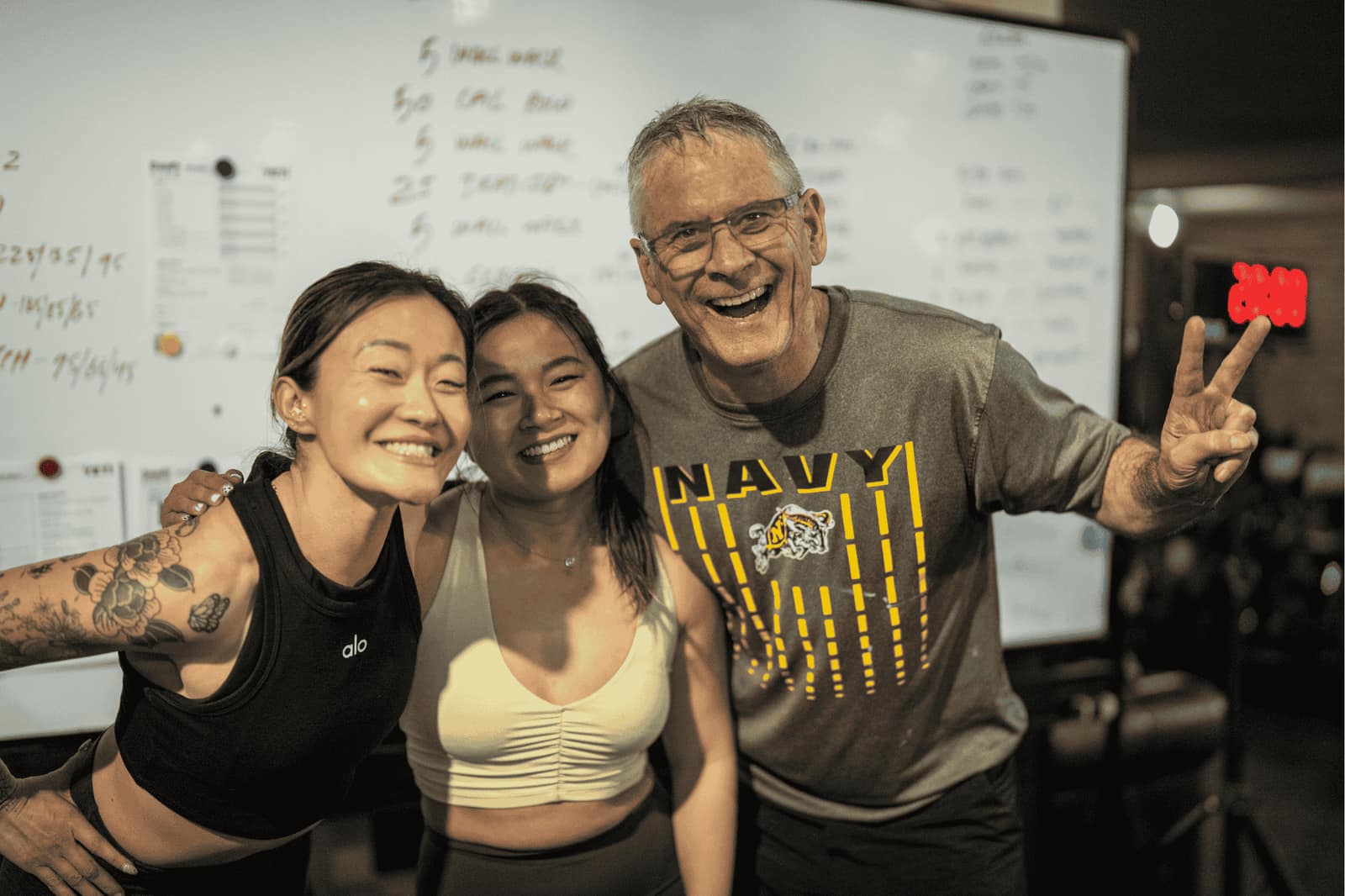
Most of our work at Persistence is in-person. We are at 3025 1st Ave in Belltown, an 8-minute walk from the Amazon Spheres. Members train with credentialed coaches (Ravi, CFL3, MS Strength and Conditioning, and CrossFit Seminar Staff; Jacque, CFL3 and PNL2; AJ and the rest of the crew through the weekday classes) in 1-on-1, semi-private, or group settings. Nutrition runs through our PNL2 coaching, not a separate vendor.
We run online programming for a small number of cases:
- Members who moved out of Seattle but want to keep their programming with us. Often a 1-on-1 in-person foundation, then a transition to online when they relocate.
- Specialty cases where in-person is impossible: masters competitors prepping for a meet in another state, traveling executives, members on overseas assignments.
- Hybrid members who train in-person 1 to 2 times per week and want online structure for solo days.
If you are local and trying to decide between online and in-person, the answer is almost always in-person. The cost difference is real but the form coaching benefit is bigger. Our personal training page has the full in-person service breakdown. Our about page covers the gym philosophy and team.
If you are not local and want to scope whether online with our team makes sense, reach out and we will be honest about whether the fit works. You can call us at (206) 593-4236. We do not push online onto members for whom it is the wrong format.
Related Articles in This Cluster
- Personal Training in Belltown: The Insider's Guide. The full PT hub with format options.
- 1 on 1 vs Semi Private Personal Training: Which Wins?. The other in-person format choice.
- Personal Training Cost in Belltown: A Transparent Breakdown. Pricing breakdown across formats.
Frequently Asked Questions
Is online personal training as effective as in person training?
For experienced lifters with clean technique, online programming can be nearly as effective as in-person, especially when paired with weekly video check-ins. For beginners, post-injury cases, or anyone learning a new technical skill (Olympic lifting, gymnastics, complex movement patterns), in-person almost always wins because the coach can cue in real time and feel where you are tight or compensating. The honest answer is that online and in-person serve different problems, and many lifters use both.
When does online personal training work best?
Online personal training works best for three situations: experienced lifters who need programming structure but coach themselves on form, athletes with niche goals (ultramarathon, masters powerlifting, return-to-sport prep) where the right specialist may not live in your city, and lifters in geographically constrained locations (rural areas, frequent travelers, expat assignments). Online is a programming and accountability product, not a form-coaching product, and it works when those are the things you actually need.
When does in-person personal training clearly win?
Five cases: beginners learning movement patterns (squat, hinge, press, pull) for the first time, post-injury return where every rep needs eyes, technical skill acquisition (snatch, clean, gymnastics), severe gym anxiety where physical presence is the accountability driver, and any goal requiring hands-on cueing or load assistance. In all five, the cost premium of in-person is worth it. The coach feels what video cannot show.
What is hybrid personal training and why is it growing?
Hybrid personal training is in-person 1 to 2 times per week plus online programming and accountability between sessions. It is the fastest-growing model in the PT space because it captures the best of both worlds: weekly hands-on coaching for form and skill plus structured programming and check-ins for the days you train solo. Most of our PT members at Persistence move into a hybrid pattern within 8 to 12 weeks of starting.
How much does online personal training cost compared to in person?
Online programming-only typically runs $150 to $400 per month, depending on coach credentials and check-in frequency. In-person 1-on-1 runs $80 to $150 per session ($640 to $1,200 per month at twice-a-week). Hybrid (1 in-person session plus online programming) runs $400 to $700 per month. The math: online is cheaper per month, but per coaching dollar, in-person delivers more for technical or beginner work. Per programming dollar, online is competitive.
Can Persistence Athletics coach me online if I cannot get to Belltown?
Yes, on request. We run online programming for a small number of members, typically established athletes who have moved out of Seattle but want to keep their programming with us, plus a few specialty cases (masters competitors, traveling executives, geographically-constrained athletes). Online is not our primary offering. Most of our work is in-person at our Belltown gym. If online is the right fit for your situation, reach out and we will scope whether it works.
Try a free first class at Persistence Athletics
If you are local to Belltown or downtown Seattle, the easiest way to evaluate in-person coaching is a free, scaled first class. You will meet a credentialed coach, get a movement screen, and find out which format fits your goal. Trial slots open up Saturday at 8:00 AM and weekday evenings at 6:30 PM (Fridays at 6:00 PM). Book your free class at Persistence Athletics, 3025 1st Ave, Belltown, Seattle. 8 minutes from the Amazon Spheres, or call (206) 593-4236.
Want to take this further?
Talk to a coach about personal training programming at Persistence Athletics.