
Personal Training in Belltown: The Insider's Guide
A Belltown head coach breaks down personal training: pricing, credentials, what to look for, and what 1-on-1 actually buys you over group classes.

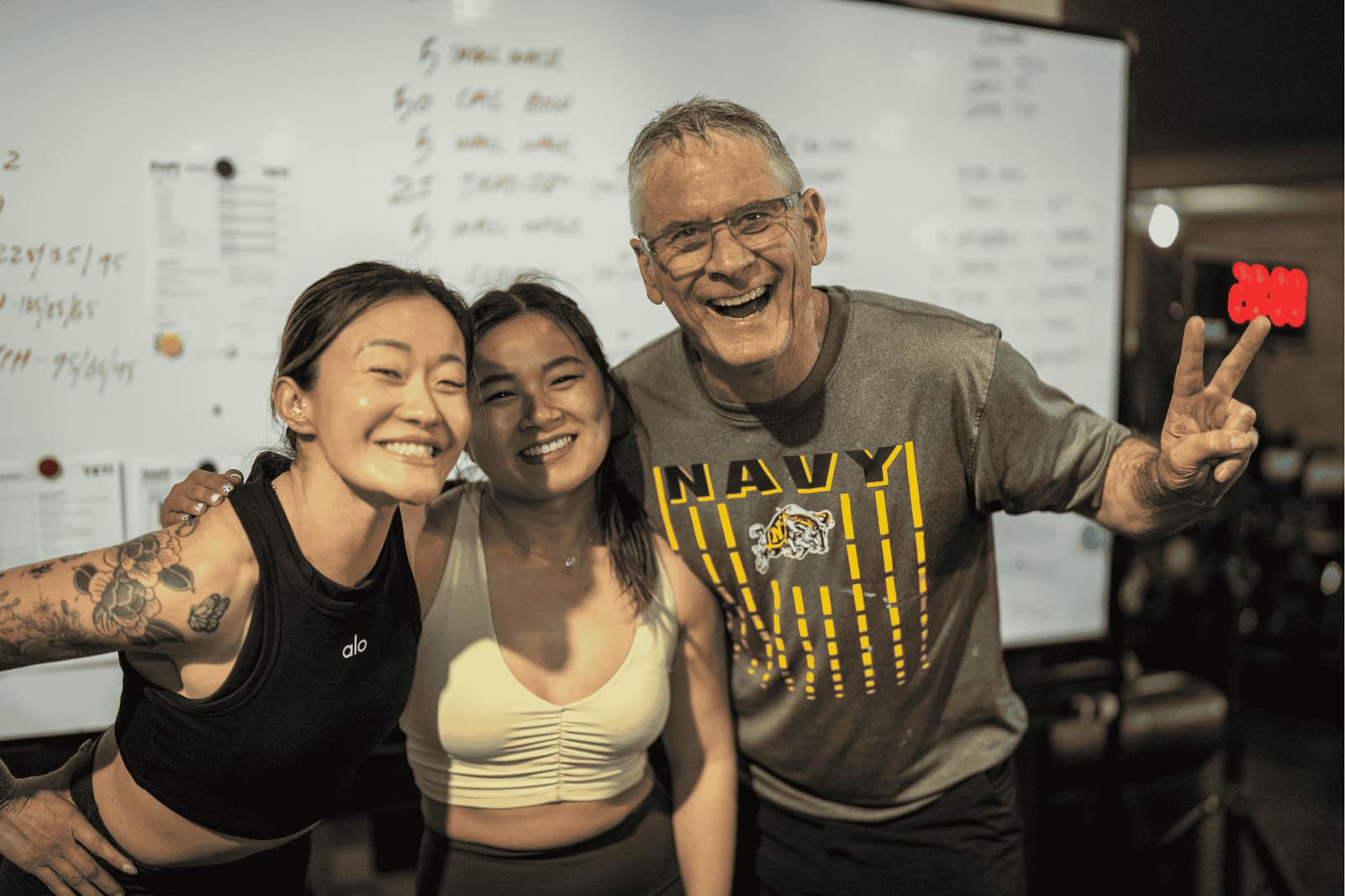
Personal training in Belltown, decoded
If you have been thinking about hiring a personal trainer in Belltown but are not sure where to start, this guide covers what PT actually buys you, what it costs, how to filter through the dozens of trainers in the neighborhood, what credentials matter, and what to expect from a first session.
I am Jacque Dewangan, head coach at Persistence Athletics on 1st Ave in Belltown. CFL3 and PNL2 (Precision Nutrition Level 2). I have run thousands of 1-on-1 sessions over the last decade with members ranging from total beginners to advanced competitors. Updated June 2026.
Most members who book a PT session with us tell me the same thing by week three: "I had no idea my squat was that asymmetric until you filmed it." That moment is what 1-on-1 buys you. A coach with eyes on every rep and years of pattern recognition for what your body is actually doing versus what you think it is doing.
This guide is honest about pricing (including ours) and about when PT is the right call. If you are new to fitness, anxious about gyms, post-injury, postpartum, or stuck at a plateau, this should make the decision easier.
Table of Contents
- What is personal training (and what it actually buys you)
- How much does personal training cost in Belltown?
- When personal training beats group classes (and when it does not)
- How to pick the right trainer in Belltown
- Credentials that matter (and ones that do not)
- The first session: what to expect at Persistence Athletics
- Member story: Sofi, a postpartum return
- How PT works at Persistence Athletics
- Related Articles in This Cluster
- Frequently Asked Questions
What is personal training (and what it actually buys you)
Personal training is 1-on-1 coached movement, programmed for your specific body, goals, and schedule. The coach builds your plan, watches every rep, films when needed, makes real-time corrections, and tracks progress across weeks.
What it actually buys you, beyond the obvious:
- A second pair of eyes on every rep. You cannot see your own squat. You cannot feel the shift onto your right hip in your deadlift. A good coach can, and the corrections compound fast.
- A program that fits your life. Not a generic 12-week plan off the internet. A plan that knows you travel two weeks a month, your right shoulder is cranky on Mondays, and you can only train mornings.
- Accountability with a face attached. A booked 6 AM session with a coach you like is much harder to skip than a workout app reminder.
- Pattern recognition. A coach who has run thousands of sessions has seen your weak link before and knows which of three drills will work fastest for your case.
What PT is not: it is not a magic shortcut. The work still has to be done. PT compresses the timeline and removes the guesswork. It does not remove the effort.
How much does personal training cost in Belltown?
Pricing varies by gym overhead, coach credentials, session length, and package size. Here is what to expect across Belltown studios in 2026:
| Service | Belltown range | Persistence | What drives cost |
|---|---|---|---|
| Single 1-on-1 session (60 min) | $80 to $150 | Mid to upper | Credentials, overhead |
| Semi-private (2 to 3 people) | $50 to $80 / person | Mid range | Group economics |
| 10-session package | $720 to $1,400 | ~10% off single | Volume discount |
| 20-session package | $1,360 to $2,700 | ~12 to 15% off | Larger volume |
| Hybrid (PT + group classes) | $400 to $700 / mo | Mid range | Cost-effective long-term |
| Online programming only | $150 to $300 / mo | On request | No floor time |
The cheapest end ($80 per session) is usually a CFL1 trainer at a budget studio or a side-hustle trainer in a hotel gym. The top end ($150 per session) is usually a CSCS or CFL3 coach at a well-equipped studio. Persistence sits in the middle to upper range with the same 10 to 15 percent package savings most Belltown gyms offer.
For exact rates, see our pricing page. For the full PT service breakdown, see our personal training page.
When personal training beats group classes (and when it does not)
PT is the right call when:
- You are post-injury or post-surgery. Returning from ACL repair, rotator cuff surgery, or chronic back pain. You need eyes on every rep until the movement pattern is rebuilt. Eric, one of our advanced members, came back from chronic back pain to strict pull-ups, and the early rebuild work is exactly the kind of thing PT is built for.
- You are pregnant or postpartum. Modifications change week to week. You need a coach who knows the specifics. This is my own wheelhouse as a PNL2 coach who works with a lot of women returning to training.
- You have severe gym anxiety. A 1-on-1 environment with no audience is the friction-free entry point. Plenty of our members start here for 4 to 8 sessions, then move to group.
- You have a specific goal with a deadline. A wedding, a HYROX race, a lift number, a return-to-sport timeline.
- You have plateaued in group classes for 3+ months. A short PT block to film your lifts and program a fix usually breaks the plateau in 4 to 8 sessions. Ravi, our head S&C coach, does most of our plateau diagnosis, and most stalls trace back to one fixable position fault.
- You travel constantly. A group class schedule does not work if you are in Boston Tuesday and Chicago Thursday.
Group classes win when:
- You want community. PT gives you a coach. Group gives you about a dozen training partners and a coach. Our coach-to-athlete ratio runs roughly 1 to 12, so you are still getting eyes on you.
- You are budget-sensitive. Group classes deliver excellent coaching at one third the cost per hour.
- Your goal is general fitness. Group programming serves "be in good shape, feel good, look good" perfectly.
- You like variety. Group programming is constantly varied by design.
The honest answer for most members: a short PT block (4 to 8 sessions) at the start, then group classes as the main work, then occasional PT later for plateaus or new goals. That hybrid pattern is the most common one we see at Persistence.
If you want to feel out the room before any of this, your first group class is free and scaled to wherever you are starting. Come try a class and meet the coaches first.
How to pick the right trainer in Belltown
Five filters, in order of importance:
1. Credentials
The trainer should hold a recognized strength certification (CSCS, CFL2, CFL3, NSCA-CPT, ACSM-CPT, or NASM-CPT) plus a specialty cert relevant to your goal (PNL1/PNL2 for nutrition, FMS for movement screening, USAW for Olympic lifting). More on which credentials matter in the next section.
2. Specialty fit
Not every trainer is good at every goal. A bodybuilding-focused trainer is a poor fit for a HYROX athlete. A general-fitness trainer is a poor fit for a powerlifter chasing a heavy squat. Match the trainer's strongest skill to your goal.
3. Intake process
A good trainer will not skip the intake. Expect a 60 to 90 minute first session: goal interview, movement screen, baseline strength tests, and a written plan. If a trainer's first session is "let's just get a workout in," that is a red flag.
4. Gym environment
You will spend 1 to 5 hours a week here. Equipment in good condition, music you can tolerate, a culture that matches your energy. A coach you like at a gym you dread is not sustainable. Visit before you commit.
5. Gut fit with the coach
The relationship matters. You should feel comfortable being honest about pain, anxiety, motivation dips, and life stress. Communication style needs to land for you. Direct, warm, joking, serious, all work, but the fit has to match.
For local context, see Belltown personal trainer. For a Seattle-wide framework, see how to choose a personal trainer in Seattle.
Credentials that matter (and ones that do not)
The credential alphabet soup is confusing on purpose. Here is what is real and what is not.
Worth the weight:
- CSCS. NSCA-issued. Bachelor's degree required plus a substantial exam. Gold standard for strength coaching.
- CFL2 / CFL3. CFL2 requires a tested practical exam plus the CFL1 base. CFL3 requires multiple years of coaching plus a comprehensive exam. CFL3 is rare and respected.
- NSCA-CPT, ACSM-CPT, NASM-CPT. Solid general-purpose personal-trainer certifications with rigorous exams. ACSM is strong on the medical and rehab side.
- PNL1 / PNL2. Nutrition coaching gold standard for non-RDs. PNL2 includes behavioral coaching depth.
- USAW Level 1 / Level 2. USA Weightlifting. Specific to Olympic lifting.
Mostly worthless on their own: "Certified" with no issuing body, weekend-only "fitness coach" certs, online-only "transformation specialist" badges, "master trainer" with no underlying cert.
A real trainer can name their cert, the issuing organization, and the exam structure in 5 seconds. If they cannot, that is your answer.
At Persistence, our coaches keep their credentials front and center. Ravi Dewangan (CFL3, MS Strength and Conditioning, CrossFit Seminar Staff) leads our programming and runs the personal training program with me (Jacque, CFL3, PNL2). I handle our nutrition coaching, which routes through the same PNL2 framework. AJ and the rest of the crew coach the weekday classes. Our coaches page has the full bios and credentials.
The first session: what to expect at Persistence Athletics
A first PT session at Persistence runs about 75 minutes:
Minutes 0 to 15: Goal interview. Training history, injury history, current fitness, sleep, nutrition, schedule, what you want from PT, what success looks like in 90 days. Notes go into your file.
Minutes 15 to 30: Movement screen. Overhead squat, hinge, push, pull, single-leg. Sometimes filmed if I want to show you something. The screen tells me which patterns are clean, which are restricted, and where to program.
Minutes 30 to 55: Baseline lifts. 2 to 3 lifts at moderate weight. Often back squat, deadlift, and a press, scaled to you. Not maxing out. Establishing a starting number to track from.
Minutes 55 to 75: Programming setup. A 4 to 6 week plan walked through with you. Days per week, focus, how PT and group will fit together. You walk out with it written down.
You leave knowing three things: your starting numbers, your weak links, and the path for the next 6 sessions. No mystery.
Member story: Sofi, a postpartum return
Sofi came to us for a postpartum return. She had trained before, but after her baby she did not trust her core, her hips felt off, and the idea of walking into a busy class and guessing at modifications was not happening. She wanted structure she could trust, not another self-coached plan she would abandon by week three.
We started with a movement screen. Postpartum, the first job is rebuilding the connection between breath, core, and pelvic floor before we load anything. Her screen flagged a hip that did not want to share the work and a midline that needed to be retrained, not just "strengthened." Nothing dramatic, just the normal picture for a body that grew and delivered a human a few months earlier.
The block ran as a slow, deliberate rebuild. Early sessions were breathing mechanics, glute and single-leg work, and reloading the hinge and squat patterns at weights that felt almost too easy on purpose. As the core came back online, we layered weight in. By the end of the block she was lifting with confidence and, just as important, she trusted her own body again under a bar.
Sofi now trains in group classes most weeks, with the occasional check-in session when something feels off. That is the pattern we see constantly: a focused PT block to rebuild the foundation, then group classes carry the work. Postpartum return is exactly what a PNL2 head coach and a careful intake are for.
How PT works at Persistence Athletics
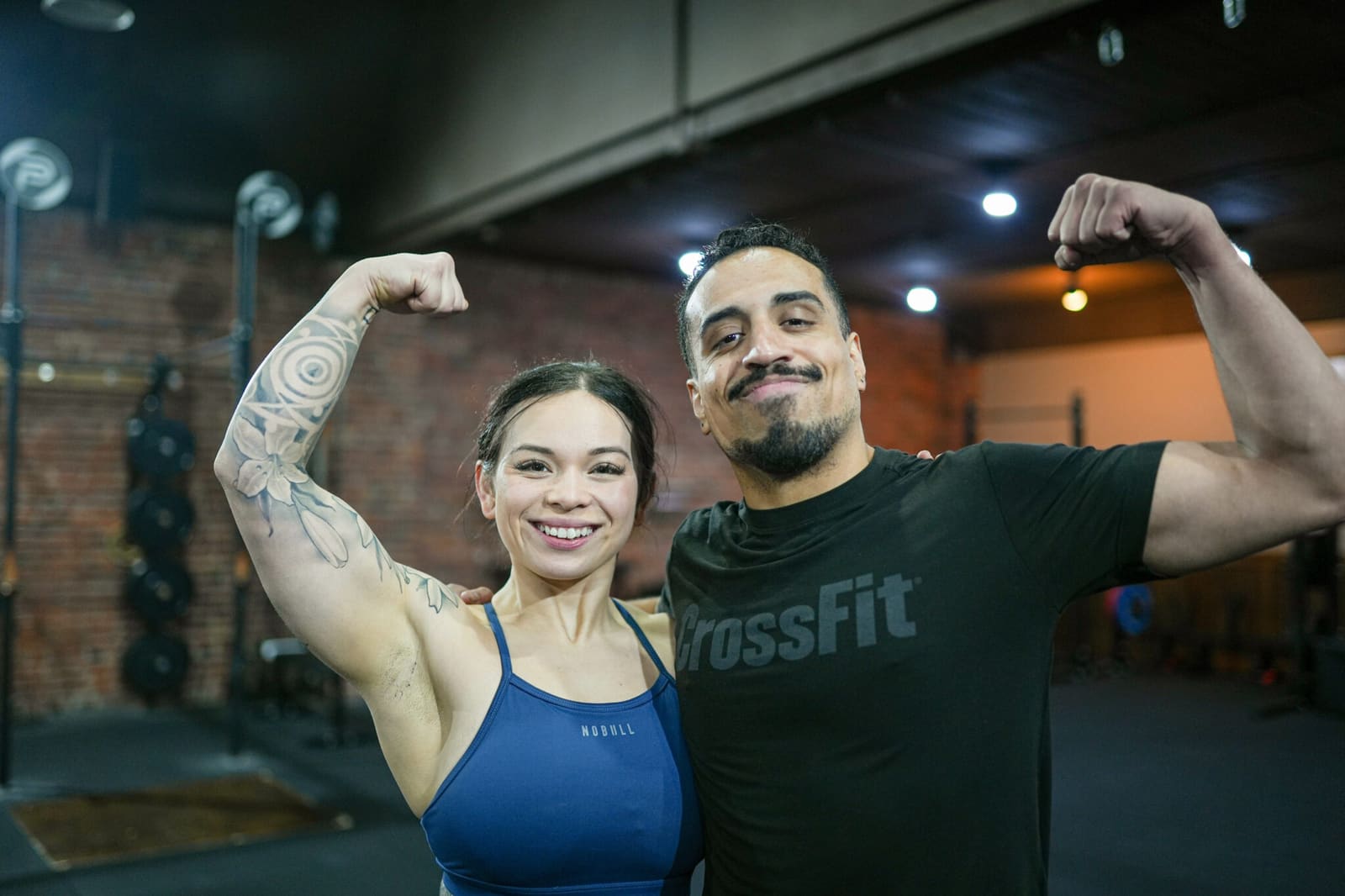
Three formats:
| Format | Description | Best for |
|---|---|---|
| 1-on-1 | One coach, one athlete. Fully individualized program. | Post-injury, postpartum, severe anxiety, very specific goals |
| Semi-private | One coach, 2 to 3 athletes. Each working their own program. | Cost-conscious, training with a friend or partner, want PT-quality coaching at a lower price |
| Hybrid (PT + Group) | 1 to 2 PT sessions per week plus group classes. | Most members. Get the form-coaching benefit of PT plus the community and conditioning of group |
Most members start with 4 to 8 PT sessions, then transition into group with periodic PT for plateaus. Some stay on hybrid year-round. A smaller number do 1-on-1 only, usually for post-injury reasons or because their schedule does not align with group times.
Programming is run by Ravi (CFL3, MS S&C, CrossFit Seminar Staff). Sessions can be booked AM (5:30 AM start) through evening, Monday through Saturday. We are at 3025 1st Ave in Belltown, Seattle, about an 8-minute walk from Amazon. Questions on scheduling or which format fits you, call us at (206) 593-4236.
For the full PT offering, see our personal training page. For Belltown specifics on logistics and parking, see Belltown personal trainer.
Related Articles in This Cluster
- How to Choose a Personal Trainer in Seattle. The full filter framework for picking a coach across Seattle, not just Belltown.
- Personal Training Cost in Belltown: A Transparent Breakdown. A deeper dive into pricing, package math, and value comparisons.
- Group Coaching vs Personal Coaching: Which Fits You?. The comparison framework for choosing between formats.

Frequently Asked Questions
How much does personal training cost in Belltown?
Most Belltown personal training runs $80 to $150 per single session, with semi-private (2 to 3 people sharing a coach) at $50 to $80 per person. Packages of 10 or 20 sessions usually save 10 to 15 percent. Hourly rates depend on coach credentials and gym overhead. CFL3 or CSCS coaches at well-run Belltown studios cluster in the $110 to $140 range.
Is personal training worth it if I already do group classes?
For most members, 4 to 8 PT sessions over the first 90 days pays back hugely in form, confidence, and rate of progress. After that, group classes carry the work. A short PT block to fix a stalled lift or recover from injury also makes sense. Year-round PT only is the right call for a smaller group: post-injury rehab, athletes with very specific goals, or members who genuinely cannot train in groups.
What credentials should a Belltown personal trainer have?
Look for CSCS (gold standard for strength), CFL2 or CFL3 (for CrossFit), NSCA-CPT, ACSM-CPT, or NASM-CPT. Plus a specialty if relevant: PNL1 or PNL2 for nutrition, FMS for movement screening, USAW for Olympic lifting. Avoid weekend-only certifications you have never heard of, and trainers who cannot tell you their cert in 5 seconds.
How is semi-private different from 1-on-1 personal training?
Semi-private is 2 to 3 people sharing one coach, each working their own program. You get most of the coaching attention of 1-on-1 at roughly half the cost. The trade-off is less individualized pace. It works well for friends or couples training together, or members who want PT-quality coaching at a more accessible price point.
Do I need personal training before joining group CrossFit classes at Persistence?
No. Our intro process is built for new members and group classes scale to every level. PT is an accelerator, not a prerequisite. About 1 in 4 of our new members chooses 4 to 8 PT sessions before joining group, usually because of injury history, severe gym anxiety, or a specific goal. The other three jump straight to group and do great.
What happens in a first personal training session at Persistence Athletics?
About 75 minutes total. We start with a goal interview, run a movement screen (overhead squat, hinge, pull, push, single leg), test 2 to 3 baseline lifts at moderate weight, and build out a 4 to 6 week training plan you walk out with. You leave knowing your starting numbers, your weak links, and exactly what the next 6 sessions look like.
Can I do personal training in Belltown if I travel a lot for work?
Yes. Several of our PT members are consultants, sales executives, or Amazon employees who travel 1 to 2 weeks a month. We program around your travel calendar, run remote check-ins on the road, and pick the work back up when you return. The structure is built around your actual schedule, not an idealized one.
How long until I see results from personal training?
Most members see meaningful form change in 3 to 4 sessions and meaningful strength change by week 6 to 8. Body composition change, if that is the goal, takes 12 weeks of consistent training plus nutrition work. The fastest results come from members who pair PT with 2 to 3 group classes per week, not PT alone.
Try a free first class at Persistence Athletics
If you are weighing PT in Belltown, the easiest first step is to come see the gym. Your first class is free, scaled to your starting point, and the lowest-pressure way to meet the coaches before committing to PT. Book your free class at 3025 1st Ave in Belltown, Seattle, about an 8-minute walk from Amazon. Or call us at (206) 593-4236.
Want to take this further?
Talk to a coach about personal training programming at Persistence Athletics.