
Bench Press Accessories That Actually Build the Lift
A CFL3 coach with an MS in S&C ranks the top 7 bench press accessories. What each builds, why it transfers, and a sample accessory day after main bench.

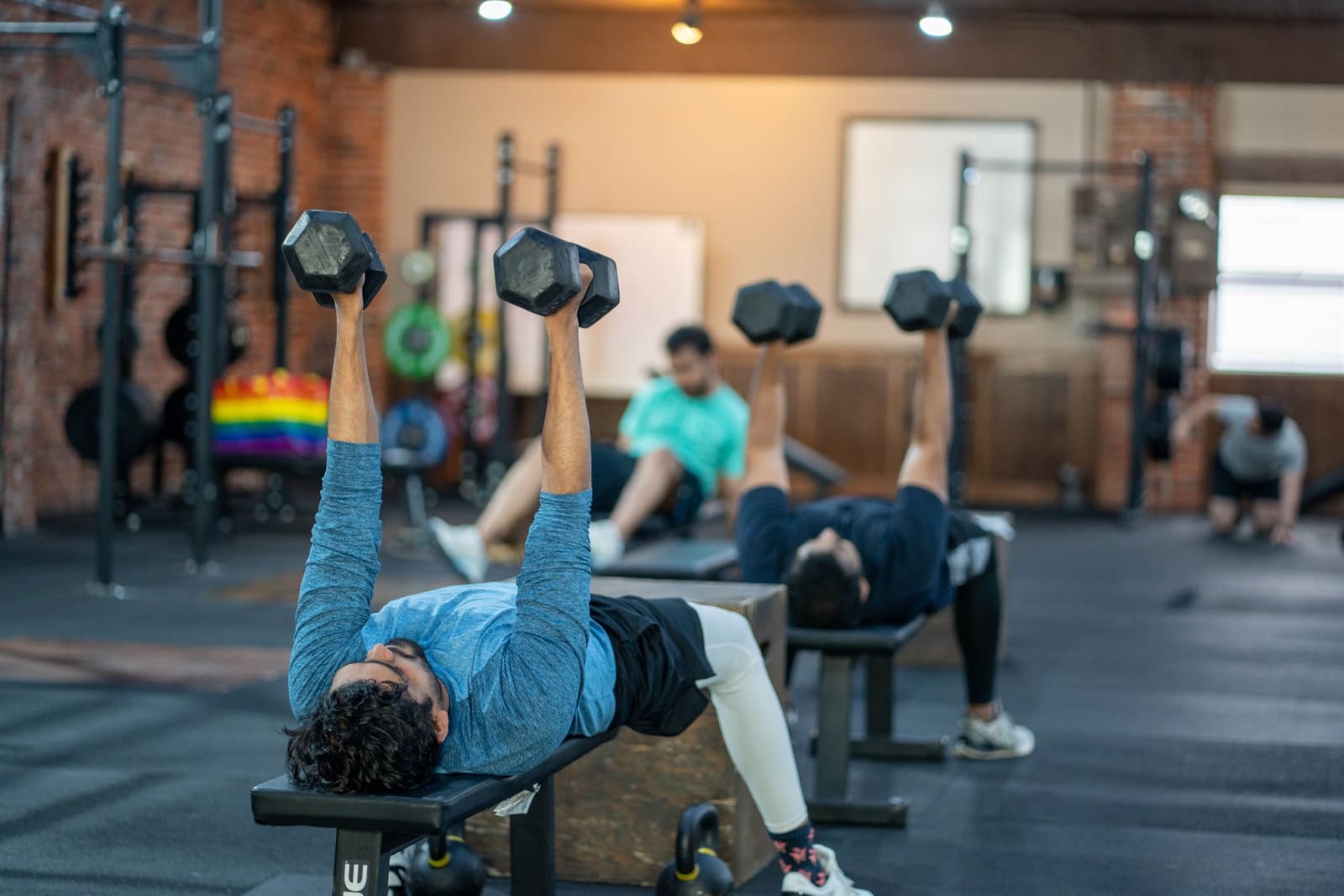
Most lifters do bench accessories wrong
Most lifters at Persistence Athletics in Belltown who plateau on the bench press are not failing the bench. They are failing the accessory work that supports the bench. The triceps are weak. The upper back is weak. The mid-range lockout collapses because no one ever trained the muscles that own that part of the rep.
I'm Ravi Dewangan, CFL3, MS in Strength and Conditioning, and CrossFit Seminar Staff. I have programmed bench accessory work for hundreds of lifters at Persistence Athletics. Updated June 2026.
The right accessories are not random. They target the specific weak points in the bench pattern. This post ranks the top seven accessories in order of how much they actually move the main lift, with sets, reps, and a sample accessory day after your main bench.
Table of Contents
- How to think about bench accessories
- The top 7 bench accessories ranked
- A sample accessory day after main bench
- How we program bench accessories at Persistence Athletics
- Frequently Asked Questions
How to think about bench accessories
The bench press is three muscle groups doing one job: pecs, anterior delts, triceps. Plus a stable upper back to brace against, plus leg drive to transfer force from the floor to the bar. Accessory work targets the specific weak link in your pattern.
Two diagnostic questions will tell you which accessories you need most.
Question 1: where does the bar stall? If the bar stalls at the chest, you need pec and anterior delt work. If it stalls at the mid-range or lockout, you need triceps. Lockout misses are the most common bench miss I see on the floor, and the fix is heavy triceps work.
I watched this play out with Devang, a software engineer who has logged over 700 classes here. He came in as a beginner and built a real strength base over a few years, but his bench stalled hard at lockout for months. The bar would launch off his chest and die three inches from the top. He was convinced his pecs were the problem and kept adding flyes. The pecs were fine. His triceps were the weak link, and once we shifted his accessory work to close-grip bench and weighted dips, the lockout came back. Same pattern, different lifter, every single week.
Question 2: does the bar drift or wobble? If yes, your upper back is not tight enough. The fix is rows, face pulls, and bracing work to lock the bar into a stable groove.
The seven accessories below cover both diagnoses. Pick the three to five that target your specific weakness.
The top 7 bench accessories ranked
Ranked by how much each actually transfers to the bench press, based on coaching observation and the lift logs we keep on members at Persistence.
1. Close-grip bench press
Why it works: Same pattern as flat bench, narrower hand position. Forces the triceps to take more of the load. Builds the lockout strength that misses out at mid-range. Same bar path means the skill transfers directly.
Programming: 4 sets x 6 reps at 70 to 80 percent of your flat bench 1RM. Do it immediately after main bench.
Why it ranks first: The transfer is the highest of any accessory because the movement is the most similar to the bench press itself. Lifters who add 1 to 2 sets of close-grip bench every bench day for 12 weeks usually add 10 to 20 lb to their main bench.
2. Dumbbell bench press (incline or flat)
Why it works: Unilateral demand stabilizes the shoulders. Greater range of motion than the barbell. Builds pec and anterior delt hypertrophy. Incline emphasizes upper pec, which drives the press off the chest for lifters who stall at the bottom.
Programming: 3 to 4 sets x 8 to 10 reps. Use a weight that lets you hit the rep target with 1 to 2 reps in reserve. Alternate incline and flat across weeks.
3. Dumbbell row (single-arm or two-arm)
Why it works: The bench press is half upper-back. The lats and rhomboids hold the bar in a tight groove during the descent and provide the stable platform to press against. Weak rows mean a wobbly bar.
Programming: 4 sets x 8 to 10 reps. Pull to the hip, control the eccentric, two-second pause at the top.
4. Tricep dips
Why it works: Heavy triceps work in a pressing pattern. Direct lockout strength. The dip is a closed-chain movement that loads the triceps under the same shoulder-flexed position as the top of the bench.
Programming: 3 sets to near-failure with bodyweight, then add a weight belt for 4 to 5 reps once bodyweight is easy. If shoulder mobility limits dip depth, scale to dip-bar push-ups or floor press.
5. Overhead press (strict barbell or dumbbell)
Why it works: Builds anterior delt and tricep strength in a different pressing plane. The strict press has the highest carryover to the bench of any non-bench pressing variation. It also builds the shoulder stability that protects the bench long-term.
Programming: 3 to 4 sets x 5 reps at 60 to 75 percent of your overhead press 1RM. Run on a separate day or as the second pressing exercise on bench day.
6. Barbell row
Why it works: Heavy upper-back loading. Bigger total load than dumbbell rows. Builds the lat strength that holds the bar tight to the body during the bench descent.
Programming: 4 sets x 6 to 8 reps. Pendlay style (dead-stop on the floor each rep) for power, bent-over row style for time-under-tension. Alternate styles across weeks.
7. Face pulls
Why it works: Posterior delt and upper back strength. Balances the front-to-back ratio at the shoulder. Heavy benching pulls the shoulders forward over time, and face pulls are the most direct counter.
Programming: 3 to 4 sets x 12 to 15 reps. Light cable weight, focus on slow eccentric and a 1-second hold at the back position. Do these 2 to 3 times a week, every upper-body day.
A sample accessory day after main bench
Here is the structure I would run for an intermediate lifter benching around 225 lb, training bench once a week, looking to add 30 lb over 12 weeks. The percentages and loads below are an illustration; in a real program we set them off your own tested numbers.
| Exercise | Sets x Reps | Load | Rest |
|---|---|---|---|
| Main: Flat bench press | 4 sets x 5 reps | 80 to 85% (180 to 190 lb) | 3 min |
| Close-grip bench press | 3 sets x 6 reps | 70% (160 lb) | 2 min |
| Incline dumbbell bench | 3 sets x 8 reps | 50 to 60 lb DBs | 2 min |
| Single-arm dumbbell row | 3 sets x 10 reps each side | 60 to 80 lb DB | 90 sec |
| Tricep dips | 3 sets to near-failure | Bodyweight, then weighted | 90 sec |
| Face pulls | 3 sets x 15 reps | Light cable | 60 sec |
Total session time: 60 to 75 minutes. Weight on the accessories progresses every 1 to 2 weeks just like the main bench. Same logic, just a slower rate of progression because the volume is higher.
If you have a second pressing day in your week, run overhead press (4 sets x 5 reps) plus barbell row (4 sets x 6 reps) plus tricep work as the structure. The split lets you accumulate enough pressing and pulling volume without overloading any one session.
How we program bench accessories at Persistence Athletics
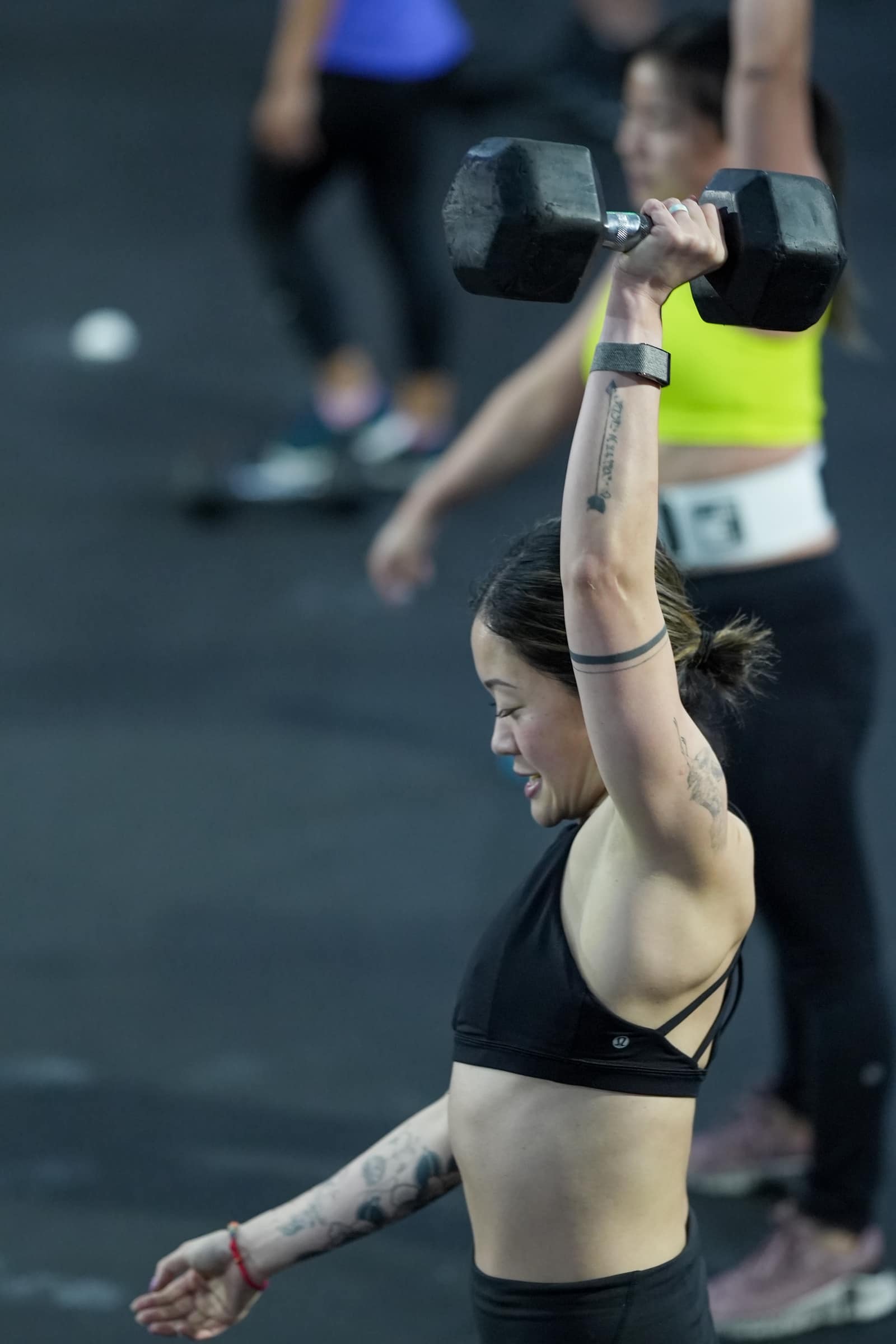
In our strength training program in Seattle, every member has a structured bench day. Main bench is programmed by block periodization (the same structure covered in our deadlift programming article), and accessories rotate through the seven above based on what each lifter needs most.
In group classes, bench shows up as a strength block roughly every 4 to 6 weeks. The accessories built into class programming are usually close-grip bench, dumbbell bench, and rows, with face pulls and dip work integrated into warmups and finishers. Most weekday classes run a coach-to-athlete ratio of roughly one to twelve, so when AJ or one of the rest of the crew is on the floor, the close-grip cue and the row tempo are getting watched in real time, not left to chance.
For lifters who have a specific bench plateau (stuck under 200 lb, or stuck at the chest, or hitting lockout misses), personal training for 4 to 8 sessions is the fastest path to identifying the weak link and building the accessory program that addresses it. Coach Jacque Dewangan (CFL3, PNL2) and I run bench-focused PT blocks. The diagnostic happens in session one, the accessory protocol takes the rest of the block.
The members at Persistence with the biggest benches all have one thing in common: they did not just bench heavy. They benched heavy, and they did the accessory work, and they did it consistently for years. Pouria has been showing up for six-plus years and has logged something like eleven hundred classes. That is the unglamorous truth of the lift. The accessories are not a finisher you tack on when you have energy left. They are the work that decides whether your bench moves or sits.
Frequently Asked Questions
What is the best accessory exercise for the bench press?
Close-grip bench press. It builds the triceps and the mid-range lockout that bench press lockouts depend on, while preserving the same bar path and pressing pattern. Most lifters who add 1 to 2 sets of close-grip bench after their main bench day add 10 to 20 lb to their flat bench within 8 to 12 weeks.
How many bench press accessories should I do per session?
Three to five. One pressing variation (close-grip, dumbbell, or overhead), one row or back movement, one tricep movement, optionally face pulls or rear delt work. More than five accessory exercises spreads the volume too thin to build any one of them. Pick fewer, heavier, and more progressive.
Should I do bench press accessories on the same day or a different day?
Same day, immediately after main bench. The accessories work the same muscle groups while the pattern is grooved and the upper body is already warm. Splitting accessories to a separate day adds a session without adding the recovery capacity to support it. Most lifters get more out of one full bench-plus-accessories day per week than two split sessions.
Do I need to do face pulls if I bench heavy?
Yes, or some equivalent rear delt and external rotator work. Heavy benching pulls the shoulders forward over time. Face pulls, band pull-aparts, or rear delt flyes balance the front-to-back ratio at the shoulder. Three to four sets of 12 to 15 reps two to three times a week is enough. The lifters who skip this work hit shoulder issues by year two.
Can I build a bigger bench with only dumbbells?
Partially. Dumbbells build pressing strength, hypertrophy, and unilateral stability, all of which transfer to the bench. But the barbell bench is its own skill. Lifters who train only dumbbells for 12 weeks then test their barbell bench usually see the dumbbell strength carry over at 70 to 80 percent. The barbell still requires barbell practice.
How long until accessories show up in my main bench?
8 to 12 weeks of consistent accessory work, with progression on the accessories themselves. The transfer is not immediate. The triceps, upper back, and shoulders need to be loaded heavy enough, often enough, with progressive overload to grow. Sporadic 3-set finishers at light weight do not move the main lift. Accessories have to be programmed like any other strength work.
Try a free first class at Persistence Athletics
If you want a coach to film your bench, identify the weak link, and build the accessory protocol that fixes it, that is what we do. Your first class at Persistence Athletics in Belltown is free and scaled to wherever you are. Book your free class. Persistence Athletics, 3025 1st Ave, Belltown, Seattle, WA 98121. About 8 minutes on foot from Amazon, walkable from anywhere downtown. Questions first? Call us at (206) 593-4236.
Want to take this further?
Talk to a coach about strength programming at Persistence Athletics.