
Strength Training for Hybrid Athletes (CrossFit + HYROX + Running)
How to program strength for hybrid athletes balancing CrossFit, HYROX, and running. Sample weekly split, volume rules, and the deload structure most miss.

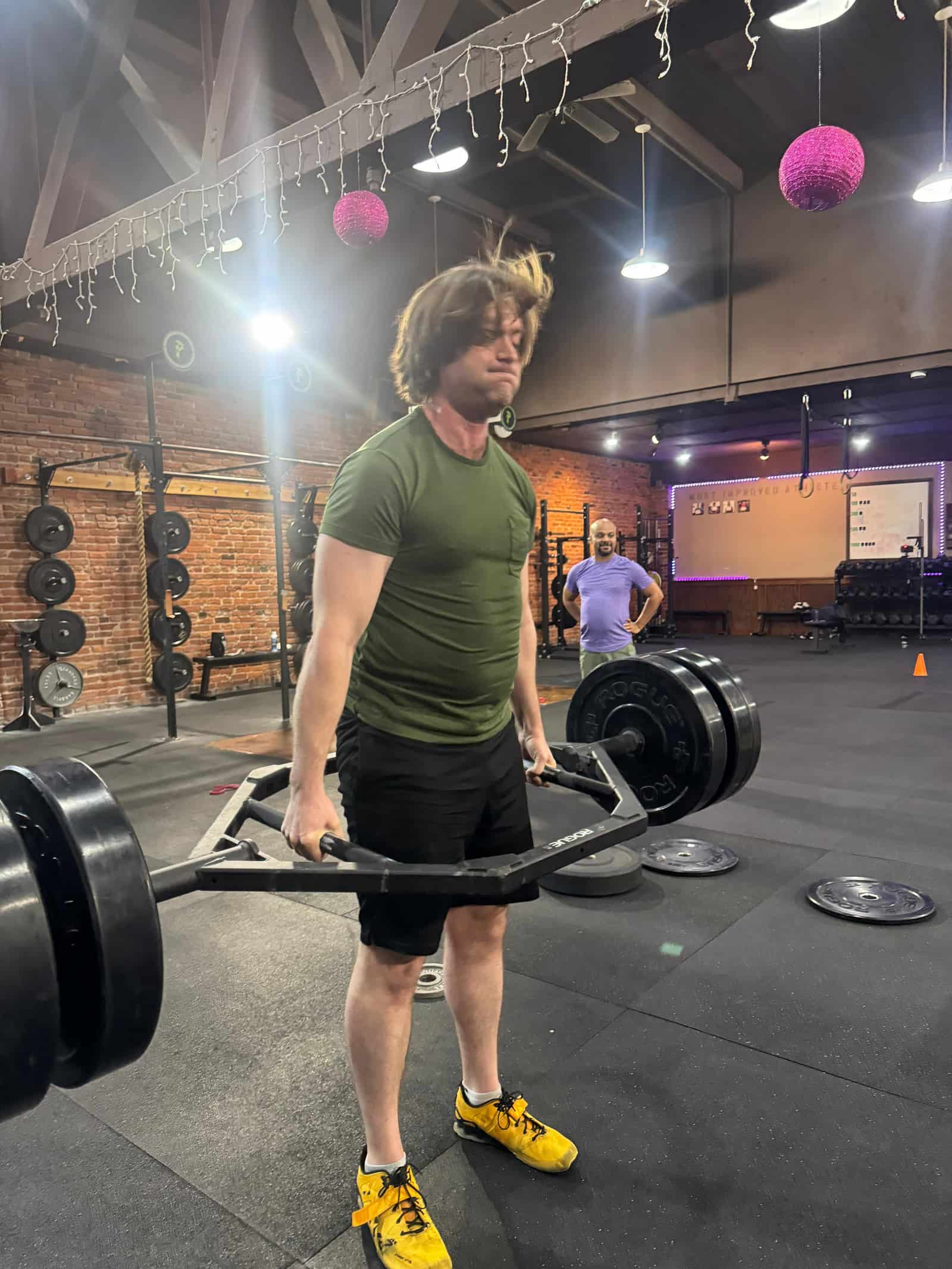
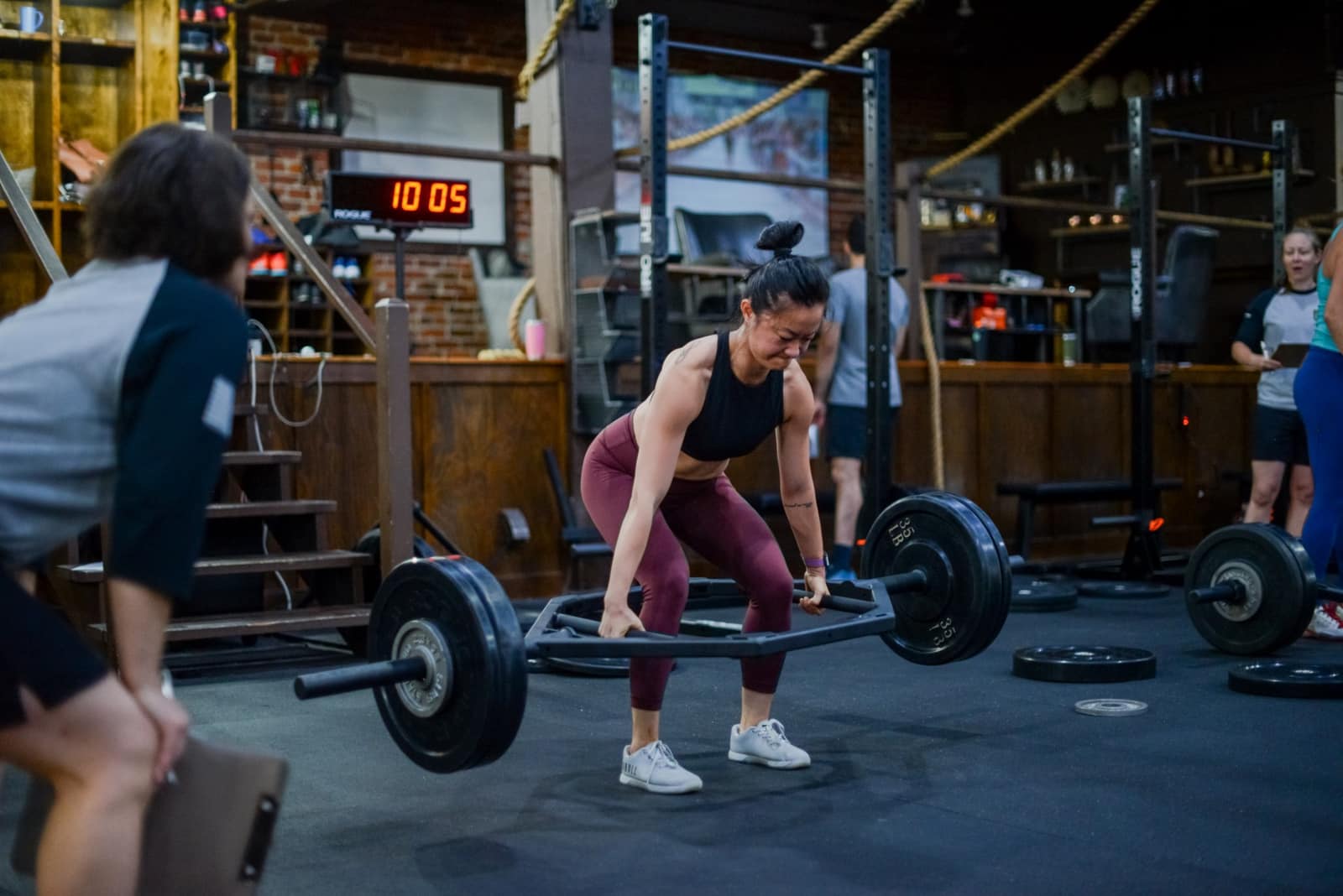
Hybrid is the most common training style most coaches still program wrong
Hybrid athletes are the fastest-growing population in functional fitness. Combining CrossFit, HYROX, running, and strength has gone from a niche pursuit to a mainstream training pattern. Most members at Persistence Athletics in Belltown train this way, or want to, and most coaches outside specialized hybrid gyms still program for them like they are pure CrossFitters or pure runners.
I'm Ravi Dewangan, CFL3, MS in Strength and Conditioning, and CrossFit Seminar Staff. I have programmed hybrid athletes from the local-competitor level up to the qualifier level. Most of what is in this post came from watching it go wrong on our own floor first. Updated June 2026.
This post lays out the real structure: what hybrid actually means, the sample weekly split that works, the volume rules most athletes break, the deload structure almost no one runs, and how Persistence is positioned to support hybrid training under one membership.
Table of Contents
- What hybrid actually means
- The sample weekly split
- Volume rules: how to know if you are doing too much
- Deload: the part nearly every hybrid athlete skips
- How Persistence Athletics is built for hybrid athletes
- Frequently Asked Questions
What hybrid actually means
A hybrid athlete trains for three qualities simultaneously.
Strength. Heavy compound lifts. Squat, deadlift, bench, press, snatch, clean and jerk. Loaded above 75 percent of 1RM. The goal is to build and maintain top-end strength.
Conditioning. Mixed-modal intervals. CrossFit metcons, HYROX simulations, kettlebell complexes. The goal is high power output sustained over 5 to 30 minutes.
Aerobic capacity. Sustained moderate-intensity work. Easy runs, rows, or rucks at 60 to 75 percent of max heart rate. The goal is the engine that supports both conditioning and recovery.
A pure strength athlete trains only the first. A pure runner trains mostly the third. A pure CrossFitter trains the second hardest, with bits of the other two. The hybrid athlete trains all three intentionally, with programming that respects the trade-offs.
The trade-off is real. Hybrid strength gains run at roughly 60 to 75 percent of pure-strength gains. Hybrid 5K times run at roughly 90 to 95 percent of pure-runner times. The reward is broad capacity. A heavy deadlift paired with a sub-7-minute mile is a profile no pure-strength or pure-running athlete can produce, and that combination is the whole point.
The sample weekly split
This is the structure I run with intermediate hybrid athletes at Persistence. Adjust based on which sport you are prioritizing in the current block.
| Day | Session | Focus |
|---|---|---|
| Monday | Strength: lower body | Squat or deadlift main lift, accessories |
| Tuesday | Conditioning: CrossFit metcon | Mixed-modal interval, 12 to 20 min |
| Wednesday | Aerobic: long easy run or row | 45 to 75 min at conversational pace |
| Thursday | Strength: upper body | Bench or press main lift, accessories |
| Friday | Conditioning: HYROX-style | Stations + run intervals |
| Saturday | Sport-specific or longer session | Hero WOD, HYROX simulation, or race prep |
| Sunday | Full rest | No training. Mobility and walk only. |
Total weekly training time: 8 to 10 hours. Of this, roughly 30 percent is strength, 35 percent is conditioning, 25 percent is aerobic, 10 percent is mobility and warmups.
The structure works because each quality gets its own dedicated session, with adequate recovery between conflicting sessions. Strength days do not run. Aerobic days do not lift heavy. The conflict between strength and endurance happens at the recovery level, not the session level, so the easiest fix is to separate them in the calendar.
If your Saturday session is HYROX, that slot is already built into the schedule here. Our HYROX class runs Saturday 9:30 to 11:00 AM, it is included in every membership, and it covers the sport-specific day in the table above without any add-on. Most of our hybrid members use that Saturday session as their weekly simulation and treat the rest of the week as strength and conditioning support around it.
For an athlete with less time (4 to 5 days a week), drop one strength day and one conditioning day. The pattern shifts to: strength + metcon, aerobic, strength + metcon, sport-specific, rest, rest, rest. This works but the rate of progress on every quality slows.
For an athlete with more time (training twice a day), the second session is always aerobic at low intensity. Doubling on heavy strength or hard conditioning is how injuries and overtraining show up. I watched Devang, a software engineer who came in as a strength athlete and added conditioning over a couple of years, learn this one the hard way. When he started doubling, his deadlift days went backward inside a month. The day his second session became an easy Wednesday row instead of a second hard piece, his strength numbers started climbing again. Nothing about his strength programming changed. Only the recovery cost of the rest of his week did.
Volume rules: how to know if you are doing too much
Three diagnostic markers. If two or more apply, you are overtraining and need to reduce volume.
Marker 1: Sleep quality drops. You go to bed at the same time but wake up tired. Resting heart rate climbs 5+ beats over baseline. Tracked sleep score drops 10+ points sustained over 2 weeks. The body is telling you recovery is not catching up to volume.
Marker 2: Strength lifts decline. Your working sets feel heavier at the same weight, or you miss reps you used to hit. The aerobic and conditioning loads are eating into the recovery capacity needed for strength adaptations. This is the most common hybrid overtraining marker.
Marker 3: Times slow on conditioning. Metcon times that used to be benchmarks slow by 10 to 20 percent. Your usual easy run pace feels harder than it should. The system is fatigued and output is dropping.
If you are seeing any two of these for more than 2 weeks, deload. Cut training volume by 40 to 50 percent for 5 to 7 days. Sleep more. Eat more. The markers usually reverse within the deload week. If they do not, the issue is bigger than volume (sleep, nutrition, life stress, or programming structure that needs a rebuild) and likely needs coach involvement.
The most common reason hybrid athletes ignore these markers is the assumption that training harder fixes the problem. It does not. Hybrid is a recovery sport. The athletes who progress longest are the ones who respect recovery as a training variable, not an afterthought. Pouria is the clearest example I can point to: roughly 1,100 classes over six-plus years here. He is not the person chasing the biggest week on the calendar. He is the person who shows up, manages his load, and is still progressing in year six. That is what longevity in this sport actually looks like, and it is dull on purpose.
Deload: the part nearly every hybrid athlete skips
Most hybrid athletes I see at Persistence have not taken a real deload in 6 to 12 months. They string 8-week blocks together with no recovery weeks between them, and by month 4 to 6 they are stalled, beat up, and frustrated.
The fix is one full deload week every 6 to 8 weeks. Real deload, not a "lighter week."
Deload week structure:
- 4 sessions only (instead of 6)
- All loads at 50 to 60 percent of normal working weight
- Volume cut by 40 to 50 percent
- No conditioning above 70 percent effort
- One additional 60-minute easy aerobic session (walk, swim, easy bike)
- Sleep 8+ hours every night
- Eat slightly more than normal (recovery requires fuel)
After a real deload, most hybrid athletes PR within 1 to 2 weeks of returning to normal volume. The deload is not lost training time. It is what makes the next 6 to 8 weeks of normal training productive.
The reason hybrid athletes skip deload is the fear of losing fitness. The truth is the opposite. Without deload, fitness reverses anyway, but in the form of overtraining and injury. With deload, fitness compounds because the body actually adapts to the work it has done.
This is the single hardest conversation I have on the floor. I will tell an athlete who is stalled and exhausted to train less for a week, and I can watch them not believe me. The ones who take the deload anyway come back the next block and PR, and then they believe me. The ones who argue keep grinding into the same wall. I have had that exact conversation with athletes preparing for HYROX, and it goes the same way every time.
This pattern is the same one covered in why you are not getting stronger for pure strength athletes. The hybrid version is harder to manage because the volume is higher and the variety is greater, but the deload principle is identical: the body adapts during recovery, not during work.
How Persistence Athletics is built for hybrid athletes

Persistence is one of the few gyms in Seattle where hybrid athletes can train all three qualities under one membership.
The CrossFit side. Group classes run 6 days a week with daily metcons, structured strength blocks, and Olympic lifting practice. Members can hit their conditioning and a portion of their strength inside the standard class.
The HYROX side. Our HYROX program meets Saturday 9:30 to 11:00 AM with running intervals, station work, and full simulations. It is included in every membership, so athletes preparing for a HYROX race get the sport-specific work they need without leaving the gym and without a separate price tag.
The strength side. Our strength training program in Seattle provides structured barbell work for athletes who want more dedicated strength time than the standard CrossFit class allows. This is the layer most CrossFit-only or HYROX-only gyms cannot offer because they do not program for it.
The result: a hybrid athlete at Persistence can hit 2 strength sessions, 2 CrossFit classes, 1 HYROX session, and 1 long aerobic day, all on one membership, all with the same coaching staff. No coordinating across multiple gyms. No conflicting programming. The structure is built into the schedule, and with a coach-to-athlete ratio of roughly 1 to 12, someone is actually watching how the pieces fit together for you.
The members at Persistence who train this way mostly arrived from one of the three sports and added the others over time. Devang came in as a strength athlete and built a real engine on top of it. Aidan, one of our most advanced lifters, layered conditioning onto a strong barbell base. Manny ran for years before he ever touched a barbell, and now he is one of the strongest members on the floor. Pouria started as a CrossFitter and added HYROX-style work. The cross-training has made every one of them better in their original sport, not worse. That is the case for hybrid in one sentence: done with structure and real recovery, the other qualities feed the one you started with.
For athletes new to hybrid, I run introductory blocks that build the structure over 12 weeks. Weeks 1 to 4 establish the weekly split. Weeks 5 to 8 layer in the deload pattern. Weeks 9 to 12 progress all three qualities under structured periodization. By the end of 12 weeks, athletes have the framework to run hybrid training indefinitely. We are at 3025 1st Ave in Belltown, about an 8-minute walk from the Amazon campus, so a fair number of these athletes are engineers fitting all three qualities around a full work schedule.
The same training principle that drives bench accessory work covered in our bench press accessories article applies here at the macro level: the right structure, applied consistently, with adequate recovery, builds the multi-quality athlete most lifters want to be.

Frequently Asked Questions
What is a hybrid athlete?
A hybrid athlete trains for multiple physical qualities at once: strength (heavy lifts), conditioning (CrossFit metcons or HYROX-style intervals), and aerobic capacity (long runs or rows). The goal is broad capacity rather than specialization. A hybrid athlete might squat 400 lb and run a sub-7-minute mile, neither of which a pure strength or pure endurance athlete can do.
How many days per week should a hybrid athlete train?
Six days, with one full rest day. The standard split is 2 strength days, 2 metcon days, 1 long aerobic day, and 1 sport-specific day (HYROX or CrossFit competition prep). Seven days a week is overtraining for nearly all hybrid athletes. The rest day is non-negotiable. Skipping it is the fastest way to stall progress in all three qualities.
Can I really get stronger while training conditioning?
Yes, but at a slower rate than a pure strength athlete. Hybrid athletes typically gain strength at 60 to 75 percent of the rate of someone training strength only. The trade-off is broader capacity. If your goal is purely a 1RM number, hybrid is the wrong template. If your goal is to be strong, fit, and conditioned, hybrid wins.
What is the biggest mistake hybrid athletes make?
Doing too much, too varied, with no deload. The hybrid temptation is to maximize every quality at once: heavy strength, hard metcons, long runs, and HYROX. The volume becomes unsustainable. Most hybrid athletes overtrain by month 4 to 6 because they never deload. The fix is one full deload week every 6 to 8 weeks where all training drops to 50 to 60 percent.
Should I run on strength days?
Generally no, or only as a 10 to 15 minute easy warmup. Heavy strength and meaningful running on the same day forces both qualities to compete for the same recovery capacity, and neither one wins. Separate strength and aerobic work by at least 6 hours, ideally on different days. The exception is competitive HYROX athletes during peaking blocks.
How do I balance CrossFit, HYROX, and strength?
Pick one as the priority sport for each 8 to 12 week block. The other two stay in maintenance. CrossFit-priority blocks emphasize gymnastics and metcon variety, with HYROX as one weekly session and strength on a 2-day-per-week template. HYROX-priority blocks emphasize running and station work, with CrossFit as one weekly session. Strength-priority blocks emphasize barbell work, with metcons and runs as recovery.
Try a free first class at Persistence Athletics
If you want a coach who programs hybrid training and a gym that supports CrossFit, HYROX, and strength under one roof, that is what we do. Your first class at Persistence Athletics in Belltown is free and scaled to where you are now. Book your free class. Persistence Athletics, 3025 1st Ave, Belltown, Seattle, WA 98121. Roughly 8 minutes on foot from Amazon and walkable from anywhere in downtown. Questions first? Call us at (206) 593-4236.
Want to take this further?
Talk to a coach about strength programming at Persistence Athletics.