
Movement Basics: Squat, Deadlift, and Press for Beginners
The three lifts every beginner needs to learn first. From a CFL3 coach in Belltown, the cues, common mistakes, and how to build the patterns that last 30 years.

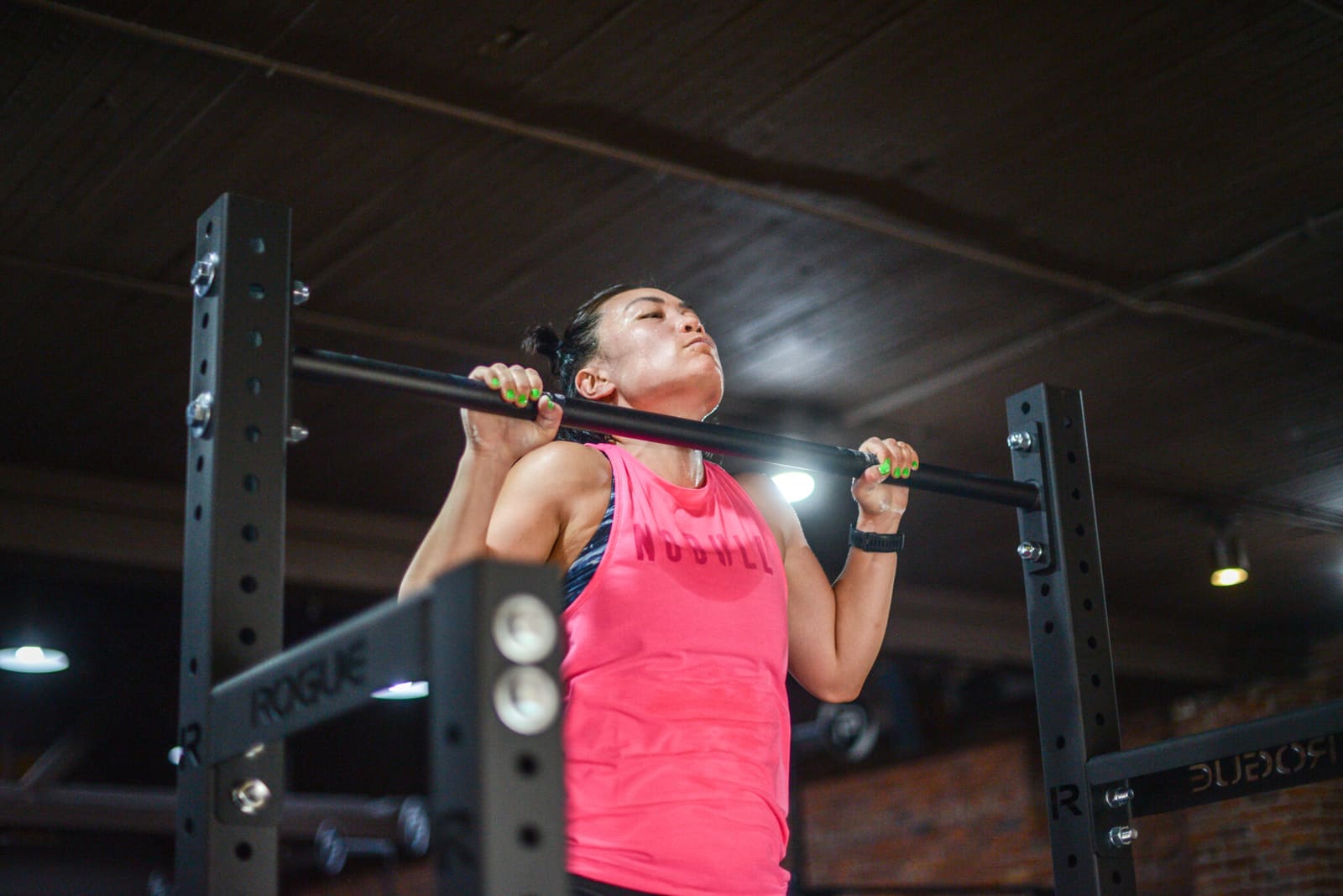
The three lifts that build everything else
The squat, the deadlift, and the press are the three movement patterns every strength program is built around. Almost every other lift is a derivative or accessory.
If you can squat to depth with a vertical torso, hinge at the hip without rounding your lower back, and press a bar overhead with stacked joints, you have the foundation for CrossFit, HYROX, powerlifting, Olympic lifting, and almost any sport that involves moving load. If you cannot, the entire structure built on top of those patterns is compromised.
I'm Ravi Dewangan, CFL3, MS in Strength and Conditioning, and CrossFit Seminar Staff. I have coached the squat, deadlift, and press a few thousand times on the floor at Persistence Athletics on 1st Ave in Belltown. The patterns are simple to describe and difficult to execute, which is why most beginners benefit massively from being coached through them rather than learning from a YouTube video. This article is the version of that intro session, in writing. Updated June 2026.
Table of Contents
- Why the squat, deadlift, and press are the foundation
- The squat: how to set up and execute
- The deadlift: how to set up and execute
- The press: how to set up and execute
- How we coach the basics at Persistence Athletics
- A 6-week beginner sequencing plan
- Frequently Asked Questions
Why the squat, deadlift, and press are the foundation
The body has roughly six fundamental movement patterns: squat, hinge, push, pull, lunge, and carry. The squat, deadlift, and press cover three of those (squat, hinge, push) and recruit the other three as supporting patterns. Master those three lifts and the rest follow with much less work.
Functionally, here is what each one builds:
| Lift | Primary pattern | Joints loaded | Carryover |
|---|---|---|---|
| Back squat | Squat (knee-dominant) | Hip, knee, ankle, spine | Sprinting, jumping, climbing stairs, picking up children |
| Deadlift | Hinge (hip-dominant) | Hip, knee (lightly), spine | Picking up anything from the floor, posture, sprinting |
| Strict press | Vertical push | Shoulder, elbow, wrist, scapula | Pressing overhead, putting bags in the overhead bin, throwing |
The argument for these three is not that they are the only useful lifts. The argument is that they recruit the most muscle mass per rep, develop the most usable strength, and reinforce the positions you need for nearly every other lift you will ever do.
Why beginners should not skip them
Many beginners want to start with isolation work, machines, or "easier" lifts. The problem is that isolation work develops one muscle at a time and has poor transfer to real-world strength. Machines lock you into a fixed plane of motion and skip the stabilization work the squat, deadlift, and press demand. Both fall short of building the foundation that makes you actually stronger.
Devang is the clearest example I can point to. He is a software engineer who walked in as a near-total beginner and has now logged over 700 classes. What turned him into one of the stronger lifters on the floor was not a magic program. It was hundreds of coached reps of these three patterns before he chased a number. The first 6 months at Persistence for almost every new member are dominated by these three patterns plus their close cousins (front squat, Romanian deadlift, push press). The order is intentional. The dosage is intentional. The result is a strength base that holds for decades.
The squat: how to set up and execute
The squat is the test for hip mobility, ankle mobility, and torso position under load. Beginners who can squat well rarely have other major lifting problems. Beginners who struggle with the squat usually have one of three issues: ankle mobility, hip mobility, or upper back strength.
Setup
- Bar position: high-bar (resting on the upper traps, just below the C7 vertebra) for most beginners.
- Foot stance: roughly shoulder-width, toes turned out 10 to 15 degrees.
- Grip: thumbs over the bar, hands as close to shoulder-width as your shoulder mobility allows.
- Brace: take a big breath into your belly, brace your core hard, then unrack.
Execution
- Step back from the rack with two or three controlled steps. Do not back up across the gym.
- Initiate the descent with hips going back and knees bending simultaneously. Not hips first, not knees first.
- Descend until your hip crease is below the top of your knee (parallel or below). For most lifters this is full depth.
- At the bottom, drive the floor away with your feet. Hips and chest rise together. Bar stays directly above midfoot through the entire lift.
- Lock out at the top. One breath. Repeat.
Common mistakes
- Knees caving inward. Almost always weak glute medius or insufficient external rotation cue. Fix with band-assisted squats and the cue "knees out."
- Forward lean / chest collapsing. Almost always weak upper back or limited ankle mobility. Fix with goblet squats and ankle mobility work.
- Hips shooting up first. Posterior-chain weakness. Fix by reducing weight and pausing 2 seconds at the bottom of every rep.
A goblet squat with a moderate dumbbell is the best self-diagnostic for any of these. If your goblet squat looks clean at full depth, the back squat will follow with cueing. If your goblet squat is broken, no amount of barbell work fixes it.
The deadlift: how to set up and execute
The deadlift is the most technique-sensitive of the three. The margin for error is smaller and the consequences of bad form are larger. We coach the deadlift in every group class at Persistence and most members are deadlifting cleanly within 4 to 6 weeks of starting.
Setup
- Walk up to the bar so it is directly above the middle of your foot.
- Stance: roughly hip-width, toes pointing slightly out.
- Bend at the hip, then the knee, until your hands reach the bar.
- Grip: just outside the legs, double overhand for warm-up sets, mixed grip or hook grip when working heavier.
- Pull the slack out of the bar (lift your chest while keeping your hips down until you feel tension in the bar).
Execution
- Big breath. Brace your core hard.
- Push the floor away with your feet. The bar moves straight up, in contact with your shins.
- Hips and shoulders rise at the same rate. Lower back stays neutral.
- Lock out at the top with the bar against your hips, glutes squeezed, knees straight, shoulders pulled back.
- Lower the bar by reversing the pattern: hips back first, then knees bend.
Common mistakes
- Bar drifting away from shins. Either the bar started too far forward or you let it drift. Cue: "bar stays glued to legs."
- Lower back rounding. The most common deadlift error. Fix by reducing weight, bracing harder before the pull, and slowing the setup.
- Hips rising before the bar. Indicates the lifter is not pushing the floor away with their feet. Cue: "press the floor away."
A common pattern in newer lifters is jerking the bar off the floor instead of pulling smoothly. The cue I use most on the floor is "make the bar bend before it leaves the floor." Tension before motion. I will stand next to a new lifter and have them hold that loaded-but-not-moving position for a full second before the bar breaks the ground, because that one second is where a rounded back either happens or does not.
The press: how to set up and execute
The strict press is the test for upper body strength without leg drive. It is also the most under-coached of the three, partly because it looks easy and partly because beginners can hide weakness with the push press.
Setup
- Bar in the front rack: resting on the front of the shoulders, elbows in front of the bar, hands just outside the shoulders.
- Grip: as close to vertical wrist as your shoulder mobility allows.
- Stance: feet roughly hip-width apart, glutes squeezed, abs braced.
Execution
- Big breath. Brace.
- Press the bar straight up by pushing your head back to clear the bar's path, then re-stack your head under the bar as it passes the forehead.
- Lock out overhead with elbows extended, biceps near the ears, shoulders fully shrugged up.
- Lower the bar back to the front rack with control. Re-set.
Common mistakes
- Hips collapsing forward. Turning a strict press into an unintentional push press. Fix: squeeze glutes hard before the press starts, brace abs.
- Elbows bending out (chicken winging). Fix with closer grip and "elbows under the bar" cue.
- Bar drifting forward. The bar should travel a straight line up. If it drifts forward, the lifter is not getting their head back fast enough.
If the bar will not lock out overhead with vertical biceps, it is almost always a thoracic spine mobility limitation, not a strength limitation. Roll your t-spine, do thoracic extensions on a foam roller, and the lockout will improve in 2 to 3 weeks.
How we coach the basics at Persistence Athletics
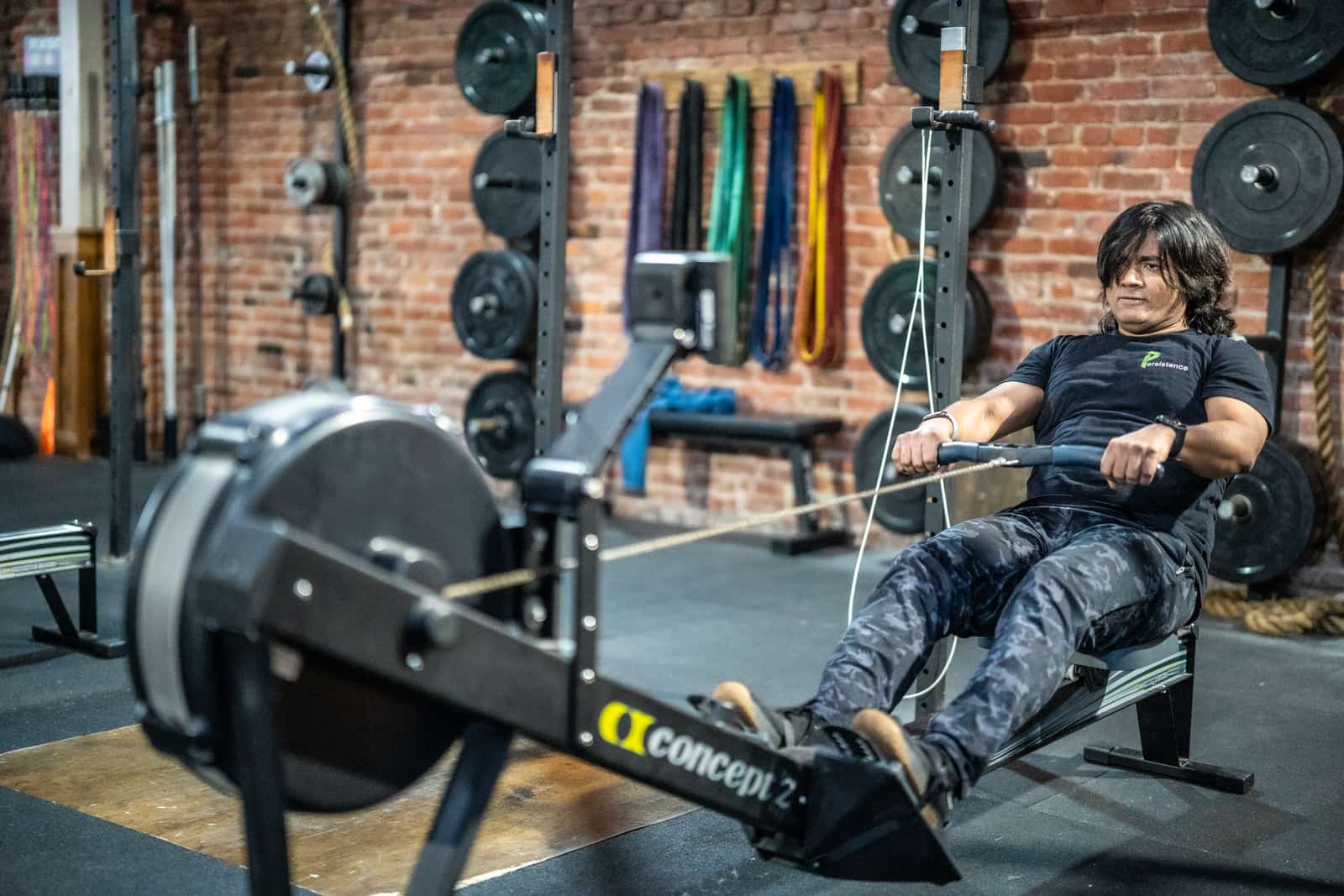
Every new member at Persistence goes through an intro session before joining group classes. The intro covers the squat, deadlift, and press at minimum. We do not load weight on the bar in the first session. PVC or empty bar only, focused on position. The first time you put real weight on the bar, you have already practiced the pattern at least 30 times.
In group classes we run a strength block on the same lifts in roughly a 12-week cycle. Beginners are scaled to lighter weights and slightly different rep schemes for the first 4 to 6 weeks while they build pattern proficiency. By week 8, most members are training at the same percentage-based loads as the rest of the class. With a coach-to-athlete ratio of roughly 1 to 12, AJ and the rest of the crew put eyes on every lifter's setup, not just call the workout from the front of the room.
If doing this in a room full of people sounds intimidating, that is the normal feeling, and it goes away faster than you expect. Take a free first class and see how scaled and coached it actually is.
For members who want a more focused track on the basics, personal training is the right move for the first 8 to 12 weeks. One session a week with a coach watching every rep is the fastest path to clean technique. After that, group classes provide enough coaching for most lifters to keep progressing.
If you have hit a stall on any of these lifts after building the pattern, our breaking plateaus article covers the diagnostic we run when the bar stops moving.
A 6-week beginner sequencing plan
This is the structure I would coach a new lifter through if I had them for one session a week for six weeks. Adapt it to your own situation.
Week 1 to 2: Pattern learning
- 3 sessions per week
- Goblet squat, Romanian deadlift, dumbbell strict press
- 3 sets x 8 reps, light weights
- Goal: pattern recognition, not strength
Week 3 to 4: Add the barbell
- 3 sessions per week
- Back squat, conventional deadlift, barbell strict press
- 5 sets x 5 reps, working at 60 to 70 percent of an estimated max
- Goal: integrate the bar into the pattern
Week 5 to 6: Begin progressive overload
- 3 sessions per week, with one heavier session and two moderate
- Add 5 lb to the bar each session as long as form holds
- Goal: build a working weight you can return to
By week 6 most beginners are squatting, deadlifting, and pressing with usable working weights. The numbers are not the point. The patterns are. Strength built on top of bad patterns plateaus and breaks. Strength built on clean patterns runs for decades. Devang's arc from beginner to advanced lifter took years, not weeks, and it was built on exactly this base.
Frequently Asked Questions
Should beginners learn the back squat or front squat first?
Goblet squat first, then back squat. The goblet squat teaches the upright torso and full-depth pattern with a fraction of the load. Front squat second, back squat third. Most beginners who start with back squat develop forward-leaning habits that are hard to fix later. We coach this order in every Persistence intro session.
How heavy should a beginner deadlift on day one?
Empty barbell, possibly less. The deadlift is the most technique-sensitive of the big three. We start every new lifter at Persistence with PVC or empty bar work, focusing on the hip hinge pattern. Real working weight comes after 2 to 4 sessions, and even then we cap at a weight that allows perfect form for 5 sets of 5.
Why does my back hurt when I deadlift?
Almost always lower back rounding off the floor. The fix is bracing earlier (before you grip the bar), keeping the bar in contact with your shins, and not jerking the bar off the floor. If pain persists once form is corrected, see a physician. Pain is data, not weakness.
Is a strict press or push press better for beginners?
Strict press first. The strict press teaches pure shoulder strength without leg drive. The push press is a follow-on movement that uses the dip and drive of the legs to assist the bar overhead. Beginners who skip strict press never build the upper body strength foundation and always rely on leg drive.
How long does it take to learn squat, deadlift, and press correctly?
Pattern learning takes 4 to 6 weeks of coached practice 3 times a week. Real proficiency takes 6 to 12 months. Most members at Persistence are doing the lifts at moderate working weight with clean form by week 8, and adding weight at a sustainable rate from there. Self-coaching from YouTube takes 2 to 3 times longer with worse outcomes.
Do I need a personal trainer for the basics or are group classes enough?
Group classes work for most beginners as long as the coach has time to give individual cues. Persistence runs class sizes that allow this. If you have a chronic pain issue, mobility limitation, or specific sport prep, personal training is the right call for the first 8 to 12 weeks. After that, group classes are usually sufficient.
Try a free first class at Persistence Athletics
If you want to learn these three lifts properly, your first class at Persistence Athletics in Belltown is free, and it includes a coached intro on the squat, deadlift, and press patterns. We will not load the bar heavy on day one. We will get the pattern right.
Book your free class. Persistence Athletics, 3025 1st Ave, Belltown, Seattle, WA 98121. About 8 minutes on foot from Amazon. Questions first? Call us at (206) 593-4236.
Want to take this further?
Talk to a coach about training programming at Persistence Athletics.