
Is CrossFit Safe? An Honest Answer From a Coach Who Has Seen the Injuries
The most common reason people do not try CrossFit is a fear of getting hurt. Here is what actually causes injuries in a CrossFit gym, what a good one does about it, and what no gym can prevent.


The single most common reason people give for not trying CrossFit is that they think it will hurt them. Not that it looks hard. That it looks like a way to end up with a bad back.
It is a fair thing to worry about and it deserves a straight answer rather than a defensive one. So: yes, you can get hurt doing CrossFit. You can also get hurt running, playing football, or lifting a suitcase into an overhead locker. The useful question is not whether injury is possible, it is what actually causes it, and how much of that is under anyone's control.
I have coached in Belltown for seven years. Here is the honest version.
What the research says, and why I am not going to lean on it
Published injury rates for CrossFit generally land in a similar range to other recreational strength training and team sports. That is the broad finding and it has held up reasonably well.
I am not going to quote you a number, though, and you should be a little suspicious of anyone who does. The studies define an injury differently from one another, some rely on people remembering what happened months ago, and the population that answers a survey about training is not a random sample of everyone who trains. You can find a figure to support almost any position you already hold.
More importantly, the average across thousands of gyms tells you very little about the one you are going to walk into. The variable that actually decides your risk is not the sport. It is the room.
The four things that actually cause injuries
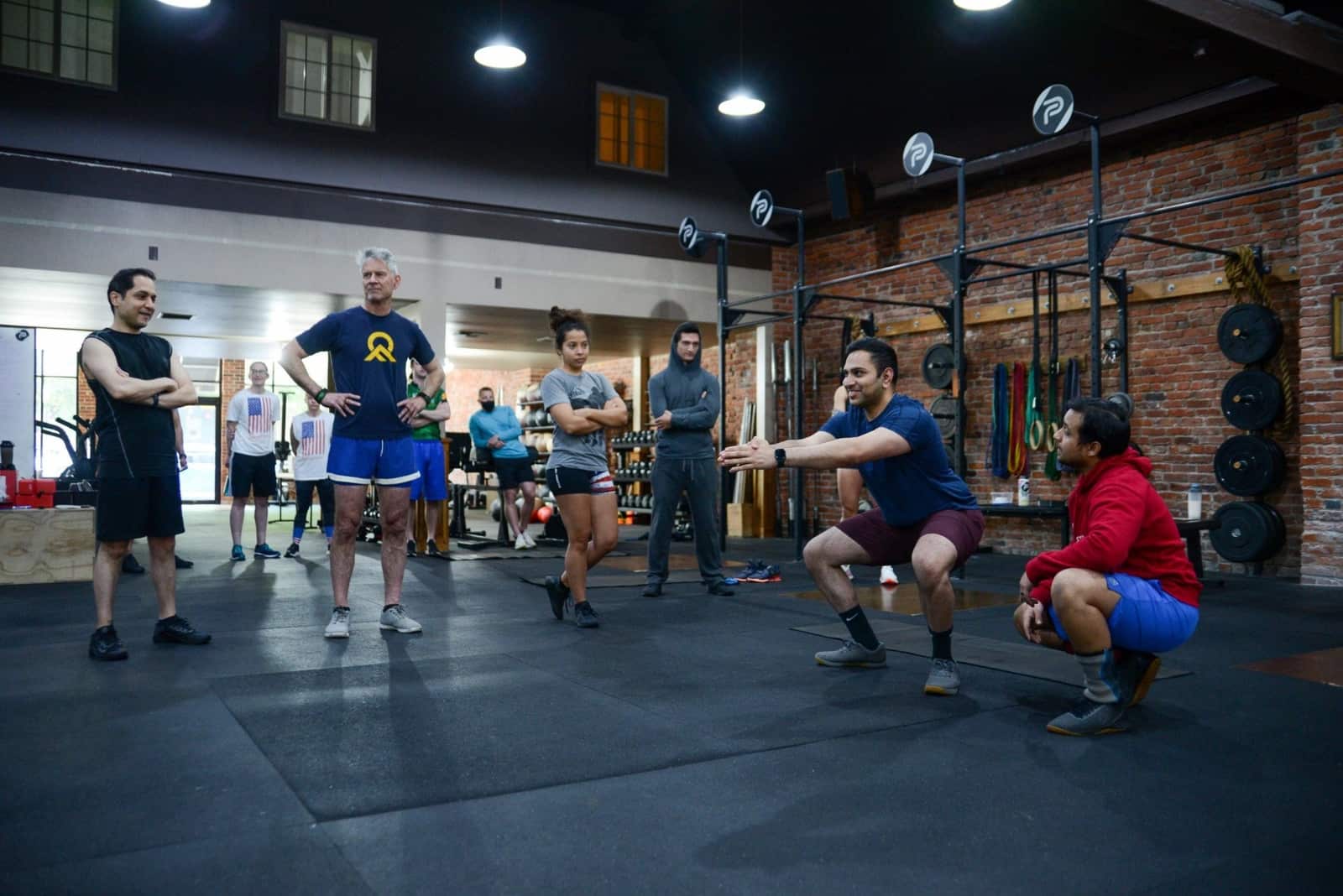
After enough years on a floor you stop seeing injuries as random events and start seeing the same handful of decisions repeat.
Picking a weight based on ambition rather than capability. This is the big one. Someone sees the prescribed weight on the whiteboard, decides that is the number that counts, and loads the bar accordingly. The first few reps look acceptable. Rep eleven does not. The movement did not hurt them. The decision made before the first rep did.
Continuing after form has broken down, because the clock is still running. CrossFit puts a timer on things, and a timer is genuinely useful for effort. It is also the mechanism by which a tired person talks themselves into three more bad reps. The clock does not know your back has started rounding.
Adding load and volume in the same week. Heavier and more, together, is the classic way to turn a manageable training week into a tissue that has not had time to adapt. Individually both are fine. Simultaneously they compound.
Training through a niggle instead of scaling around it. A sore shoulder that gets worked around for two weeks usually stays a sore shoulder. The same shoulder trained through for two weeks frequently becomes something that needs a professional.
Read that list again and notice what is absent. There is no movement on it. No snatch, no kipping pull-up, no box jump. The things that actually hurt people are decisions, not exercises, which is why the argument about whether a particular movement is dangerous mostly misses the point.
What a gym can genuinely do about it
If injuries come from decisions, then a gym's job is to make the good decision the easy one. That is a culture problem more than an equipment problem, and it shows up in a few concrete places.
Scaling has to be normal, not a concession. Every movement we run has a scaled version, and the coach offers it before anyone has to ask. The moment scaling reads as admitting something, people stop taking it, and you have built a room where the honest choice costs social capital. That is how gyms hurt people without anyone intending to.
Someone has to be watching. A coach can genuinely see a class of a certain size. Past that they are a timekeeper with a whistle. When you visit any gym, count the people on the floor and count the coaches, and ask yourself whether the second number can actually observe the first.
The coach has to be willing to take weight off your bar. This is the one that separates the rooms. It is uncomfortable to walk up mid-set and tell someone to strip a plate, and a coach who will not do it has quietly decided your comfort matters more than your shoulder.
The first weeks should look different from the rest. New members are scaled harder, watched closer, and told less often to go faster. That is not condescension, it is the period where we are still learning what you can do.
The part most gyms will not tell you
The risky window is usually not week one. It is somewhere around six to eighteen months.
By then you are strong enough to lift something meaningful, confident enough to stop asking questions, and familiar enough with the scoreboard to care where your name sits on it. The scaling that felt sensible in month two starts to feel like you are holding yourself back. You have also stopped being the person the coach instinctively watches, because you look like you know what you are doing.
That combination, real strength plus fading caution plus competitiveness, is where the avoidable injuries cluster. A gym that concentrates all its attention on beginners is watching the wrong group.
If you are in that window right now, the useful question is not whether you can do the prescribed weight. It is whether you can do it on the last round as well as the first.
What no gym can prevent
I would rather be straight about the limits than oversell the controls.
We cannot know what you did yesterday, how you slept, or that your knee has been complaining for a fortnight unless you say so. We cannot make you leave your ego at the door, though we will keep asking. We cannot promise you will never tweak anything, because that is not a promise any form of physical training can honestly make, including walking.
We also cannot clear you medically. If you have a condition, an old injury under treatment, or anything a doctor is currently managing, the conversation about what is appropriate belongs with them first. Bring us the answer and we will build around it, which is a normal part of the job rather than a special case.
So, is it safe?
Safer than its reputation, and considerably more dependent on the specific gym than on the sport.
If you walk into a room where scaling is the default, the coach knows your name, someone is genuinely watching, and stopping a set is treated as good judgement rather than weakness, the risk is comparable to any other serious recreational training. If you walk into a room where the whiteboard number is treated as the real number and the coach is running the clock from a corner, it is not, and that would be true whatever the sport was called.
The good news is that you can tell the difference in about twenty minutes of being in the building, which is more than you can say for most things you are asked to commit to.
If you want to see which kind we are
Come and look. Your first class is free, you will be scaled, and a coach will spend the session on you rather than on a stopwatch. If you would rather know what you are walking into first, what to expect at your first class covers it, and your first 30 days covers what the early weeks actually look like.
Bring the old injury. Mention it before we start. That conversation is the normal one, not the awkward one.
- Ravi
Want to take this further?
Talk to a coach about crossfit programming at Persistence Athletics.