
How to Improve Metabolic Health: Five Levers, Ranked by Payoff and Cost
Food, timing, exercise, sleep, and stress. A coach ranks the five levers of metabolic health by how much each one moves against what it actually costs you.

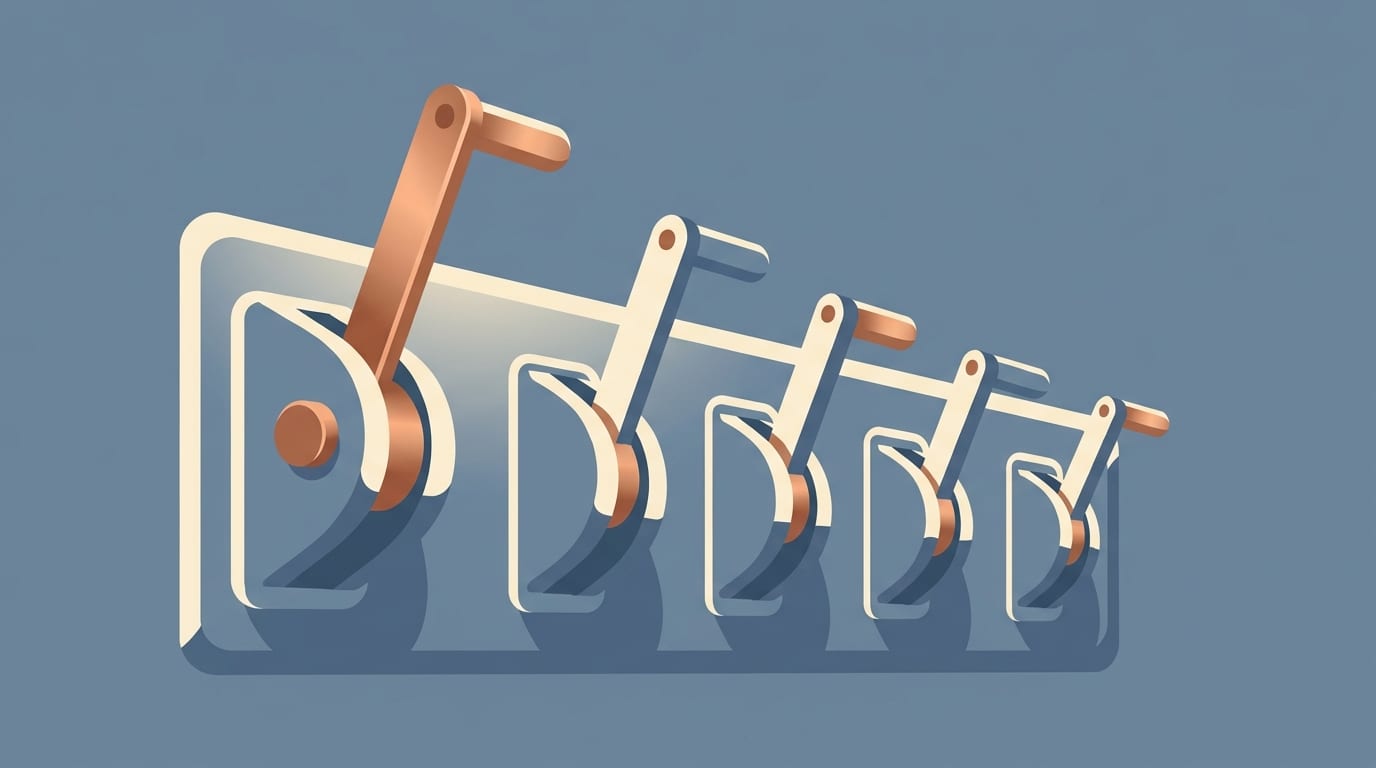
Everyone works one lever and wonders why nothing moves
Ask someone what they are doing about their metabolic health and nine times out of ten you get a food answer. Cutting carbs. More vegetables. No sugar in the coffee. Getting the seed oils out of the house.
Food matters. It is not the problem. The problem is that food is the only lever most people ever touch, and there are five.
I am Ravi Dewangan, CFL3, MS in Strength and Conditioning, and I coach at Persistence Athletics in Belltown. I wrote the MetFix course, the free education series this article closes out. What follows is the ranking I use when someone asks where to start: five levers ordered by how much they move against what they cost. Cost is not just money. It is attention, social friction, and how much of your life you have to rearrange. Updated August 2026.
Table of Contents
- The ranking, up front
- Lever 1: exercise, and the ten minutes after dinner
- Lever 2: timing, or the hours with nothing coming in
- Lever 3: sleep, which decides tomorrow's cravings tonight
- Lever 4: stress, the hardest one to work honestly
- Lever 5: food, which you already know about
- How we handle this at Persistence Athletics
- Do one thing tomorrow
- Frequently Asked Questions
The ranking, up front
| Lever | How much it moves | What it costs | Where to start |
|---|---|---|---|
| Exercise | Large, starts today | Low. Ten minutes, no equipment | Walk after your biggest meal |
| Timing | Large | Low in dollars, moderate socially | Count your eating events for 3 days |
| Sleep | Large | High for some lives | Fix the wake time before the bedtime |
| Stress | Large | Highest, least under your control | Protect one boundary, not five |
| Food | Large, but you are on it | High attention, high noise | Protein floor and fiber, then stop reading |
Notice that every lever is in the large column. This is not a ranking of importance. It is a ranking of return on effort, a different question and the more useful one when you have a job, a commute, and maybe a kid.
Two notes. This is education, not a diagnosis or a treatment plan. And if you take medication for blood sugar or blood pressure, changing your food, activity, or meal timing can change how that medication behaves, so talk to your physician before you change anything.
Lever 1: exercise, and the ten minutes after dinner
Here is the piece of physiology that reorganized how I coach this.
There are two ways glucose gets out of your blood and into muscle. The familiar one is insulin: you eat, insulin rises, it signals muscle and fat cells to take glucose in. The second is muscle contraction itself. When a muscle contracts it recruits glucose transporters to the cell surface through a route that does not require insulin. Contracting muscle opens its own door.
That is why walking after a meal is the cheapest intervention available. You put working muscle directly in the path of the glucose arriving from what you just ate, using a route that does not ask an already-busy system to do more. Ten to fifteen minutes of easy walking after the largest meal of the day. Not a workout. Not fasted cardio at 5 AM. A walk around the block, ideally starting within half an hour of the last bite.
The longer-horizon version of this lever is building muscle. Skeletal muscle is where the large majority of the glucose from a meal ends up, so the trained muscle you carry is effectively the size of the tank you have to put it in. That is the honest argument for lifting at any age, and why the strength work in our group classes is not decoration around the conditioning.
Cost: ten minutes, no equipment, no social friction, and nobody at the dinner table has to know you are doing anything. This is why it is first.
Lever 2: timing, or the hours with nothing coming in
Insulin is a storage signal. While it is elevated, the body is putting things away rather than pulling them back out. That is not a villain story, it is what the hormone does, and you need it working.
What follows is simple: the hours when nothing is coming in are the only hours the system gets to drain. If food arrives every ninety minutes from 7 AM to 10 PM, those hours barely exist.
Here is where two things get collapsed. Portion size is one lever. Frequency is a different lever. The same total food across six eating events is a different pattern of insulin exposure than the same food across three. You can eat a well-composed diet and never get a drain window, because the almonds at 3 PM, the oat milk latte at 4 PM, and the bite of your kid's dinner at 6 PM all count as eating events even though none of them count as a meal.
So the first move is not a fasting protocol. It is a count. For three ordinary days, write down every time something with calories enters your mouth. Coffee with cream counts. Most people land two to four events higher than they guessed. Then drop one or two of the smallest and let the window compress from the edges.
I am deliberately not giving you a target window. There is an industry built on prescribing one, and the prescriptions are more confident than the evidence. If you are pregnant, have a history of disordered eating, or manage a diagnosed condition, restricting eating windows is a clinical decision with your doctor.
Cost: nothing in dollars, moderate socially. Dinner with friends at 8:30 is worth more than a tidy eating window. Have the dinner.
Lever 3: sleep, which decides tomorrow's cravings tonight
Sleep is the lever people nod along to and never actually change, because it requires giving something up rather than adding something on.
Two mechanisms make it worth the trade. First, short sleep reduces insulin sensitivity in otherwise healthy adults, and fast, within a handful of nights. Not a slow accumulation over years, a next-week effect. Second, sleep sets the hormonal signals that shape appetite the following day: short sleep pushes the hunger signal up, the fullness signal down, and appetite specifically toward dense, fast, easy food.
Sit with the second one, because it reframes a lot of self-blame. The 3 PM craving you are fighting with willpower was substantially decided at 11:30 the night before, when you started the last episode. You are not failing a discipline test in the afternoon, you are paying interest from the night before. Most of the people I have coached who thought they had a willpower problem had a sleep problem wearing a willpower costume.
Practical version: fix the wake time first, not the bedtime. A consistent wake time drags the bedtime along with it, because you cannot force sleep onset but you can force getting up.
Cost: genuinely high for some lives, and I will not pretend otherwise. New parents, night-shift nurses, on-call engineers. If that is your season, this lever is partly closed, and the answer is to lean harder on levers one and two rather than feel bad about one you do not control.
Lever 4: stress, the hardest one to work honestly
Chronic stress raises blood glucose without a single bite of food.
The mechanism is not mysterious. Cortisol and adrenaline mobilize stored glucose into the bloodstream. That is their job: fuel in circulation for a threat you are about to fight or run from. In a real emergency you spend it within minutes. In a bad quarter at work, at a desk, you do not. The fuel goes out and has nowhere to go.
Then it compounds. Stress degrades sleep, short sleep raises stress reactivity the next day, and now two levers are moving the wrong way at once and reinforcing each other.
Stress ranks fourth not because it matters least but because it has the worst ratio of leverage to control. Nobody improves their metabolic health by deciding to feel calmer. What you can actually do is narrower: put the training in, because hard physical work gives mobilized fuel somewhere to go and lowers the arousal afterward. Protect exactly one boundary rather than announcing five. Take the ten-minute walk, which doubles as the only unstructured thinking time most people get all day.
Cost: the highest here, and the least negotiable. Be honest about which parts of your stress load are seasonal and which are structural.
Lever 5: food, which you already know about
Food is last, and not because food does not matter. It matters enormously. It is last because it is the lever you have already read forty articles about, so your return on the forty-first is close to zero, while your return on your first post-dinner walk is not.
The short version of what holds up: enough protein, enough fiber, food that looks like food, and attention to how much of your day's carbohydrate arrives with nothing alongside it. Carbohydrate eaten with protein, fat, and fiber behaves differently on the way in than the same carbohydrate alone, because the meal leaves the stomach more slowly. The protein side has its own article: protein timing and daily targets.
What I would drop is the search for the one villain ingredient. I have watched people spend a year on an ingredient hunt while sleeping six hours and eating seven times a day. The ingredient was never the thing.
How we handle this at Persistence Athletics
In nutrition coaching we go through these five in order and find the one lever that is both broken and cheap for that person. It is almost never the one they came in wanting to talk about. Someone books a session to discuss macros and we spend most of it on their 11:45 PM bedtime.
For members who want the full workup, Jacque runs most of our MetFix assessments, a 90 minute sit-down covering your history, your labs, your training, and your actual week. She is better at that conversation than I am. I write the curriculum, she runs the room.
And if the honest answer is that you need to start moving with people who notice whether you showed up, your first class is free and scaled to wherever you are. Book a free class. More on my background is at coaches/ravi-dewangan.
Do one thing tomorrow
Not five. One.
If you do not know which, take the walk. Ten minutes, after whichever meal is your largest, starting within about half an hour of finishing. It works through a mechanism that does not depend on anything else being fixed first, and it is the only item here you can start tomorrow without rearranging your life.
Run it two weeks. Then pick the next one.
Frequently Asked Questions
How do I improve my metabolic health naturally?
Work five levers, not one: food, meal timing, exercise, sleep, and stress. Most people put all their attention on food and leave the other four untouched, which is why progress stalls. The cheapest high-value change for most people is a 10 minute easy walk after the largest meal of the day, because contracting muscle pulls glucose out of the blood through a pathway that does not depend on insulin. Add one lever at a time so you know what is working.
How can I improve insulin sensitivity naturally?
Three mechanisms do most of the work. First, muscle contraction: activity moves glucose into muscle through an insulin-independent route, and more trained muscle means a bigger place for glucose to go. Second, uninterrupted hours without food, since insulin only falls when nothing is arriving. Third, sleep, because even a few short nights reduce insulin sensitivity in otherwise healthy adults. None of this is a treatment plan. If you are on medication for blood sugar, changes to food and activity can change how that medication behaves, so involve your physician.
Does walking after a meal actually help blood sugar?
Yes, and the mechanism is straightforward. When muscle contracts, it takes up glucose from the blood without needing insulin to open the door. Walking after eating puts working muscle in the path of the glucose that is arriving from the meal, which reduces the size of the post-meal rise. Ten to fifteen minutes of easy walking is enough to matter. It does not need to be a workout, and it is the cheapest intervention on this list in both time and effort.
Does snacking hurt metabolic health even if the snacks are healthy?
Frequency is a separate lever from portion size. The same total food spread across six eating events produces a different pattern of insulin exposure than the same food across three. Insulin is a storage signal, and while it is elevated the body is in storage mode rather than draining mode. That is not an argument for extreme fasting. It is an argument for counting your eating events for three days, because most people are surprised by the real number once coffee with cream, the afternoon handful, and the post-dinner bite all get counted.
Can stress raise blood sugar without eating anything?
Yes. Cortisol and adrenaline mobilize stored glucose into the bloodstream. That is their job: fuel for a threat you are about to run from or fight. In a real physical emergency you spend that fuel. At a desk during a bad quarter you do not, so the number can rise without a single bite of food. Stress also degrades sleep, and short sleep raises stress reactivity the next day, which is why this lever is the hardest one to work directly.
Start with the free course
If this was useful, the full version is free and it is the thing I am proudest of writing. The MetFix course is 8 short modules on how the metabolic system actually works: metabolic flexibility, what mitochondria are really doing, why insulin behaves the way it does, and how to read a nutrition study without getting taken. No cost, no upsell inside it.
If you would rather see where you stand before you read anything, there is a 2 minute metabolic health score that walks the same five levers and tells you which one is your weakest. It is not a diagnosis and it does not replace your doctor. It is a starting point, and for most people it names the lever they were not looking at.
Want to take this further?
Talk to a coach about metfix programming at Persistence Athletics.