
Strength Training in Seattle: A Beginner's Guide That Actually Works
The complete beginner's guide to strength training in Seattle. 5 lifts, 12-week template, real member numbers. From a CFL3 head coach in Belltown.

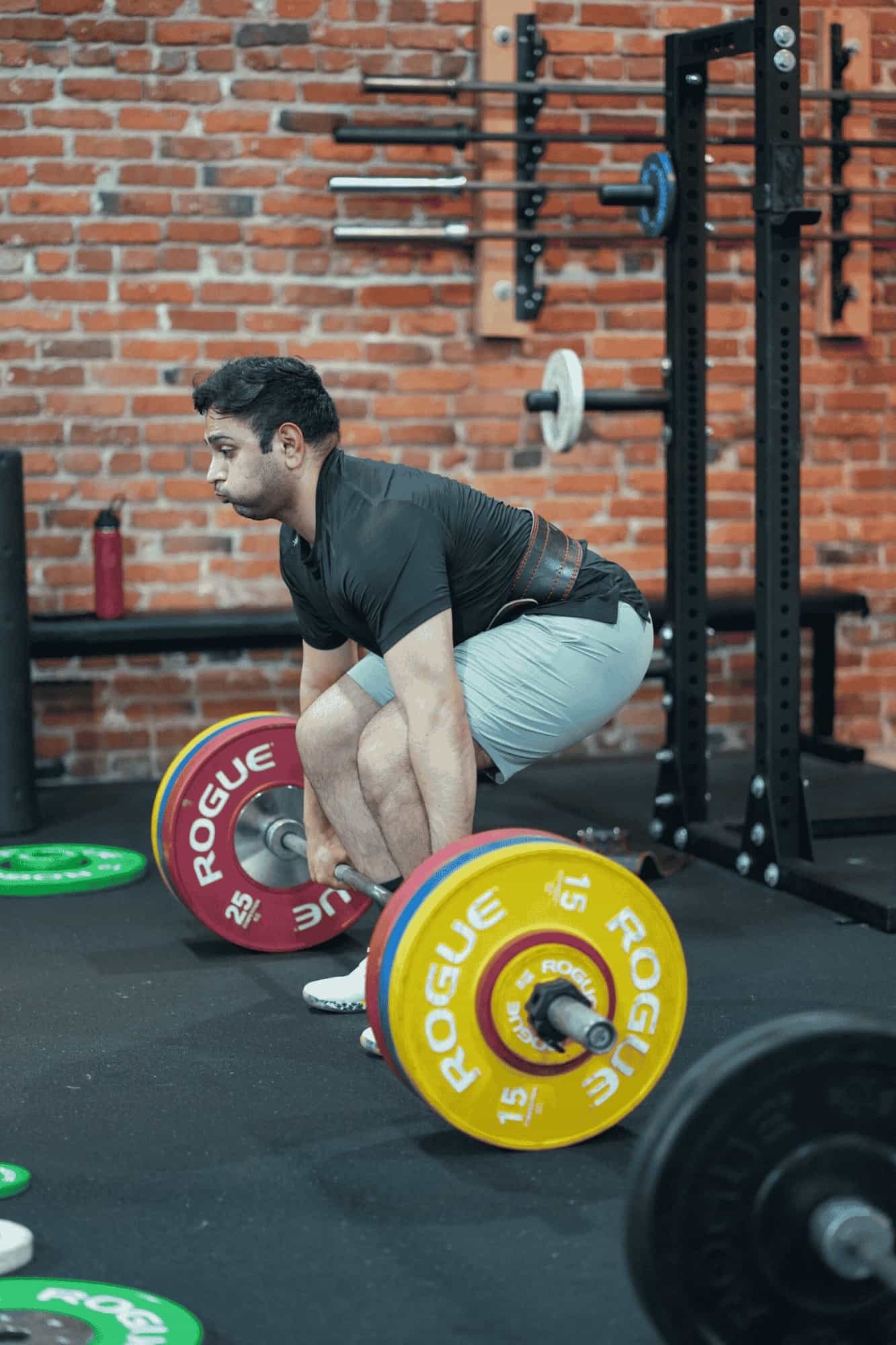
Strength training in Seattle, decoded
Strength training is the practice of getting stronger under load. It is not bodybuilding (which optimizes for muscle size) and it is not conditioning (which optimizes for work capacity). It is the dedicated work of producing more force on a barbell, dumbbell, or your own bodyweight, week after week. Done right, it is the highest-leverage thing most adults can do for long-term health, performance, and resilience.
This guide is for the beginner in Seattle who wants to get stronger and does not know where to start. Maybe you have lifted at a globo gym down on 2nd Ave and never seen the bar move much. Maybe you have done CrossFit casually and want to get serious about strength. Maybe you have never touched a barbell. All three walk through our door on 1st Ave every week, and the answer is roughly the same: build the patterns, follow a structured program for 12 weeks, and let the math work.
I am Ravi Dewangan, CFL3, MS in Strength and Conditioning, and CrossFit Seminar Staff. I have been the head strength and conditioning coach at Persistence Athletics in Belltown for over a decade. I have coached members who walked in barely able to hold an empty bar overhead and, 18 months later, were pulling heavy deadlifts with clean spines and no fear. Devang, one of our members, is a software engineer who came in a near-total beginner and built one of the strongest, most consistent strength arcs in the gym over 700-plus classes. The framework that got him there is not complicated. It is just rarely followed end to end. This guide is the framework. Updated June 2026.
Table of Contents
- What strength training actually means (and the 5 lifts that matter most)
- Why most beginners plateau in 8 weeks
- The 12-week beginner template
- How to scale: from bodyweight to barbell
- What to look for in a strength gym in Seattle
- Real numbers from Persistence members
- How strength training works at Persistence Athletics
- Globo gym vs CrossFit box vs strength-focused gym
- Related Articles in This Cluster
- Frequently Asked Questions
What "strength training" actually means (and the 5 lifts that matter most)
Strength training is a style of resistance training that prioritizes maximum force production over time under tension or volume. The protocol is different from bodybuilding. Loads are heavier (typically 75 to 95 percent of a one-rep max), reps are lower (1 to 6 per set), rest periods are longer (2 to 5 minutes), and the goal each session is to add weight to the bar, not to chase the pump.
The 5 lifts that build the bulk of beginner strength are:
- Back squat. The king. Full body strength under heavy load.
- Deadlift. Maximum force from the floor. Posterior chain dominant.
- Bench press. Horizontal upper body push.
- Overhead press. Vertical upper body push, full body brace.
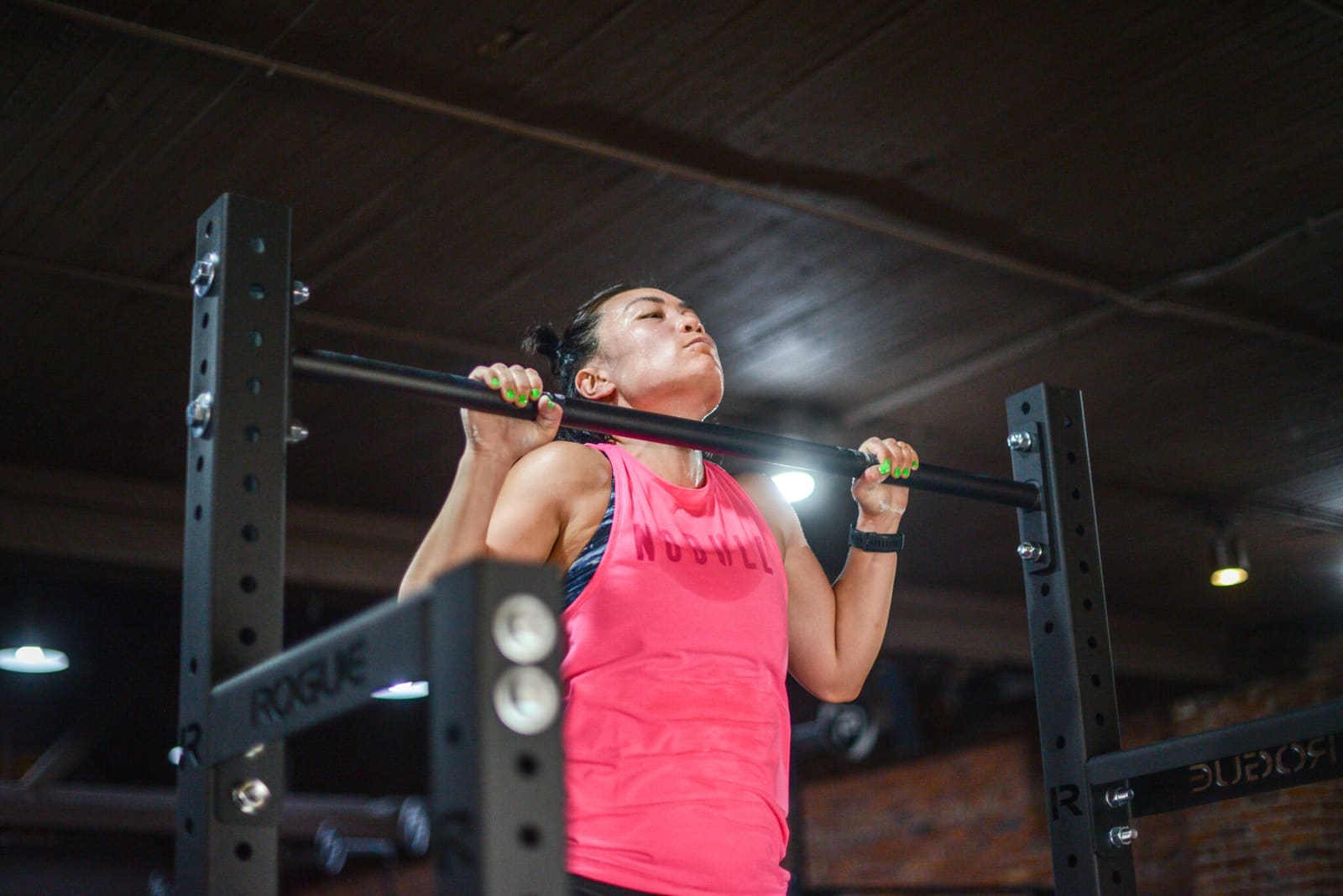
- Weighted pull-up. Vertical upper body pull, full body tension.
These 5 cover the major movement patterns: knee-dominant squat, hip-dominant hinge, horizontal push, vertical push, and vertical pull. If you can run these 5 lifts in a structured program for 12 to 24 months, you will build a strength base that holds for the next 30 years.
You do not need much else. Accessories (rows, lunges, curls, dips) help fill in gaps, but they do not replace the main 5. Beginners who chase variety before they have built a base on the main lifts almost always plateau. The ones who run the basics into the ground rarely do.
For a deeper breakdown on common errors, see our squat form mistakes article, which covers the three most common breakdowns we see in beginner squat sessions.
Why most beginners plateau in 8 weeks
Most beginner strength programs work for the first 8 weeks. Then they stop. The reason is predictable, and avoidable.
The body adapts to a stimulus in roughly 4 to 6 weeks. That means whatever weight, sets, and reps were challenging on day one are no longer challenging on day 28. To keep progressing, the program has to change. Most beginners do not change the program because they do not know they should, or they think the goal is to "be consistent" forever with the same numbers. Consistency matters, but it is consistency of effort and progression, not consistency of the exact same workout.
Three specific reasons beginners plateau:
No deload. Running 5x5 at increasing weight forever burns out the central nervous system in 6 to 8 weeks. A planned deload week (60 percent of working weight, lower volume) every 4 to 6 weeks resets the system and lets you push harder the following month.
No periodization. Beginners who train at 80 percent of their max every session for 12 weeks straight do not progress as fast as beginners who alternate heavy days, moderate days, and light days. Variation in intensity drives adaptation.
Sleep and food are missing. Strength is built between workouts, not during them. A beginner sleeping 5 hours a night and eating in a calorie deficit will plateau no matter how good the program is. The recovery side is half the equation, which is why we route members who are stalling to our nutrition coaching with Jacque (CFL3, Precision Nutrition Level 2) before we touch the program.
For a longer treatment of the plateau diagnostic, see why you're not getting stronger.
The 12-week beginner template
This is the structure I would put a brand-new lifter on if I had them 3 days a week for 12 weeks. It assumes basic pattern proficiency (you have done at least 4 to 6 sessions of coached technique work first).
| Week | Day A | Day B | Day C | Loading scheme |
|---|---|---|---|---|
| 1 to 4 | Squat 5x5, Bench 5x5, Row 3x8 | Deadlift 3x5, OHP 5x5, Pull-up 3xAMRAP | Squat 5x5, Bench 5x5, Row 3x8 | 65 to 75% of 1RM, add 5 lb each session |
| 5 to 8 | Squat 5x3, Bench 5x3, Row 3x8 | Deadlift 3x3, OHP 5x3, Pull-up 3xAMRAP | Squat 5x3, Bench 5x3, Row 3x8 | 75 to 85% of 1RM, add 5 lb each week |
| 9 | Deload week | Deload week | Deload week | 60% of 1RM, all lifts |
| 10 to 12 | Squat 3x5 heavy + 1 backoff, Bench same, Row 3x8 | Deadlift 3x3 heavy, OHP 3x5, Pull-up weighted | Same as Day A | 85 to 92% of 1RM, test 1RM week 12 |
The structure is intentionally simple. Three lifts per session, three sessions per week, one main lift focus per session. The progression is linear (add 5 lb each session in weeks 1 to 4, then each week in weeks 5 to 8) until linear stops working, then move to weekly periodization in the back half.
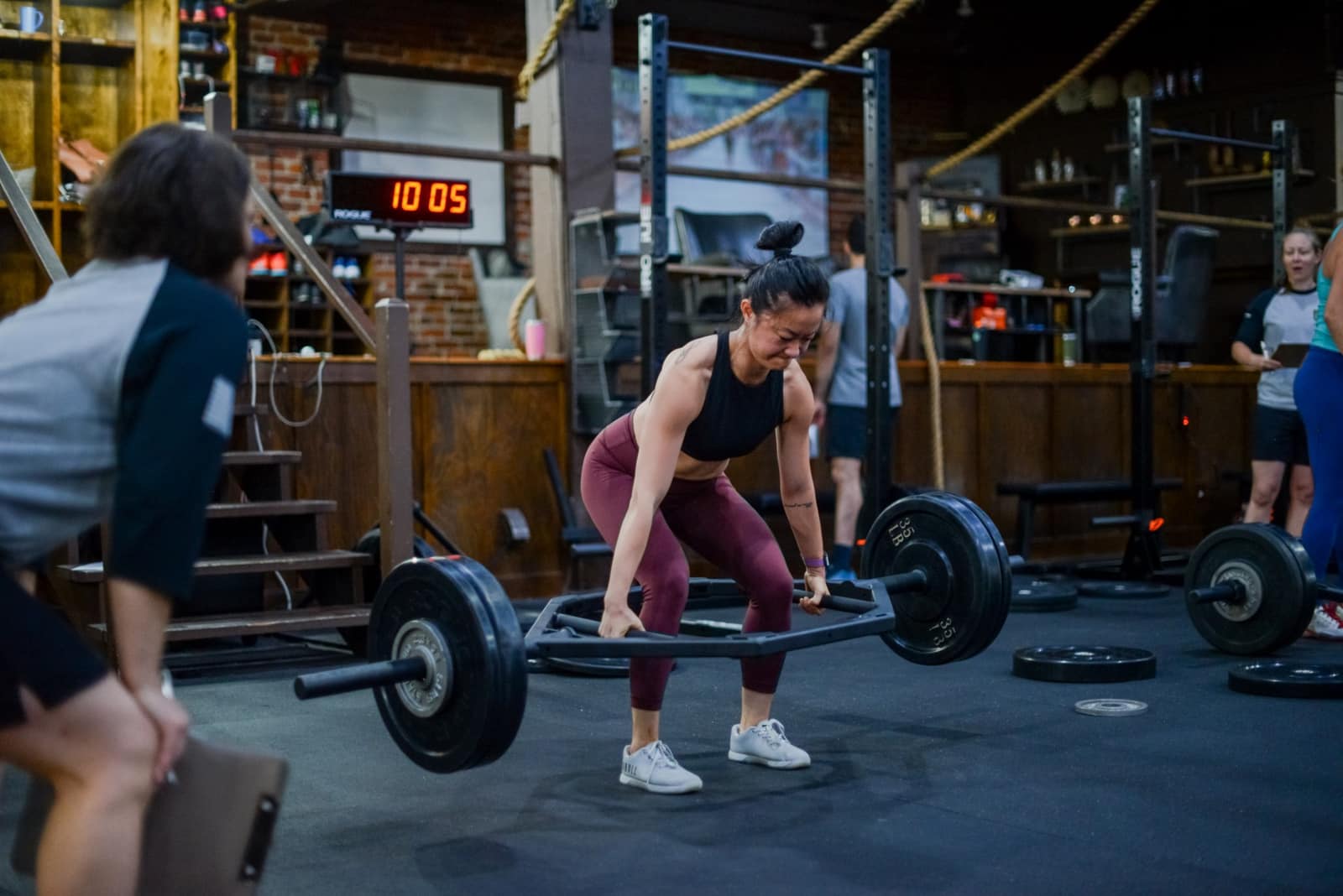
Most beginners running this template add 50 to 100 lb to their back squat across 12 weeks. Bench and overhead press add slower (15 to 30 lb is normal). Deadlift can jump 75 to 150 lb because beginners almost always start with deadlift well below their actual capacity. For a deadlift-specific protocol, see our deadlift 12-week progression.
If you want a coach to write this template against your actual starting numbers instead of guessing at it alone, that is exactly what the first class is for. Come try one free and we will scale it on the spot.
How to scale: from bodyweight to barbell
If you cannot back squat 95 lb for 5 reps with clean form, you should not be back squatting 95 lb yet. The progression ladder for someone starting at zero:
Stage 1: Bodyweight pattern (week 1 to 2)
Air squat 3x10, RDL with broomstick 3x8, push-up (knee or full) 3xAMRAP, inverted row 3x8. Goal: pattern and range of motion, no load.
Stage 2: Loaded with light implements (week 3 to 4)
Goblet squat with 25 to 35 lb dumbbell 3x8, trap bar deadlift with empty bar 3x5, dumbbell bench press 3x8, banded or jumping pull-up 3xAMRAP. Goal: integrate light load into the pattern.
Stage 3: Empty barbell (week 5 to 6)
Back squat, conventional deadlift, bench press, strict overhead press, all with the empty 45 lb bar at 3x5. Goal: comfort with the bar itself, not the load.
Stage 4: Begin progressive overload (week 7 onward)
Add 5 lb to each lift each session as long as form holds. This is where the 12-week template above begins.
The full ladder is roughly 6 weeks for someone starting at zero. Some compress it to 3 weeks, some need 8. What matters is form holding at every stage. Loading bad patterns is how injuries happen. The single most common thing I cue on the floor with a brand-new lifter is not "more weight," it is "slow down and own the bottom of the squat." Rushing this ladder is the fastest route back to where you started.
I will give you a specific floor example. A new member comes in convinced they are "weak" because the empty bar feels heavy overhead. Nine times out of ten the bar is not the problem, the brace is. We spend the first session teaching them to fill the belly with air, set the ribs down, and squeeze the bar hard enough that the whole torso turns into one stiff unit. The bar instantly feels lighter, because now they are pressing from a platform instead of a noodle. That is not a strength gain, it is a skill gain, and beginners get most of their early progress from skill, not muscle. If you understand that, you stop being discouraged by slow scale weight in month one.
What to look for in a strength gym in Seattle
Not every gym in Seattle is set up for serious strength training. The filters that matter:
1. Coach credentials
Look for CSCS (Certified Strength and Conditioning Specialist) from NSCA, CFL2 or CFL3 from CrossFit, or NSCA-CPT for personal trainers. These certifications signal that the coach has been tested on programming and movement standards. A trainer with a 2-day weekend cert and no follow-up education is not a strength coach.
2. Equipment
A real strength gym has a dedicated lifting platform, calibrated plates (steel or competition-grade), a competition bar with decent knurling, and squat racks with proper safety pins. Cheap racks, no platforms, and 35 lb plates that are actually 32 lb are not what you want.
3. Programming structure
A gym should be able to tell you, in 2 minutes, what the strength programming philosophy is. "We do whatever the coach feels like" is not an answer. "We run 12-week linear progression for beginners followed by periodized blocks" is.
4. Class size or 1-on-1 ratio
For strength work, the coach needs to see every rep. We run roughly 1 coach to 12 athletes for exactly this reason. 20 athletes in a strength class with one coach is not coaching, it is supervision.
For an inside look at our coaching team, see coach Ravi Dewangan's bio.
Real numbers from Persistence members
Real members at Persistence Athletics in Belltown, named with their permission. I am leaving specific bar weights out on purpose. The point is the arc, not the trophy number, and the arc is what repeats.
Devang, software engineer. Walked in a near-total beginner. He did the unglamorous thing: showed up three to four times a week, ran the basic progression, and added weight only when the program said to. Across more than 700 classes he went from struggling with an empty bar to one of the strongest, most reliable lifters in the room. No fancy program. Patience plus attendance.
Eric, Amazon manager. Started with a chronic lower-back history and a lot of justified caution. We spent his first 8 weeks on bodyweight and trap bar work before he ever touched a conventional deadlift from the floor. He rebuilt the hinge from the ground up, and the back pain that had limited him for years stopped being the thing that ran his training. His full story is on the site.
Emily, pull-up journey. Started unable to do a single strict pull-up. We built it the boring way: ring rows, eccentric lowers, banded work, then nothing. Her first unassisted strict pull-up came after months of patient progression, not a magic cue. That moment is one of the better ones I get to coach.
Tom, 66. The proof that "too old to start" is a myth. Tom trains alongside lifters a third his age, has logged well over 500 classes, and still pulls deadlifts with a spine I would put up against most 30-year-olds. He scales what he needs to and progresses everything else. Masters athletes do not get a watered-down program here, they get a smart one.
The pattern across all four: 12-plus months of consistent training, 3 to 4 days a week, with structured programming and coached technique. None of them used a fancy program. They ran a simple program correctly and added weight when the program said to.
If you want the cleanest one-line version of why these four worked, it is Pouria, another member of ours, who has logged somewhere north of a thousand classes across six-plus years. He is not the flashiest lifter in any given session. He is just always there. The single biggest predictor of whether a beginner gets strong is not their starting numbers, their genetics, or their program. It is whether they keep showing up after the novelty wears off in week six. Strength is a long game played by people who treat boring as a feature.
How strength training works at Persistence Athletics
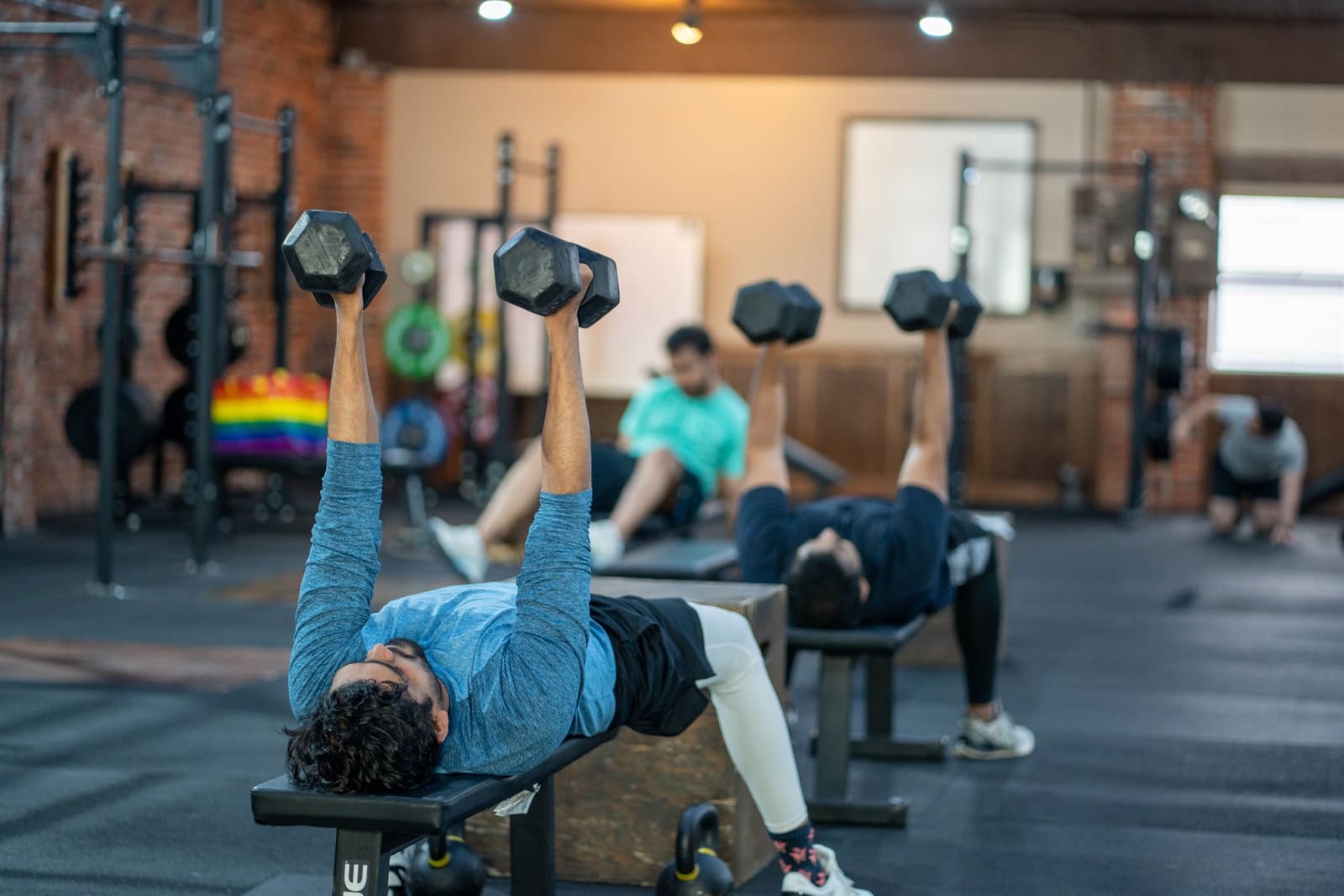
Our model is hybrid. Most members start in group classes, which include a structured strength block at the start of every session (back squat, deadlift, bench, OHP, or weighted pull-up) followed by metabolic conditioning. Strength programming runs in 12-week cycles with planned deloads.
For members in their first 90 days, or members with specific technical needs (chronic injuries, advanced lifts, competition prep), we add personal training on top of group classes. One session a week with a coach watching every rep accelerates the first 12 weeks dramatically. After 90 days, most members move to group classes only and keep progressing.
Members who want a heavier strength focus (less conditioning, more dedicated lifting) can run a strength track via personal training. The full breakdown is on the strength training Seattle page.
Globo gym vs CrossFit box vs strength-focused gym
The three main options for a Seattle adult who wants to get stronger:
| Factor | Globo gym | CrossFit box | Strength-focused gym |
|---|---|---|---|
| Monthly cost | $30 to $80 | $190 to $260 | $200 to $300 |
| Coaching | None or hourly | Included in classes | Included or 1-on-1 |
| Equipment | Often poor for serious lifting | Usually solid | Best (platforms, calibrated plates) |
| Programming | DIY | Done for you | Done for you, periodized |
| Community | None | Strong | Strong |
| Form coaching | None | Included | Included |
| Best for | Self-directed advanced lifters | Hybrid athletes | Pure strength focus |
For most beginners in Seattle, a coached gym wins by a wide margin. The cost difference versus a globo gym is offset by the speed of progress and the lower injury rate. Beginners self-coaching at a globo gym either plateau in 12 weeks or get hurt pushing through bad form.
A hybrid gym like Persistence covers the strength function (real platforms, calibrated plates, periodized programming) plus the CrossFit box function (community, conditioning) under one membership. For most Belltown professionals, who are an 8-minute walk from the Amazon Spheres, that is the right slot.
Related Articles in This Cluster
- Squat Form Mistakes: The Three Errors We See Most Often. The three most common breakdowns in beginner back squat technique and how to fix them.
- The 12-Week Deadlift Progression That Actually Works. Loading scheme, weekly cues, and the deload structure for a 12-week deadlift block.
- Why You're Not Getting Stronger (Even Though You're Lifting). The diagnostic for stalled progress: programming, recovery, and intensity.
- Movement Basics: Squat, Deadlift, and Press for Beginners. The three foundational lifts coached step by step, with cues and common mistakes.
Frequently Asked Questions
How long does it take to get strong as a beginner?
Real strength gains show up in 8 to 12 weeks of consistent training, 3 days a week. Most beginners at Persistence add 50 to 100 lb to their back squat in the first 6 months. The variable that matters most is consistency, not intensity. Three coached sessions a week for a year beats five hard sessions for two months and then quitting.
What is the best strength program for a beginner in Seattle?
Linear progression for the first 12 to 16 weeks, then a periodized program after that. Starting Strength, StrongLifts 5x5, and our Persistence beginner template all work. The format matters less than the coaching attached to it. A perfect program with no coaching beats a great program loaded with bad form, but coached imperfect beats both.
Should I do CrossFit or pure strength training as a beginner?
Depends on the goal. If you want maximum strength on one specific lift, pure strength training (powerlifting style) is faster. If you want broad fitness with strength as one component, CrossFit or a hybrid model wins. Most beginners at Persistence do a hybrid: group classes with structured strength blocks plus optional one-on-one work for technical movements.
How heavy should a beginner squat, deadlift, and bench?
Bodyweight back squat, 1.5x bodyweight deadlift, and 0.75x bodyweight bench within the first 12 to 18 months is a fair beginner target. A 175 lb male should aim for a 175 lb back squat, 265 lb deadlift, and 130 lb bench by month 12. Women adjust slightly lower on bench (about 0.5x bodyweight) and similar everywhere else.
Do I need a personal trainer to start strength training?
Not always, but it accelerates the first 8 to 12 weeks dramatically. A coach watching every rep catches form errors before they become habits. After the first 90 days, group classes with a credentialed coach are usually enough for most lifters. Personal training is highest-leverage early, lowest-leverage after the patterns are clean.
What is the difference between strength training and bodybuilding?
Strength training builds maximum force production (lifting heavy for low reps). Bodybuilding builds muscle size and aesthetics (moderate weight for higher reps). The lifts overlap but the programming is different. Beginners benefit from strength training first because it builds the foundation that bodybuilding work later sits on top of.
How many days a week should a beginner strength train?
3 days a week for the first 12 weeks. Beyond that, 3 to 5 depending on schedule and recovery. More than 5 days of pure strength work without programmed deloads is the fastest way to plateau and accumulate joint stress. The members who progress fastest at Persistence train 3 to 4 strength days plus 1 to 2 conditioning days.
What is the best gym for strength training in Belltown Seattle?
Look for credentialed coaches (CSCS, CFL2 or higher, NSCA-CPT), real lifting equipment (calibrated plates, lifting platform, competition bar), and a structured intro process. Persistence Athletics at 3025 1st Ave runs all three. Globo gyms have the equipment but no coaching. Coaching gyms without real equipment can only take you so far. The combination is what matters.
Try a free first class at Persistence Athletics
If you are starting strength training in Seattle and want a coached intro on the 5 lifts that matter, your first class at Persistence Athletics is free and scaled to wherever you are starting. We will walk you through the patterns and lay out the 12-week plan against your real numbers. Book your free class at 3025 1st Ave, Belltown, Seattle, an 8-minute walk from the Amazon Spheres. Questions first? Call us at (206) 593-4236.
Want to take this further?
Talk to a coach about strength programming at Persistence Athletics.