
Rest Days: How Belltown Coaches Actually Recover
Rest days are not a break, they are part of the program. How Persistence Athletics coaches structure recovery, plus the real evidence behind why it matters.


Rest days are not a break, they are part of the program
The most common mistake I see on the floor at Persistence Athletics in Belltown is members who treat rest days as optional. They show up 6 days a week, train hard, and wonder why their squat has stopped moving.
The part that takes people a while to believe: rest days are when the actual adaptations happen. Strength, hypertrophy, conditioning capacity, and skill consolidation all happen during recovery, not during the workout. The workout is the stimulus. Recovery is the response. Skip the response, no adaptation.
This is the article version of a conversation I have on the floor most weeks, usually with the member who feels guilty about taking a day off. I am Ravi Dewangan, CFL3, MS in Strength and Conditioning. The guilt is the problem, not the day off. Updated June 2026.
Table of Contents

- What recovery actually does for your body
- How many rest days do you need?
- Active recovery versus passive rest
- How we structure rest at Persistence Athletics
- The 4 recovery levers, ranked
- Frequently Asked Questions
What recovery actually does for your body
Three things happen during recovery, and all of them matter.
- Muscle protein synthesis. Damaged muscle fibers from the workout are repaired and rebuilt slightly stronger. Peak rate is in the first 24 to 48 hours after training.
- Nervous system reset. High-intensity work taxes the central nervous system. CNS recovery takes 24 to 72 hours and is not visible in muscle soreness. You can feel "fine" while your CNS is still down.
- Connective tissue and joint adaptation. Tendons, ligaments, and fascia adapt slower than muscle. They need 3 to 5 day cycles to recover from heavy load.
If you train every day, you stack the stimulus before any of these processes finish. The result looks like progress for 4 to 6 weeks (your body has reserve capacity), then plateaus, then regresses.
I think of Devang here, a software engineer who has logged more than 700 classes and went from beginner to a genuinely strong lifter. Early on he tried to outwork everyone, and it stalled him. His numbers moved once he trained hard on the days he trained and actually let go on the days he did not.
How many rest days do you need?
The answer depends on your training history, intensity, and recovery quality outside of training.
| Training history | Sessions per week | Rest days per week |
|---|---|---|
| Beginner (under 6 months) | 3 to 4 | 3 to 4 |
| Intermediate (6 to 24 months) | 4 to 5 | 2 to 3 |
| Advanced (2+ years) | 5 to 6 | 1 to 2 |
| Competitive athlete (competing) | 5 to 7 | 0 to 2 + scheduled deloads |
Most members at Persistence are in the intermediate range. They train 4 to 5 group classes a week, take 2 to 3 days off, and progress steadily. The members who try to push to 6 days a week without changing recovery (sleep, food) almost always plateau within 8 weeks.
The flip side is just as real. Pouria has been with us more than six years and has logged somewhere around 1,100 classes. People assume that means he never rests. It means the opposite. He has lasted that long because he treats recovery as part of the plan. Consistency over years is a recovery skill before it is a willpower skill.
Signs you are not getting enough rest
- Strength numbers stagnant or dropping over a 4-week window
- Sleep quality declining
- Resting heart rate elevated by 5+ bpm
- Mood flat, motivation dropping
- Minor injuries piling up
Two or more of these and your problem is recovery, not training volume.
If you are not sure which bucket you fall into, a coach sorts that out in thirty seconds on the floor. Your free first class is scaled, and a coach will tell you straight what your week should look like. Try a free class and bring the question.
Active recovery versus passive rest
Both have a role. The difference matters.
Active recovery. Light movement that improves circulation without taxing muscle or nervous system. Walking, easy cycling, mobility work, swimming. Goal: feel slightly better at the end than you did at the start.
Passive rest. No structured exercise. Errands, hanging out, sleep. Goal: zero training stimulus. The body uses the time to recover.
Most weeks, you want a mix. One full passive day (often Sunday for members at Persistence) plus one or two active recovery days that include a 30 to 45 minute walk through Belltown, down to Pike Place, or along the waterfront. We are about an 8-minute walk from Amazon, so for a lot of our members the active recovery day is just the commute on foot.
The line: if you finish your "active recovery" tired, you trained. Rename it accordingly and add a passive day to compensate.
How we structure rest at Persistence Athletics
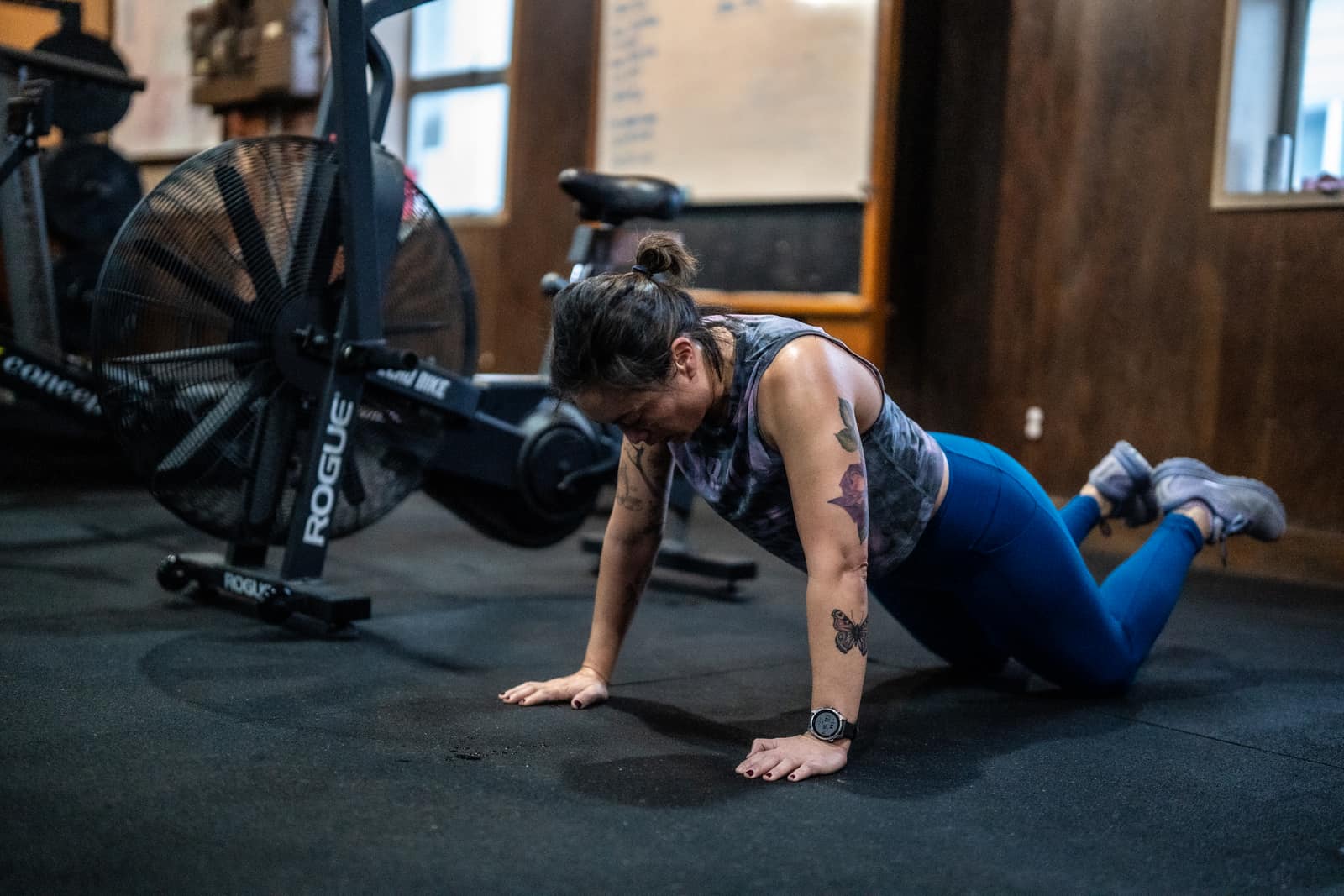
Our group class programming follows a 4-day-on, 1-day-off rotation through the week. Members are encouraged to follow that rhythm: Monday, Tuesday, Wednesday, Thursday on, Friday off, Saturday on, Sunday off. The pattern keeps recovery aligned with the training stimulus. The Saturday session is our HYROX class, 9:30 to 11:00 AM, included in every membership, and it is a hard one, so for most people the Sunday off is not optional.
For members who train strength specifically, we layer in a deload week every 4 to 8 weeks: 5 to 7 days at 50 to 60 percent of working volume. The lift numbers usually jump in the week after. I no longer try to talk an athlete out of a deload when they feel great. Feeling great in week six is often the last thing you feel before the wall.
For our breaking plateaus diagnostic, recovery is the second variable we audit. Most plateaus are technique plus recovery, not programming. The fix is often "take an extra rest day and eat 20 grams more protein per day" rather than a new program.
The 4 recovery levers, ranked
In order of effect size, biggest first.
- Sleep. 7 to 8 hours, consistent timing. The single biggest recovery lever. Drop to 5 hours for a week and your training tanks. We coach this first because it is the most under-valued.
- Daily protein. 0.7 to 1 gram per pound of bodyweight. Under-eaten protein limits how much your body can repair after each session. This is where I send people to Jacque Dewangan, our head coach and a Precision Nutrition Level 2 coach. Our nutrition coaching exists because most stalled members are under-fed, not over-trained, and that is fixable in a couple of weeks.
- Total daily calories. Training in a deficit is fine, training in a deep deficit is not. Most members under-eat by 200 to 400 calories on training days, which slowly compounds into stalled progress.
- Daily steps and time outdoors. 8,000+ steps and 20+ minutes outside both correlate with better recovery in the data. Belltown makes this easy: walking to lunch, walking the waterfront, walking up to Capitol Hill on weekends.
Stress, alcohol, and screen time before bed all matter, but they sit below these four.

Frequently Asked Questions
How many rest days do I need per week?
2 to 3 for most CrossFit and strength athletes training intensely. Beginners need closer to 3, intermediate athletes can handle 2, advanced athletes sometimes do well on 1 if recovery (sleep, food) is dialed. Going 6 to 7 days a week with no rest leads to a plateau, then a regression, in 4 to 6 weeks.
Should I do active recovery on rest days?
Yes, light movement helps. A 30 to 45 minute walk, easy bike ride, or mobility session improves circulation and recovery. The line is: nothing that taxes the muscles or nervous system. If you finish your active recovery feeling tired, it was a workout, not recovery.
Can I do cardio on a rest day?
Light cardio yes, intense cardio no. A Z2 zone walk or row at conversational pace helps recovery. A high-intensity interval session on your strength rest day defeats the purpose. Most members at Persistence walk a lot in Belltown on rest days, which is enough.
Should I take a rest day if I do not feel sore?
Yes. Soreness is not a reliable signal of recovery. The nervous system, connective tissue, and hormones recover on different timelines than muscle soreness. Schedule rest days based on programming, not feel.
What about deload weeks?
Different from rest days. A deload is a planned 5 to 7 day stretch of reduced volume and intensity, usually every 4 to 8 weeks for serious lifters. We program deloads into our personal training tracks at Persistence. Most amateurs skip them and stall on every block.
Is two rest days in a row okay?
Yes, especially after a hard week. The myth that you have to alternate is just a myth. What matters is the total recovery you give your system within a 7 to 10 day window. Two days off in a row is often a smarter pattern than scattering them.
Try a free first class at Persistence Athletics
A coached gym makes recovery easier because the programming already accounts for it. You show up to the right session on the right day, take the right amount of rest, and the cycle works. Book your free class at Persistence Athletics, 3025 1st Ave, Belltown, Seattle. Call (206) 593-4236 with questions.
Want to take this further?
Talk to a coach about training programming at Persistence Athletics.