
Why You Are Tired All the Time (It Is Usually an Engine Problem)
Most fatigue advice is sleep hygiene. Here is the other explanation nobody gives you: the machinery that makes your energy is trainable, and capacity varies enormously.

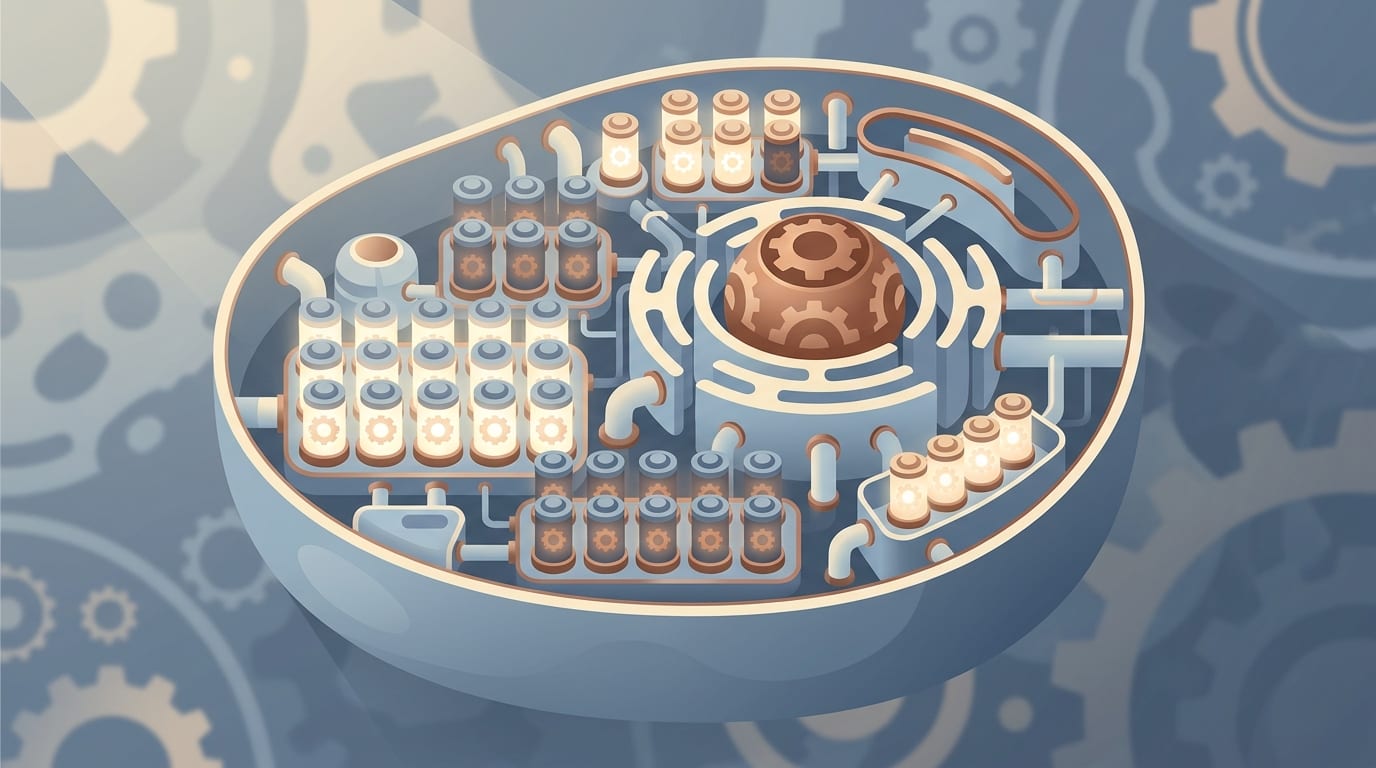
Almost every fatigue article you have read is about sleep
Go to bed earlier. Cut the screens. Cool room, dark room, no caffeine after two. Most of it is true, and if sleep is the thing that is broken, fix sleep first.
But I talk to a lot of people who are already doing all of it and still feel flat by two in the afternoon. They sleep seven or eight hours. They are not obviously sick. They are just tired in a way no amount of blackout curtains touches. Nobody ever offers them the second explanation: the machinery producing their energy has less capacity than they need, and that capacity is not fixed.
I am Ravi Dewangan, CFL3, MS in Strength and Conditioning, CrossFit Seminar Staff. I coach at Persistence Athletics in Belltown and I wrote the MetFix course, which is the long version of what follows. This is the short version. Updated August 2026.
One thing up front, because it matters more than anything else in this article: fatigue is a symptom, not a diagnosis. It has many causes, several of them medical. I am explaining one mechanism. I am not telling you what is wrong with you, and no coach can.
Table of Contents
- What actually happens between a meal and a usable unit of energy
- Capacity varies enormously between people
- Mitochondria are not fixed equipment
- Why the fix for this kind of tired is the opposite of rest
- What actually builds capacity, ranked by how well supported it is
- When tired is not an engine problem
- How we handle this at Persistence Athletics
- Frequently Asked Questions
What actually happens between a meal and a usable unit of energy
Most people have a vague picture where food goes in and energy comes out. The middle of that picture is worth filling in, because once you can see it, the rest of this article is obvious.
Step one: food gets taken apart. Carbohydrate becomes glucose, fat becomes fatty acids, protein becomes amino acids. These get delivered to cells.
Step two: fuel gets stripped for electrons. Inside the cell, glucose gets partially broken down in the fluid outside the mitochondria. Fatty acids get pulled inside the mitochondria and chopped down two carbons at a time. Both routes converge on the same small molecule, which feeds a loop of reactions in the mitochondrial interior. That loop is often described as making energy, and that is a little misleading. What it mostly does is pull electrons off carbon atoms and load them onto shuttle molecules. The leftover carbon leaves as carbon dioxide, which is what you breathe out.
Step three: the electrons run a chain, and the chain pumps. The shuttles carry those electrons to a series of protein complexes embedded in the inner mitochondrial membrane. Electrons pass from one complex to the next, each with a slightly stronger pull on them, releasing a little energy at every hand-off. That energy does one job: it pumps protons out across the membrane. Do this a few billion times and you have built a real gradient, a reservoir of protons crowded on one side of a barrier they cannot easily cross.
Step four: the flow back drives a turbine. The protons want back in, and there is exactly one easy way through: an enzyme that is, mechanically, a rotor. Protons flow through it, it spins, and the spinning drives the chemistry that welds a phosphate onto ADP to make ATP. ATP is what your cells actually spend. Every contraction, every ion pumped, every protein built, every thought, is paid for in ATP.
Where oxygen fits. At the end of the chain the spent electrons have to go somewhere or the whole line backs up. Oxygen takes them, combining with protons to form water. That is the real reason you breathe: not to fill your lungs, but to keep the end of that chain clear.
Two things follow. First, the aerobic route is far more productive per unit of fuel than the anaerobic shortcut: on the order of thirty units of ATP from one glucose molecule taken all the way through, versus two from the early steps alone. Second, your daily ATP turnover is enormous. Estimates put it in the range of tens of kilograms per day, roughly on the order of your own body weight, recycled continuously because you only hold a few seconds of it at a time.
That is the engine. Now the part that gets left out.
Capacity varies enormously between people
The size of that engine is not the same in everyone, and the spread is not small. Measured aerobic capacity between a deconditioned adult and a trained endurance athlete commonly differs by a factor of two or more. That is not a rounding error. That is two people in the same elevator running fundamentally different equipment.
The same is true down at the level of the machinery. Muscle from a trained endurance athlete carries substantially more mitochondrial content and more of the enzymes that run these reactions than muscle from a sedentary person, plus more capillaries, so oxygen actually gets delivered to it.
Here is why that shows up as daytime tiredness. Every ordinary thing you do draws on this system: standing, walking six blocks, carrying groceries up to a Belltown apartment, sitting through a long meeting without fading. When your ceiling is low, ordinary tasks consume a large share of it, and you spend the day near the top of your range. When your ceiling is high, the same tasks cost a smaller fraction and you finish with margin. Nothing about the tasks changed. The denominator changed.
Mitochondria are not fixed equipment
This is the part that surprises people, and it is one of the most replicated findings in exercise physiology: the mitochondrial content of muscle responds to use. Train regularly and the muscle builds more of this machinery. Stop, and it goes away.
The loss direction is faster than the build direction. Weeks of genuine inactivity are enough to see meaningful decline in oxidative capacity. Anyone coming back after an injury, a long work crunch, or a bad winter knows what that feels like from the inside, even without knowing the mechanism.
One honest limit: how much any given person improves on the same training varies a lot, and some of that is genetic. Trainability itself is not evenly distributed. Everyone moves. Not everyone moves the same distance.
Why the fix for this kind of tired is the opposite of rest
If your tiredness is a capacity problem, resting more makes it worse. That is the uncomfortable part. Rest is what shrinks the engine. The only signal that grows it is being asked to do work.
This is why "I am too tired to train" becomes self-reinforcing so easily. Every week you sit out, the ceiling drops a little, the same daily tasks get relatively harder, and the evidence that you are too tired to train gets stronger. That loop is not a character flaw. It is physiology running in the direction you pointed it.
The way out is genuinely undramatic. Easy, repeatable aerobic work. Walk more than you do now. Add two or three sessions a week you can actually finish. Do not go looking for the hardest thing you can survive; that is a good way to confirm the story you already believe about yourself. We start most new members well under what they think we are going to ask, and that is deliberate.
What actually builds capacity, ranked by how well supported it is
Here is my honest tiering. I am separating what has real weight behind it from what is mechanistically interesting and unproven, because most of the internet does not.
Well supported.
| What | Why it works | Notes |
|---|---|---|
| Easy aerobic work | Regular moderate work drives mitochondrial and capillary adaptation in trained muscle | The single highest-yield item. Walking counts |
| Harder intervals | Also drive the same adaptations, in less total time | Complements the easy work, does not replace it |
| Resistance training | Builds and preserves the muscle that houses the machinery, improves glucose handling | Especially important past 40 |
| Less sitting overall | Total daily movement is its own variable, separate from training | Cheapest change available |
| Enough sleep | Sleep loss degrades performance, recovery, and glucose handling | Fix this first if it is broken |
| Enough protein and enough total food | Chronic under-eating undercuts the adaptation you are training for | Covered in our recovery nutrition post |
| Correcting a real deficiency | Iron sits inside the electron transport machinery and in hemoglobin, B12 matters too | Get tested. Do not guess, and do not supplement iron blindly |
Plausible, weaker evidence, do not build your plan on it. Cold exposure and sauna have mechanistic stories and some cardiovascular data, but "builds mitochondria" oversells what is known in humans. Time-restricted eating has good animal mechanisms and mixed human results. CoQ10, PQQ, NAD precursors, and urolithin A are reasonable ideas that have not earned a place ahead of the list above.
Commonly recommended, wrong target. Creatine is excellent and I take it, but it supports the short, immediate energy system, not this one. It is not a fatigue fix.
When tired is not an engine problem
Two other patterns look similar from the outside and need the opposite response.
Under-recovery. If you have been training hard, sleeping badly, and your performance is going backwards while your motivation drains, more training is the wrong prescription. That one wants rest, and we wrote about it in why rest days matter.
Something medical. Low iron, thyroid disorders, sleep apnea, depression, poorly controlled blood sugar, medication side effects, and a long list of others all present as being tired all the time. If your fatigue arrived suddenly, does not respond to either rest or activity, or comes packaged with other symptoms, that is a physician conversation, not a coaching one. I would rather you spend an hour with your doctor than a year with me guessing.
How we handle this at Persistence Athletics
We do not treat anything. What we do is give people a place where the aerobic work happens consistently without requiring willpower, which is the actual hard part. A coached class at a fixed time on the calendar beats a plan you have to self-start.
For the food side, Jacque runs our nutrition coaching, and she runs most of the MetFix assessments we do in the gym. My own bio is at coaches/ravi-dewangan if you want to know who is telling you this.
If the mechanism above was the interesting part for you, the full walkthrough is free. I wrote the MetFix course to explain metabolic health properly, in plain language, with nothing sold at the end of it: start the free course. If you would rather see where you stand before reading anything, there is a 2-minute score that takes less time than finishing this article did.
Frequently Asked Questions
Why am I tired all the time even though I sleep 8 hours?
Sleep is one input, not the only one. Your cells make usable energy through mitochondria, and the amount of that machinery you carry is trainable: it grows in response to regular physical work and shrinks during long stretches of inactivity. If you sleep well and still feel flat, low aerobic capacity is one plausible explanation, and it is one that gets worse the more you rest. It is not the only explanation. Persistent fatigue also has real medical causes, including low iron, thyroid problems, sleep apnea, and depression, so if it came on suddenly or came with other symptoms, see a physician before you assume it is fitness.
Can being out of shape actually make you tired during the day?
Yes, and the mechanism is straightforward. Everything you do, including sitting up, walking to the bus, and carrying groceries, draws on the same aerobic system. When your capacity is low, ordinary tasks take a larger share of what you have, so you spend the day near your ceiling and feel it. Raising the ceiling by training makes the same daily tasks a smaller fraction of your capacity. This is a well established relationship in exercise physiology, though how much any one person improves varies a lot.
How long does it take to build aerobic capacity?
Measurable changes in the muscle's oxidative machinery show up within a few weeks of consistent training, well before body composition changes. That said, the size of the change varies enormously between people, and consistency matters far more than the specific program. Losing capacity is faster than building it: several weeks of inactivity is enough to see meaningful decline, which is why long layoffs feel so rough coming back.
Do mitochondria supplements like CoQ10 or NAD boosters help with fatigue?
The mechanisms are interesting and the human evidence is thin for otherwise healthy people. CoQ10, PQQ, NAD precursors, and urolithin A are all mechanistically motivated, and none of them have the weight of evidence that regular training, adequate sleep, adequate protein, and correcting an actual nutrient deficiency have. If you want to spend money on your energy, spend it on the things with the strongest support first. If you suspect a deficiency, get tested rather than guessing.
When should I see a doctor about being tired all the time?
See a physician if the fatigue came on suddenly, if it does not improve with either rest or activity, or if it comes with other symptoms: shortness of breath at low effort, heavy periods, unexplained weight change, snoring and gasping at night, low mood, or a new medication. Fatigue is a symptom with many causes, several of which are simple blood tests away from an answer. This article explains one mechanism among many. It is not a diagnosis and no coach can give you one.
Want to take this further?
Talk to a coach about metfix programming at Persistence Athletics.